'Shaitan' not devilish after all: Why Rajasthan govt nixed name plan for kids
Education minister Madan Dilawar was forced to suspend the 'Sarthak Naam Abhiyan' following a backlash. Will he now package his scheme differently?
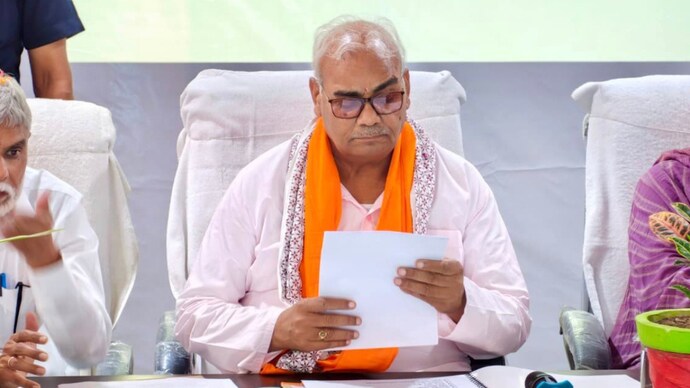
While Dilawar was forced to suspend the ‘Sarthak Naam Abhiyan’ following a backlash, the idea, it seems, had been to nudge parents away from what the government calls “embarrassing” or “silly” names—think Shaitan, Sheru, Tinku, Bablu—when enrolling children in school.
Indeed, Bhayankar (terrifying), Bhiksha (alms), Makhi (fly), Bikaner (city?), Dahi Bhai (yogurt brother), Ahankar (arrogance) or Becharadas (poor servant) could sound odd in a classroom today, but who decides absurdity, really? Folks might nix Shaitan, but what about Major Shaitan Singh Bhati PVC, the 1962 War hero whose name represents valour, not villainy? Stripped of context, the name may sound undesirable. Attached to a Param Vir Chakra citation, it becomes immortal.
Naming in India is a contested cultural space, because here, names are never just names. They are negotiations—between tradition and trend, astrology and ambition. They are sometimes whispered into existence by grandmothers, sometimes dictated by horoscopes, and often borrowed from cinema posters or politicians.
Parents plan names in advance or improvise in the delivery room. The devout outsource this task to priests or gurus, bound by the first letter dictated by planetary alignments. Yet for every curated Aarav or Ishaan, there’s a Bablu, who clings to his nickname like a security blanket, or a Sheru, compared equally to a loyal dog and a brave son.
The Rajasthan government order frowns on such nicknames. But in north India, these aren’t quirks but cultural fixtures. The streets of Punjab and Haryana echo with Tinku, Lucky, Honey, Bittu and Pinki—sometimes regardless of gender. In some homes, Meenu is less a name than a family heirloom, shared by same-age cousins like prized jewellery. South India and the Northeast have their own gems.
There’s also the dual identity dilemma—the ‘ghar ka naam’ versus ‘school ka naam’. At home, you are Chotu, Sonu or Guddi. At school, you become something more formal, more socially acceptable. Yet the home name has a stubborn way of leaking into the outside world.
Names also mark identity, caste, region—a quiet assertion. A father may ditch Singh for his son to dodge generic vibes. The very son, when a parent, might name his child Ivan after a Russian folk hero, only to watch peers flock to the safer and Sanskritised Ishaan.
And picture this Jaipur street scene. A mother hollers, “Sheru beta, ghar aao!” The boy, now 12 and school-topper material, winces but sprints home. His official name? Shivendra Rathore.
Then there are names with stories too heavy to be edited out by bureaucratic lists. Consider Kura Ram or Kura Singh—names that might draw smirks in a classroom. But behind them often lies family superstition or priests suggesting ‘unattractive’ names to ward off the evil eye. What sounds awkward might carry the weight of survival.
That brings us to the larger question about minister Dilawar’s move. Can the state standardise something as personal, emotional—and occasionally hilarious—as a child’s name? While the government pushes for “respectable” monikers, society thrives on contradictions. A Sheru might ace IIT. A Bablu could helm a Fortune 500 company. A Bhayankar could be the gentlest soul in a village.
Names are society’s mirror, reflecting superstition, politics and pure aspiration. Trying to standardise naming in India is like trying to regulate humour or emotion. The chaos is the culture. The contradictions are the identity.
And perhaps that’s the quiet lesson here. You can draft lists, issue advisories, even nudge parents towards “respectability”. But somewhere in a small town, a family will still name their child out of faith, fear, love or sheer whimsy—and that name, however odd it sounds, will carry a story no government circular can fully comprehend.
The state government’s advisory frowns upon such names. But in large parts of north India, these aren’t aberrations—they are the norm. Not accidents but cultural fixtures. Indian names routinely defy neat categorisation. What sounds unusual today often becomes respectable tomorrow.
This brings us back to the Rajasthan government’s well-meaning intervention. The impulse is understandable: no parent wants their child to be mocked in a classroom. But the assumption—that embarrassment lies inherently in certain names—is shaky. More often, embarrassment lies in how society chooses to hear them. Good sense has prevailed on the government for now. Whether and when Dilawar reverts with his scheme packaged differently is everyone’s guess.
Subscribe to India Today Magazine
While Dilawar was forced to suspend the ‘Sarthak Naam Abhiyan’ following a backlash, the idea, it seems, had been to nudge parents away from what the government calls “embarrassing” or “silly” names—think Shaitan, Sheru, Tinku, Bablu—when enrolling children in school.
Indeed, Bhayankar (terrifying), Bhiksha (alms), Makhi (fly), Bikaner (city?), Dahi Bhai (yogurt brother), Ahankar (arrogance) or Becharadas (poor servant) could sound odd in a classroom today, but who decides absurdity, really? Folks might nix Shaitan, but what about Major Shaitan Singh Bhati PVC, the 1962 War hero whose name represents valour, not villainy? Stripped of context, the name may sound undesirable. Attached to a Param Vir Chakra citation, it becomes immortal.
Naming in India is a contested cultural space, because here, names are never just names. They are negotiations—between tradition and trend, astrology and ambition. They are sometimes whispered into existence by grandmothers, sometimes dictated by horoscopes, and often borrowed from cinema posters or politicians.
Parents plan names in advance or improvise in the delivery room. The devout outsource this task to priests or gurus, bound by the first letter dictated by planetary alignments. Yet for every curated Aarav or Ishaan, there’s a Bablu, who clings to his nickname like a security blanket, or a Sheru, compared equally to a loyal dog and a brave son.
The Rajasthan government order frowns on such nicknames. But in north India, these aren’t quirks but cultural fixtures. The streets of Punjab and Haryana echo with Tinku, Lucky, Honey, Bittu and Pinki—sometimes regardless of gender. In some homes, Meenu is less a name than a family heirloom, shared by same-age cousins like prized jewellery. South India and the Northeast have their own gems.
There’s also the dual identity dilemma—the ‘ghar ka naam’ versus ‘school ka naam’. At home, you are Chotu, Sonu or Guddi. At school, you become something more formal, more socially acceptable. Yet the home name has a stubborn way of leaking into the outside world.
Names also mark identity, caste, region—a quiet assertion. A father may ditch Singh for his son to dodge generic vibes. The very son, when a parent, might name his child Ivan after a Russian folk hero, only to watch peers flock to the safer and Sanskritised Ishaan.
And picture this Jaipur street scene. A mother hollers, “Sheru beta, ghar aao!” The boy, now 12 and school-topper material, winces but sprints home. His official name? Shivendra Rathore.
Then there are names with stories too heavy to be edited out by bureaucratic lists. Consider Kura Ram or Kura Singh—names that might draw smirks in a classroom. But behind them often lies family superstition or priests suggesting ‘unattractive’ names to ward off the evil eye. What sounds awkward might carry the weight of survival.
That brings us to the larger question about minister Dilawar’s move. Can the state standardise something as personal, emotional—and occasionally hilarious—as a child’s name? While the government pushes for “respectable” monikers, society thrives on contradictions. A Sheru might ace IIT. A Bablu could helm a Fortune 500 company. A Bhayankar could be the gentlest soul in a village.
Names are society’s mirror, reflecting superstition, politics and pure aspiration. Trying to standardise naming in India is like trying to regulate humour or emotion. The chaos is the culture. The contradictions are the identity.
And perhaps that’s the quiet lesson here. You can draft lists, issue advisories, even nudge parents towards “respectability”. But somewhere in a small town, a family will still name their child out of faith, fear, love or sheer whimsy—and that name, however odd it sounds, will carry a story no government circular can fully comprehend.
The state government’s advisory frowns upon such names. But in large parts of north India, these aren’t aberrations—they are the norm. Not accidents but cultural fixtures. Indian names routinely defy neat categorisation. What sounds unusual today often becomes respectable tomorrow.
This brings us back to the Rajasthan government’s well-meaning intervention. The impulse is understandable: no parent wants their child to be mocked in a classroom. But the assumption—that embarrassment lies inherently in certain names—is shaky. More often, embarrassment lies in how society chooses to hear them. Good sense has prevailed on the government for now. Whether and when Dilawar reverts with his scheme packaged differently is everyone’s guess.
Subscribe to India Today Magazine

