Why Kiren Rijiju wants more visible Japanese economic presence in Northeast India
Japanese engagement in Arunachal Pradesh is limited because of Chinese sensitivities, and that must change, the Union minister said at the India Today Indo-Japan Conclave
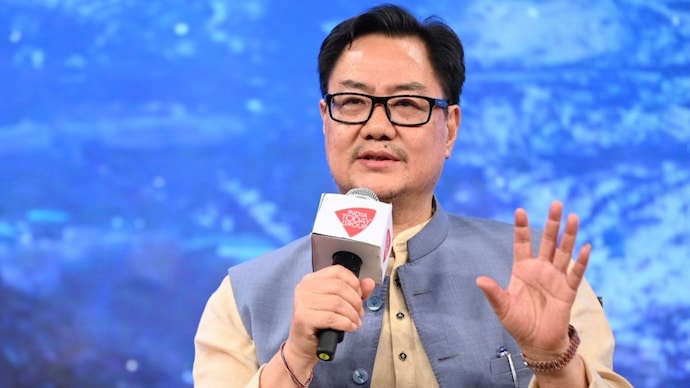
Addressing the India Today Indo-Japan Conclave during the session ‘The Northeast Corridor: Looking and Acting East’, Rijiju said India had “miserably failed” to utilise the strategic geography of the Northeast despite its enormous geopolitical significance. “Every geostrategic policy or programme is based on geography. Geography decides how you devise your strategy,” Rijiju said, arguing that Northeast India cannot be separated from the wider Southeast Asian region. “When we talk about Southeast Asia, it is not complete without Northeast India,” he added.
Referring to Prime Minister Narendra Modi’s shift from the “Look East” to “Act East” policy, Rijiju said the change in nomenclature reflected a transition from passive diplomacy to concrete engagement. “We need to do some real action, some work on the ground. That is the purpose of changing the nomenclature from Look East to Act East policy,” he said.
The Arunachal West Lok Sabha MP stressed that the Northeast occupies one of the most strategically sensitive locations in the country, bordering China, Myanmar, Bangladesh, Nepal and Bhutan. Yet, according to him, policymakers historically failed to grasp its strategic value. “I really feel that India has miserably failed to utilise the geographic location of Northeast India,” he said.
Rijiju also revealed that Japanese economic engagement in Arunachal Pradesh remains limited because of geopolitical sensitivities involving China. “Arunachal Pradesh, which is the largest state in the Northeast, does not form part of the Japanese economic investment or activities. The JICA (Japan International Cooperation Agency) head and others came to me many times, but due to the problem with China, Japan does not have any economic presence in my state,” he said.
Calling for Japan to make its presence more visible in the Northeast, Rijiju said symbolic infrastructure projects could significantly alter public perception in the region. “Their presence is there but not very visible. Like Delhi Metro or the Suzuki-Maruti collaboration, something visible which can influence the minds of the Northeastern people that the Japanese are here and coming in a big way in the Northeast,” he said.
The minister also reflected on the cultural dynamics shaping Northeast India’s engagement with East Asia. While Korean popular culture has deeply influenced the youth of the region, he said Japan’s influence has been more subtle and rooted in technological excellence and historical respect.
“The Koreans strategically used cultural influence as a soft power to attract global attention. The Japanese thought it was not required because ‘Made in Japan’ itself was once the biggest global brand,” he said.
At the same time, Rijiju emphasised the need for stronger people-to-people engagement, especially through skill development and labour mobility partnerships with Japan. “We can have specific agreements on mobility between India and Japan, specifically for skilling the youth of the Northeast and also to make them available in Japan,” he said, adding that he planned to discuss the matter with External Affairs Minister S. Jaishankar.
Rijiju also highlighted Buddhism as India’s most underutilised soft power asset in its ties with Japan and other Asian countries. “The biggest soft power that India wields today is Buddhism,” he said. “If Saudi Arabia has Mecca and Medina, we have Bodh Gaya. We are not understanding, as Indians, not even 1 per cent of what we are.”
Recalling his interactions with Buddhist-majority nations, Rijiju said India commands immense reverence because it is seen as the land of the Buddha. “Wherever I met Buddhists, they look at Indians not only as citizens of a great country but from a reverence angle. ‘Oh, he is from the land of Buddha’,” he said.
The minister also pointed to Prime Minister Modi’s efforts to place Buddhism at the centre of India’s diplomacy. “India gave Buddha to the world, we did not give war,” he said, invoking Modi’s line at the United Nations: “Humne Buddha diya hai, yuddh nahi.”
RIJIJU-SPEAK
* “India has miserably failed to utilise the geographic location of Northeast India.”
* “When we talk about Southeast Asia, it is not complete without Northeast India.”
* “Arunachal Pradesh, the largest state in the Northeast, does not form part of the Japanese economic investment or activities. Due to the problem with China, Japan does not have any economic presence in my state.”
* “The biggest soft power that India wields today is Buddhism. If Saudi Arabia has Mecca and Medina, we have Bodh Gaya.”
* “We can have specific agreements on mobility between India and Japan, specifically for skilling the youth of the Northeast and also to make them available in Japan.”
Subscribe to India Today Magazine
Addressing the India Today Indo-Japan Conclave during the session ‘The Northeast Corridor: Looking and Acting East’, Rijiju said India had “miserably failed” to utilise the strategic geography of the Northeast despite its enormous geopolitical significance. “Every geostrategic policy or programme is based on geography. Geography decides how you devise your strategy,” Rijiju said, arguing that Northeast India cannot be separated from the wider Southeast Asian region. “When we talk about Southeast Asia, it is not complete without Northeast India,” he added.
Referring to Prime Minister Narendra Modi’s shift from the “Look East” to “Act East” policy, Rijiju said the change in nomenclature reflected a transition from passive diplomacy to concrete engagement. “We need to do some real action, some work on the ground. That is the purpose of changing the nomenclature from Look East to Act East policy,” he said.
The Arunachal West Lok Sabha MP stressed that the Northeast occupies one of the most strategically sensitive locations in the country, bordering China, Myanmar, Bangladesh, Nepal and Bhutan. Yet, according to him, policymakers historically failed to grasp its strategic value. “I really feel that India has miserably failed to utilise the geographic location of Northeast India,” he said.
Rijiju also revealed that Japanese economic engagement in Arunachal Pradesh remains limited because of geopolitical sensitivities involving China. “Arunachal Pradesh, which is the largest state in the Northeast, does not form part of the Japanese economic investment or activities. The JICA (Japan International Cooperation Agency) head and others came to me many times, but due to the problem with China, Japan does not have any economic presence in my state,” he said.
Calling for Japan to make its presence more visible in the Northeast, Rijiju said symbolic infrastructure projects could significantly alter public perception in the region. “Their presence is there but not very visible. Like Delhi Metro or the Suzuki-Maruti collaboration, something visible which can influence the minds of the Northeastern people that the Japanese are here and coming in a big way in the Northeast,” he said.
The minister also reflected on the cultural dynamics shaping Northeast India’s engagement with East Asia. While Korean popular culture has deeply influenced the youth of the region, he said Japan’s influence has been more subtle and rooted in technological excellence and historical respect.
“The Koreans strategically used cultural influence as a soft power to attract global attention. The Japanese thought it was not required because ‘Made in Japan’ itself was once the biggest global brand,” he said.
At the same time, Rijiju emphasised the need for stronger people-to-people engagement, especially through skill development and labour mobility partnerships with Japan. “We can have specific agreements on mobility between India and Japan, specifically for skilling the youth of the Northeast and also to make them available in Japan,” he said, adding that he planned to discuss the matter with External Affairs Minister S. Jaishankar.
Rijiju also highlighted Buddhism as India’s most underutilised soft power asset in its ties with Japan and other Asian countries. “The biggest soft power that India wields today is Buddhism,” he said. “If Saudi Arabia has Mecca and Medina, we have Bodh Gaya. We are not understanding, as Indians, not even 1 per cent of what we are.”
Recalling his interactions with Buddhist-majority nations, Rijiju said India commands immense reverence because it is seen as the land of the Buddha. “Wherever I met Buddhists, they look at Indians not only as citizens of a great country but from a reverence angle. ‘Oh, he is from the land of Buddha’,” he said.
The minister also pointed to Prime Minister Modi’s efforts to place Buddhism at the centre of India’s diplomacy. “India gave Buddha to the world, we did not give war,” he said, invoking Modi’s line at the United Nations: “Humne Buddha diya hai, yuddh nahi.”
RIJIJU-SPEAK
* “India has miserably failed to utilise the geographic location of Northeast India.”
* “When we talk about Southeast Asia, it is not complete without Northeast India.”
* “Arunachal Pradesh, the largest state in the Northeast, does not form part of the Japanese economic investment or activities. Due to the problem with China, Japan does not have any economic presence in my state.”
* “The biggest soft power that India wields today is Buddhism. If Saudi Arabia has Mecca and Medina, we have Bodh Gaya.”
* “We can have specific agreements on mobility between India and Japan, specifically for skilling the youth of the Northeast and also to make them available in Japan.”
Subscribe to India Today Magazine

