No Pomfret, no Hilsa: Why India's favourite fish are vanishing from plates
In this week's Climate on My Plate, we explore how the cultural and culinary relevance of two of India's most popular fish is at risk as temperatures rise and warm our oceans.
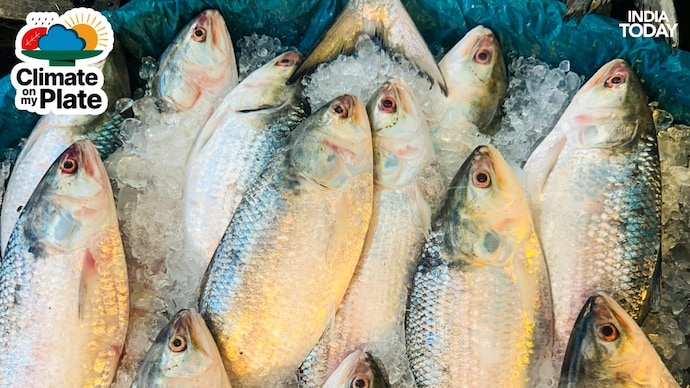
In Bengal, the arrival of hilsa with the monsoon is less a food event than a cultural one, with the fish woven into poetry, ritual, and the identity of the state and its people.
Now here's the bad news. Both these fish, some of the most popular species in India, are in trouble, along with the waters they live in.
WHAT'S HAPPENING TO INDIAN FISHERIES?
India’s total marine fish production dropped to approximately 3.47 million tonnes in 2024, down from 3.53 million tonnes in 2023, a decline that the Central Marine Fisheries Research Institute (CMFRI) attributed primarily to climate-related disruptions, including multiple cyclones and rising sea surface temperatures.
Over seven million people depend on fishing for their livelihoods, and roughly 250 million live within 50 km of the coastline, making this decline not just an ecological crisis, but part of a food security emergency and a bigger, more concerning trend.
POMFRET AND HILSA AT RISK
Maharashtra’s state fish, the silver pomfret, is exemplifying what warming seas do to a culturally cherished species.
In the 1970s, annual catches ran to around 1,200 tonnes, with fish typically weighing 300–500 grams. By 2023, the annual catch had collapsed to just 40 tonnes, and the fish had shrunk from an average of 350 grams in the early 1980s to just 150 grams by the 2010s.
Warming causes fish to mature earlier, before they even reach full size, creating an irreversible biological shift that marine biologist Dr Vinay Deshmukh told UNDP has permanently altered the species.
At Mumbai’s fish counters, fish seller Nayana Patil told Reuters that pomfret prices had tripled in a fortnight during a heatwave, reaching 1,500 rupees per kg.
The issue is not confined to just Maharashtra's favourite fish.
For Bengal’s millions, hilsa is more than food, and climate change is threatening its survival, too.
Over the past two decades, the inland water yield of hilsa has declined by around 20%, as climate change and siltation have disrupted its migratory routes from the Bay of Bengal into spawning rivers.
A study has found that a 4°C temperature rise off India’s northeast coast could reduce overall fisheries productivity by 5%, with migratory species like hilsa among the most vulnerable.
WHY ARE INDIA'S SEAS WARMING SO RAPIDLY?
The Indian Ocean has been warming at 0.12°C per decade since 1950 and is projected to accelerate to 0.17°C per decade through 2100.
In 2023–24, the Arabian Sea experienced a record-breaking warming anomaly of 0.88°C, sustaining a marine heatwave through an entire year.
And by 2050, the Indian Ocean is projected to see 220–250 marine heatwave days per year.
These projected trends are immensely concerning because warmer surface water blocks the upwelling of cold, nutrient-rich deep water, starving phytoplankton, which is the base of the entire marine food chain.
Phytoplankton in the western Indian Ocean has already declined by up to 20% over six decades.
Oil sardines, which were once abundant off Kerala and Karnataka, have already migrated northward to Maharashtra and Gujarat in direct response.
To put it simply, warming of water bodies due to climate change is rewiring the entire habitat, putting numerous species at the risk of collapse and sending others to places away from their native homes.
While fish might travel to other habitats, it's not a given that they will adapt enough to survive. Apart from that, the cultural shock of the absence of entire species from regions they have lived in for generations will also be significant.
CAN INDIA'S FISHERIES COPE?
The question, therefore, is about adaptation and survival.
In November 2023, Maharashtra banned the capture of 54 species below minimum size thresholds, setting the legal catch size for silver pomfret at 135–140mm. That could be one way to offer protection to these species while also preserving their cultural relevance.
But regulation alone cannot cool an ocean as the sea is warming, and it will continue to do so until emissions are curbed. Until that doesn't happen, the fish millions of Indians rely on will continue to shrink, migrate, or simply disappear.
#ClimateOnMyPlate
In Bengal, the arrival of hilsa with the monsoon is less a food event than a cultural one, with the fish woven into poetry, ritual, and the identity of the state and its people.
Now here's the bad news. Both these fish, some of the most popular species in India, are in trouble, along with the waters they live in.
WHAT'S HAPPENING TO INDIAN FISHERIES?
India’s total marine fish production dropped to approximately 3.47 million tonnes in 2024, down from 3.53 million tonnes in 2023, a decline that the Central Marine Fisheries Research Institute (CMFRI) attributed primarily to climate-related disruptions, including multiple cyclones and rising sea surface temperatures.
Over seven million people depend on fishing for their livelihoods, and roughly 250 million live within 50 km of the coastline, making this decline not just an ecological crisis, but part of a food security emergency and a bigger, more concerning trend.
POMFRET AND HILSA AT RISK
Maharashtra’s state fish, the silver pomfret, is exemplifying what warming seas do to a culturally cherished species.
In the 1970s, annual catches ran to around 1,200 tonnes, with fish typically weighing 300–500 grams. By 2023, the annual catch had collapsed to just 40 tonnes, and the fish had shrunk from an average of 350 grams in the early 1980s to just 150 grams by the 2010s.
Warming causes fish to mature earlier, before they even reach full size, creating an irreversible biological shift that marine biologist Dr Vinay Deshmukh told UNDP has permanently altered the species.
At Mumbai’s fish counters, fish seller Nayana Patil told Reuters that pomfret prices had tripled in a fortnight during a heatwave, reaching 1,500 rupees per kg.
The issue is not confined to just Maharashtra's favourite fish.
For Bengal’s millions, hilsa is more than food, and climate change is threatening its survival, too.
Over the past two decades, the inland water yield of hilsa has declined by around 20%, as climate change and siltation have disrupted its migratory routes from the Bay of Bengal into spawning rivers.
A study has found that a 4°C temperature rise off India’s northeast coast could reduce overall fisheries productivity by 5%, with migratory species like hilsa among the most vulnerable.
WHY ARE INDIA'S SEAS WARMING SO RAPIDLY?
The Indian Ocean has been warming at 0.12°C per decade since 1950 and is projected to accelerate to 0.17°C per decade through 2100.
In 2023–24, the Arabian Sea experienced a record-breaking warming anomaly of 0.88°C, sustaining a marine heatwave through an entire year.
And by 2050, the Indian Ocean is projected to see 220–250 marine heatwave days per year.
These projected trends are immensely concerning because warmer surface water blocks the upwelling of cold, nutrient-rich deep water, starving phytoplankton, which is the base of the entire marine food chain.
Phytoplankton in the western Indian Ocean has already declined by up to 20% over six decades.
Oil sardines, which were once abundant off Kerala and Karnataka, have already migrated northward to Maharashtra and Gujarat in direct response.
To put it simply, warming of water bodies due to climate change is rewiring the entire habitat, putting numerous species at the risk of collapse and sending others to places away from their native homes.
While fish might travel to other habitats, it's not a given that they will adapt enough to survive. Apart from that, the cultural shock of the absence of entire species from regions they have lived in for generations will also be significant.
CAN INDIA'S FISHERIES COPE?
The question, therefore, is about adaptation and survival.
In November 2023, Maharashtra banned the capture of 54 species below minimum size thresholds, setting the legal catch size for silver pomfret at 135–140mm. That could be one way to offer protection to these species while also preserving their cultural relevance.
But regulation alone cannot cool an ocean as the sea is warming, and it will continue to do so until emissions are curbed. Until that doesn't happen, the fish millions of Indians rely on will continue to shrink, migrate, or simply disappear.
#ClimateOnMyPlate

