
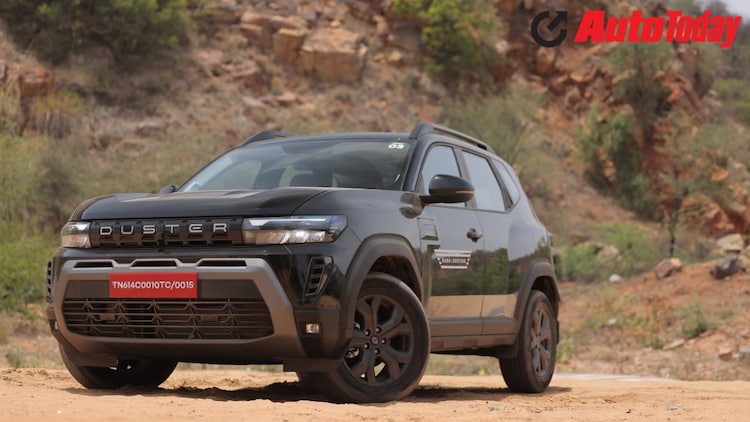
Renault Duster TCe100 review, first review: 1-litre turbo-petrol punches above its weight
The Renault Duster is available with a 1.3-litre turbo-petrol engine, while a strong hybrid will arrive later this year and the Duster is also available with a 1-litre turbo engine. But is the 1-litre turbo-petrol Duster worthy of your consideration? Let's find out.
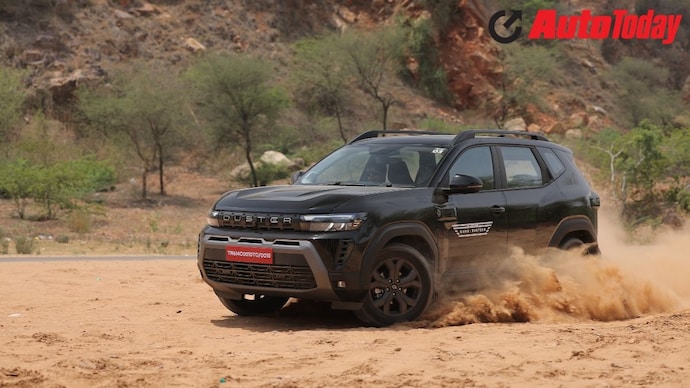
Renault Duster TCe100 review

UPDATED: Jun 9, 2026 16:01 IST
Renault is on a charge to revive its former glory, and kickstarted the year with the launch of the Duster that we drove in the mountains, and were very impressed, but that was the 160bhp fully-loaded spec. To really take on the segment leaders, the Duster needs a varying range of powertrains, as the Hyundai Creta, Kia Seltos, Maruti Suzuki Grand Vitara and Victoris do, and while the French automaker will be bringing a 1.8-litre strong hybrid later this year, the entry-level powertrain for the Duster is a familiar motor – the 1.0-litre turbo-petrol. And now the sales of this base motor have begun, and we got behind the wheel to get a taste of what may become the volume driver for Duster sales.
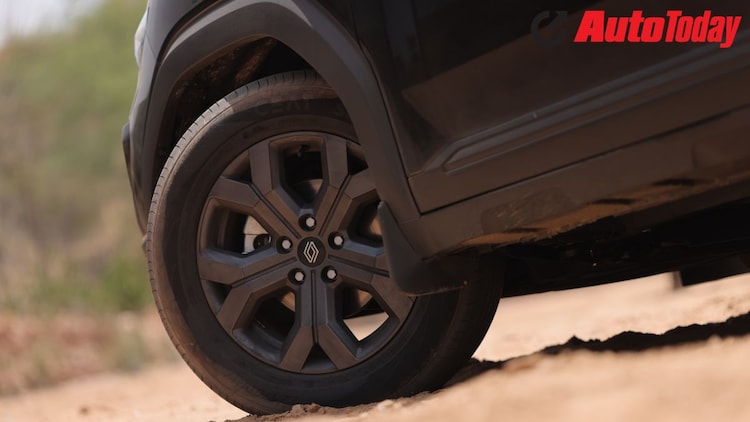
Starting with the exterior, and this is key – the Duster looks almost indistinguishable from the top-spec Iconic trim, despite being offered till the mid-spec Techno trim. The only key difference is the alloys, that are 17-inchers instead of 18s on the higher trims, and feature a different design, and they fill up the arches well and look neat too.
Otherwise the Duster continues as is, with the same butch aesthetic that is drawing the attention of the people, the front houses the Duster lettering, the chunky bumper, the sides feature chunky cladding, functional roof rails and pronounced haunches. The only thing that could’ve been executed better are the integrated door handles for the rear doors, and the full-width taillamp at the rear. The rear itself isn’t the best angle of the Duster, and makes it appear smaller than it is. For a smaller motor, and mid-spec trim, Renault has ensured that the customers don’t miss out on the appeal at all.
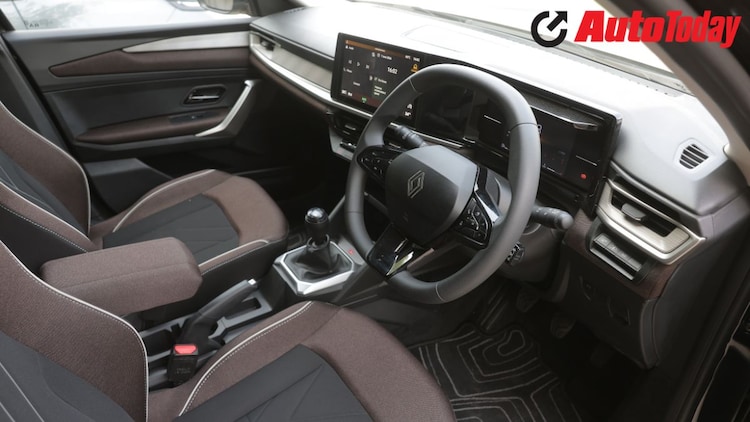
Inside, the layout is the same, but it gets different colours and fabrics compared to the top-spec Iconic. This is covered in a brown-themed fabric, unlike the green leatherette, but it doesn’t feel much different, especially that the dash is the same, it gets the fabric treatment, so do the doors, and the seats are brown and black, but have the same shape.
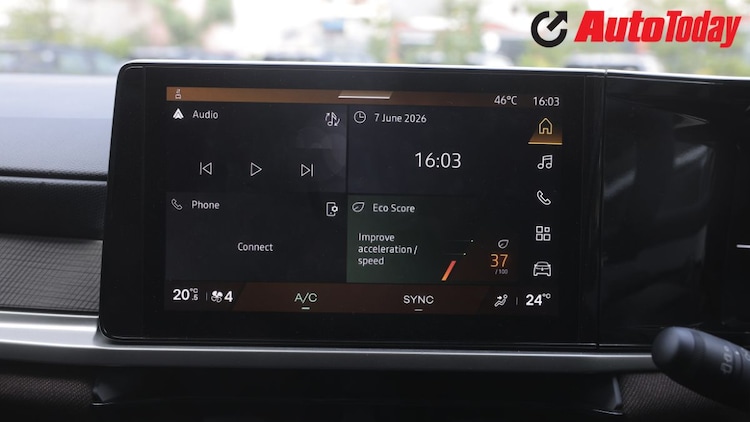
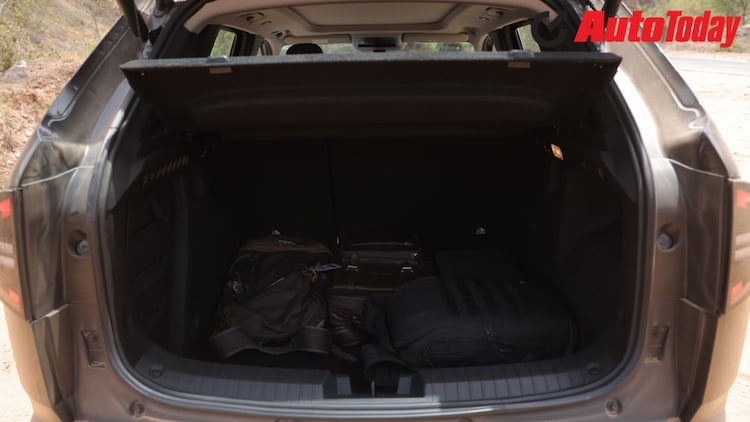
The 10.1-inch infotainment display is the same, and gets wireless Android Auto and Apple CarPlay, but doesn’t get Google built-in, but one doesn’t miss it. It even gets the dual-zone climate control, with physical switches, very nice to use, and a Qi2 enabled wireless charger. Most importantly, the space is the same, and while it is not segment-best, it feels like a butch SUV from the inside too, and to add to that, it also gets the dual-pane panoramic sunroof, and a powered tailgate. Interestingly, the Duster Techno 1.0 MT is the most-affordable car in India with a powered tailgate.
Renault has kept things simple with the features, instead of offering more than two levels of kit, they’ve kept it mostly to two. Except the base trim, every Duster gets the 10.1-inch infotainment, automatic climate control is standard and dual-zone system.
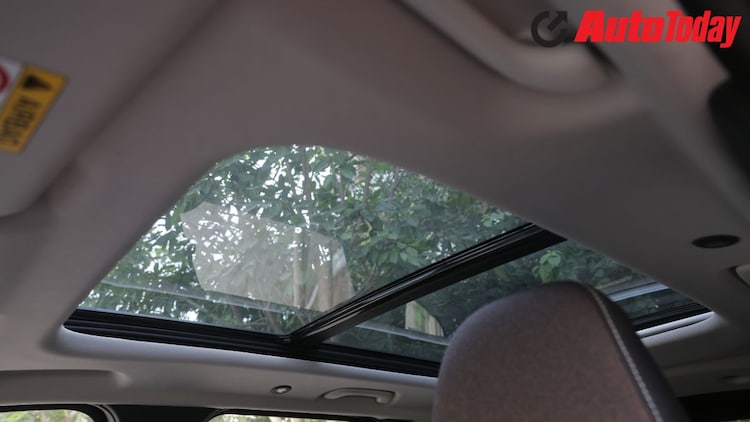
The sunroof is only available as a dual-pane panoramic one, that means that when the Techno trim was specced, it got the same exact kit that the top-spec Duster Iconic does, hence it feels like a no compromise when it comes to certain features.
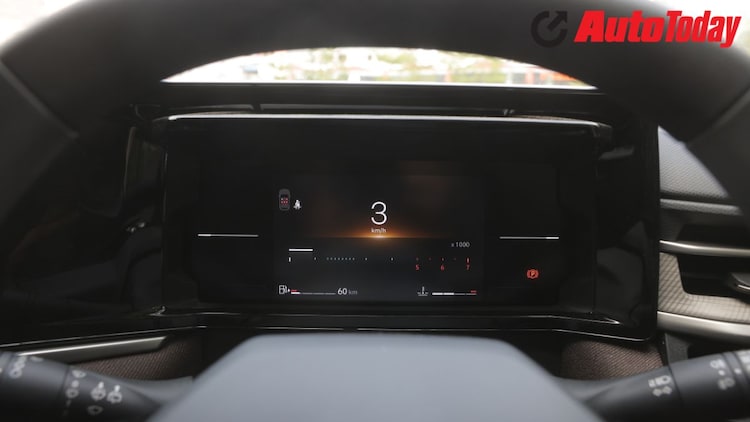
But it isn’t without its rough edges, the 7-inch driver’s display for example, doesn’t look great, and the fact that like the larger display on the Iconic, this doesn’t have any dials, only an abstractish rev counter and digital speed, it is not great on the go, and could’ve been executed better. The reversing camera, no 360-degree here, is shabby, the feed is pixelated, and poor enough that one can’t spot vehicles approaching from some distance, but at least it gets guidelines. That being said, for the price, this is specced really well, if only it had ventilated seats, and a better reversing camera system, it would be faultless.
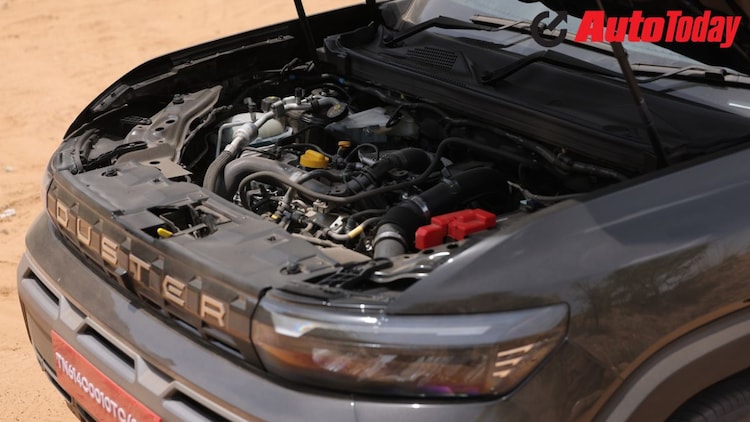
Now on paper, Renault’s decision to put the 1.0-litre three-cylinder turbo in the Duster doesn’t seem like a wise decision. It doesn’t really have the numbers to back it up, 100bhp and 166Nm of torque, that means it has the least amount of power in the segment, the 1.5-litre naturally aspirated motor on the Creta and Seltos makes 115bhp, while the Tata Sierra has 106bhp and the Maruti Suzuki Victoris/Grand Vitara has 103bhp. Compared to the VW Taigun and Skoda Kushaq too, which feature the 1.0 TSI, a three-pot turbo engine, making 115bhp, Renault’s motor falls short. But it makes up for this by having higher torque, with only the VW/Skoda duo offering more at 178Nm. And from behind the wheel, it all starts making sense.
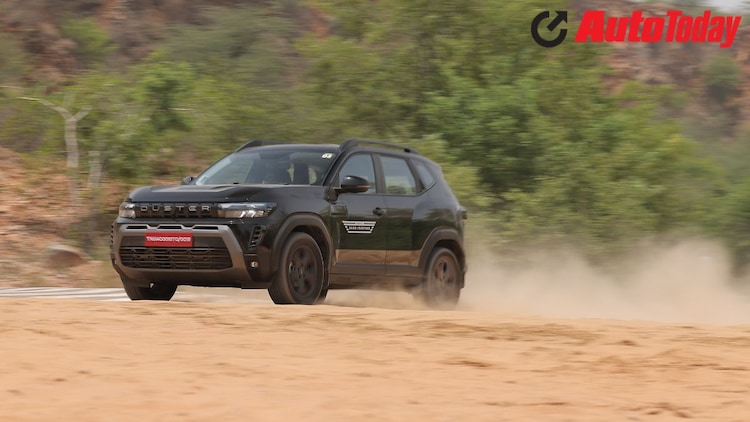
Offered solely with a 6-speed manual, the first time this configuration has been offered by Renault as it comes with a 5-speed manual or a CVT in the Kiger, the setup is surprisingly good. The engine has good low end torque, available from 2,000rpm, means that it doesn’t struggle to get going in traffic conditions, even in second gear. For city driving, the engine is very capable, it allows for quick overtakes, mid-range is strong, and power comes on in a linear manner.
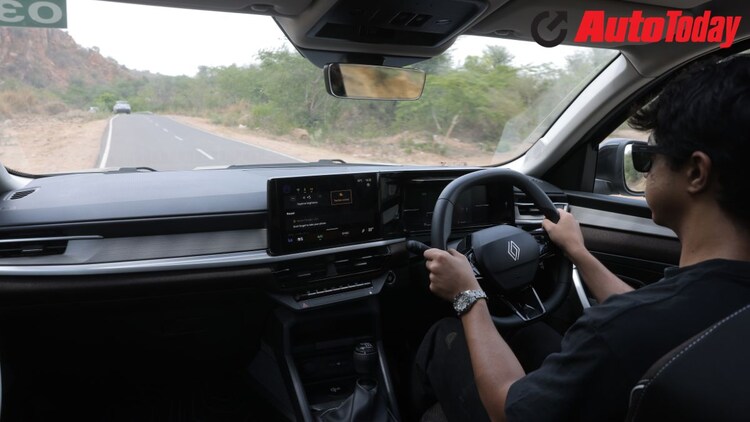
And once at higher speeds, the 6th gear allows it to settle into a nice rhythm, ensuring it doesn’t drink petrol. Drive it enthusiastically and the Duster 1.0-litre is not disappointing at all, the linear pull rewards with a steady gain of speed all the way to 5,000rpm, and reaching triple digits is very simple. The gearbox is great too, short throws, well defined gates, one can really make quick shifts and it feels that its been designed for those who like to drive and this is coupled with a light clutch, though the bite point is a bit vague but not a problem per se. All this is result of clever gear-ratios and minor changes to the engine’s power delivery that makes it very well suited for the Duster, drive it normally it is good, drive it hard, it doesn’t fall short, and only those who have driven the 160bhp 1.3-litre turbo powered Duster may feel that this engine could do bit just a bit more oomph.
For those concerned about the refinement of the three-cylinder, well it is pretty good. Of course open the engine bay, and it is loud, but from inside the cabin, it is nearly quiet, the engine mountings are good, so the vibrations and the noise levels are very well controlled. Even pushing the car doesn’t mean that too much noise enters the cabin, so for those who may be on the fence about the refinement levels considering the three-pot nature, can rest assured that it is a major improvement compared to what one gets in the Kiger.
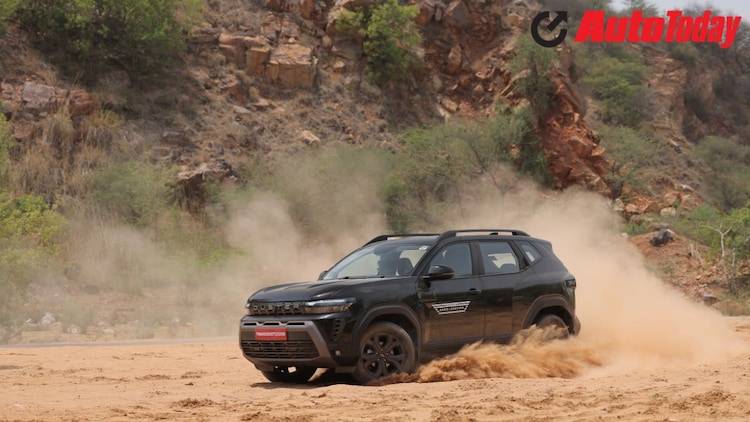
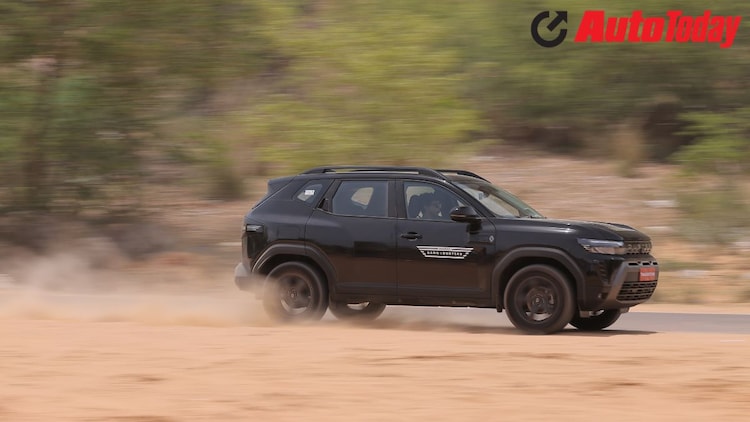
While the powertrain is suited for most people, it is the ride and handling of the Duster that is the most impressive aspect. Like the 160bhp Duster, this handles brilliantly, it can attack corners, hold the quick line without alarming body roll, and is genuinely fun to push around twisties and has a feeling of lightness. This is also due to the great steering, it is sharp, allows one to turn in quick and make corrections, and weighs up nicely at highway speeds, giving the driver a lot of confidence. The suspension is great too, it is slightly stiff, but that is rewarding for those who love to corner, or drive in India, because the Duster eats bad roads, potholes and speed breakers. While it may not be as good at handling bad roads as some Indian SUVs, it is definitely the best in its segment, true Duster DNA.
Verdict
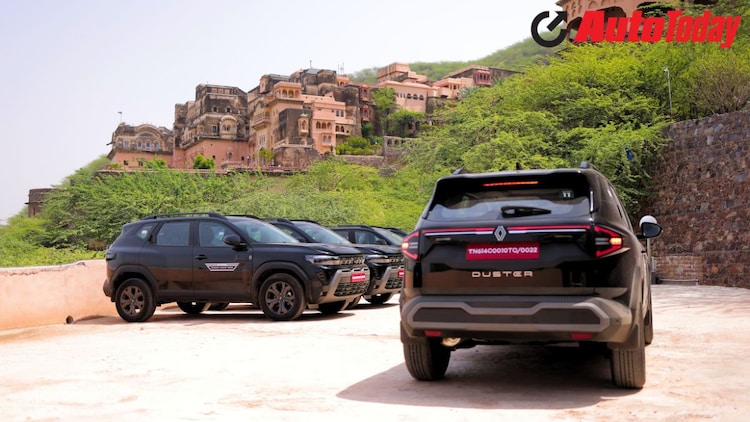
For Rs 13.50 lakh (ex-showroom), the Renault Duster Techno 100 feels like a steal. It is very well-equipped, doesn’t lack any of the looks or the aesthetics at all. Despite being a mid-spec trim, this car feels genuinely good, with every single important feature loaded, with the benefit of a powered tailgate, panoramic sunroof and dual-zone climate control, that are sure to make the case for this car. The 100bhp engine behaves sufficiently for most use cases, and even pushing it at highway speeds feels good, and the only thing Renault could do here is offer an automatic variant to really eat into the sales of its competitors. And then there is best part about the new Duster, its ride and handling – very sporty, confident and made for the worst of Indian roads.
Subscribe to Auto Today Magazine
- Ends