
Synthetic highs: India sees rise in seizures of psychotropic drugs
Indian agencies seized more than 7000 kg of psychotropic drugs, and nearly 1.1 lakh cases were recorded in 2024


On May 16, the Narcotics Control Bureau seized Captagon tablets, often called the “jihadi drug” or “poor man’s cocaine”, worth Rs 182 crore from Gujarat’s Mundra Port and Delhi under “Operation Ragepill”.
The stimulant, widely linked to conflict zones in Syria and West Asia, is known for keeping users awake for long periods, suppressing fear, and boosting aggression.
National Crime Record Bureau data shows agencies are increasingly dealing with chemically manufactured stimulants such as methamphetamine, MDMA, and other psychotropic substances alongside conventional opium and cannabis-based narcotic drugs.
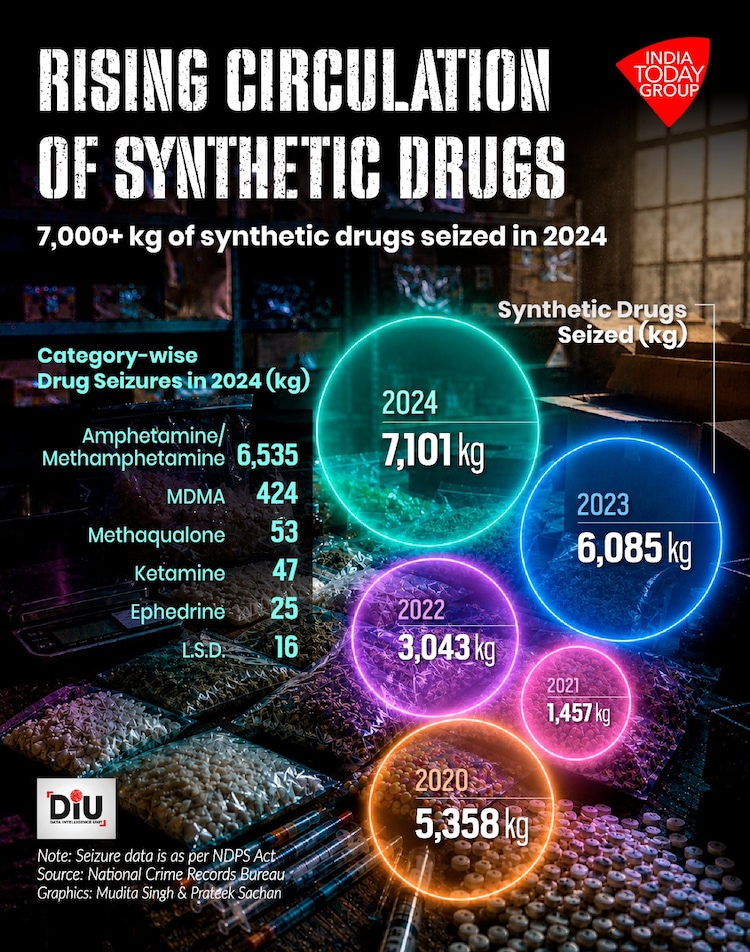
The rise has been sharp in synthetic narcotics and other psychotropic substances — chemicals that affect the brain and alter a person’s mood, behaviour, perception, thinking, or consciousness by acting on the central nervous system. Psychotropic drugs are used medically to treat mental health conditions, but can also be abused for their effects and can lead to addiction and other health complications.
Seizures of psychotropic substances more than doubled from 1,457 kg in 2021 to 3,043 kg in 2022, before climbing to more than 7,000 kg in 2024!
Among the psychotropic substances seized in 2024, amphetamine and methamphetamine accounted for the largest share at 6,535 kg, followed by MDMA at 424 kg. Agencies also seized other drugs such as methaqualone (53 kg), ketamine (47 kg), ephedrine (25 kg), and LSD (16 kg).
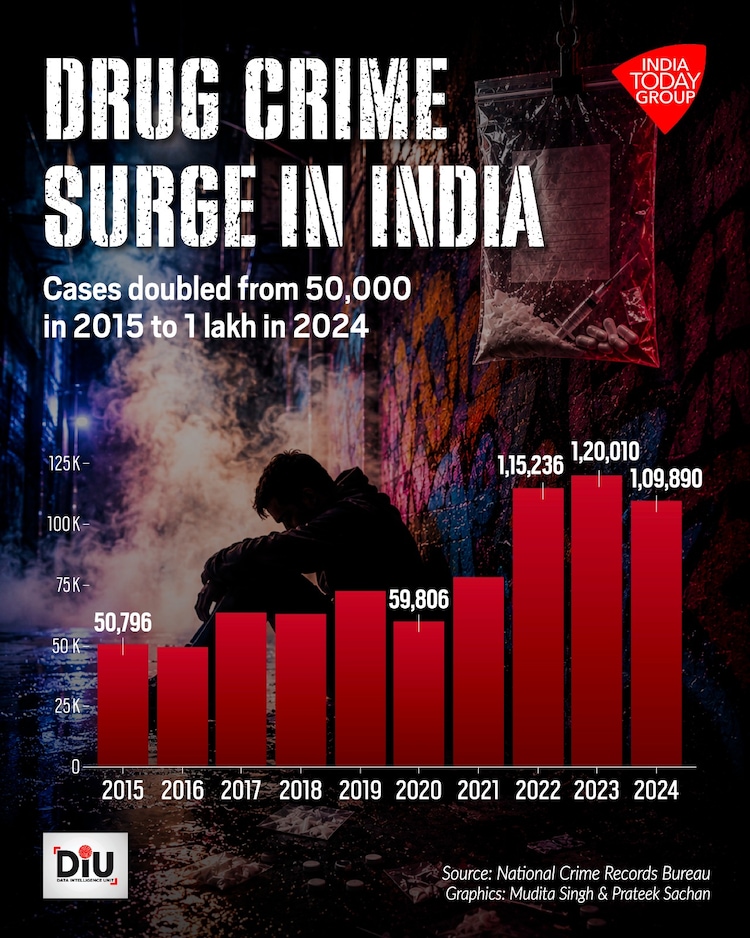
The narcotics problem has also risen sharply over the past decade. Drug-related cases in India rose from around 50,000 in 2015 to more than 72,000 by 2019. After a brief decline in 2020 during the Covid-19 pandemic, cases surged again, crossing 1.15 lakh in 2022 and 1.2 lakh in 2023. Even in 2024, the number remained above one lakh.