
Did fear and force projection influence Bengal election results?
Bengal's 2026 election unfolded under an unprecedented central security deployment after years of poll violence. The heavy presence of forces reshaped voter confidence and became a key factor in the BJP's historic victory.
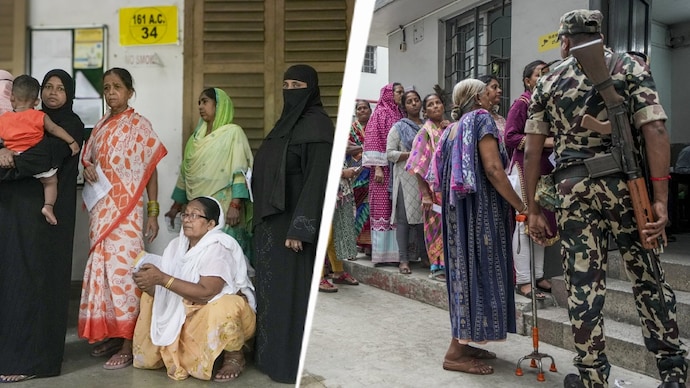

"They destroyed my house... they even thrashed my innocent puppies to death," a trembling Abhijit Sarkar said in a Facebook live video on May 2, 2021 - the day election results were declared, giving the TMC a brute majority. Minutes later, the BJP worker, who ran an NGO for stray dogs, was brutally dragged by the neck with a cable wire by 30-35 people and killed by smashing his head with a heavy object. But 2026 felt different. This time, Bengal witnessed a 'bandobast' like never before, with 2.4 lakh central troops spread across every nook and corner of the state. It is believed that this massive show of force altered Bengal's political game, handing the BJP a thumping victory.
Bengal's tryst with poll violence is nothing new. It was entrenched during the 34-year rule of the Left. It was taken over by the Trinamool as Left workers shifted to the party - some out of fear, some for relevance. This time, the Election Commission (ECI) took out the 'fear factor' of the polls. Security camps, route marches and tighter monitoring changed the atmosphere on the ground. Micro-level transfers of OCs and inspectors-in-charge of police stations were also carried out.
HOW FEAR FACTOR SHAPED BENGAL POLLS?
The ECI's reaction was constant - to ensure "fear-free and violence-free elections". The result - not a single bomb was hurled, nor was life lost during the voting process. The overall turnout in the two phases (down from eight in 2021) was a staggering 92.9% despite the scorching April heat and humidity.
A point to be noted here is that the reduction of the electorate by 12% due to the SIR effectively compressed the electoral base. Hence, it made the turnout number appear more robust.
Nevertheless, the enthusiastic voter participation was seen by the BJP and the TMC in different ways. While the BJP claimed that it was a result of voters exercising their franchise free from fear and intimidation due to the presence of central forces, the TMC called it an "united effort" to "defend" Bengal.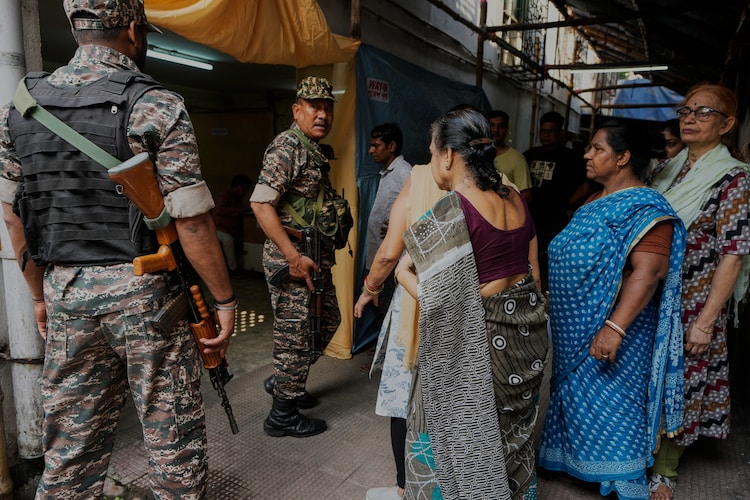
'BHOY' REPLACES 'BHAROSA'
In fact, "fear" was the central theme of the BJP's election campaign. Prime Minister Narendra Modi, who criss-crossed the state addressing over 20 rallies, positioned the election as a battle to replace "bhoy" (fear) with "bharosa" (trust).
"No matter how much TMC goons intimidate you on polling day, you must have trust in the law. Fear will be driven out of Bengal in this election," PM Modi said at a rally.
Home Minister Amit Shah was more vitriolic. In his rallies, Shah struck a sharper tone and spoke the language that he was sure would reverberate in the TMC.
"I advise TMC goons to stay in their homes... else we will pick them up one by one on May 4 and throw them in jail," Shah said in a rally on April 13.
Conscious of the history of post-poll violence in Bengal, the Home Minister also said that around 70,000 CAPF personnel would remain deployed in Bengal until "further orders" even after the end of elections.
"Do not worry about Didi's goons. The Election Commission has deployed CAPF at every nook and corner. I am telling you today - even though the BJP will come to power after the elections, central forces will remain here for 60 more days," Shah said.
The CAPF, which comprises the CRPF, BSF, CISF, ITBP and SSB, report to the Home Ministry. The message was unmistakable - muscle was being matched with muscle. A show of strength to counter a culture of intimidation. The Bengal polls were much more of a psychological battle than a political one.
Visuals of Uttar Pradesh's 'encounter specialist' Ajay Pal Sharma, deployed as special observer, warning the henchmen of TMC candidate Jehangir Khan against intimidating voters in Falta, grabbed attention ahead of the second phase of voting.
"We will deal properly with him (Khan) if his men continue to threaten... don't cry or regret it later," Sharma, known as UP's 'Singham' for his crackdown on criminals, is heard saying in the video.
The incident hit the headlines also because Khan is not just any other TMC leader, but a close aide of Mamata Banerjee's nephew and the party's No. 2 Abhishek Banerjee. Falta falls under Abhishek's Diamond Harbour constituency, a TMC stronghold.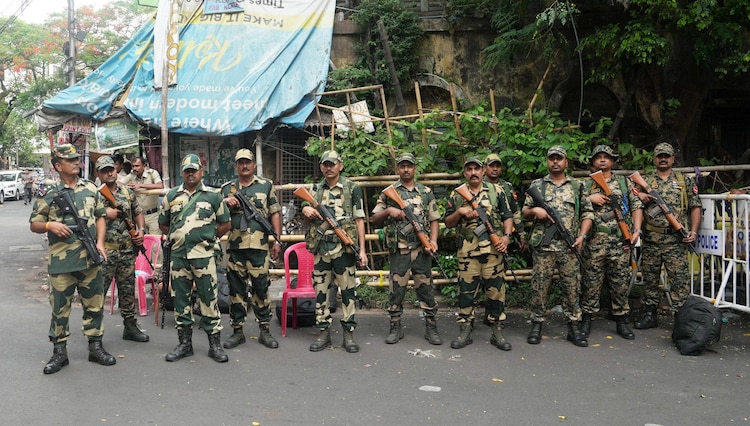
NO HALF CHANCES
The BJP knew this time there was a large section of undecided voters. Thus, there was a need to inculcate a sense of confidence among them to step out and vote freely.
Weeks before the first phase of polling, more than 2.4 lakh CAPF personnel were stationed - nearly three times the strength used in the 2021 Assembly election. Just before the first phase on April 23, chiefs of all CAPF units held an unprecedented meeting in Kolkata's Science City. The images of hundreds of security personnel in a jampacked conference hall were hard to miss.
The TMC alleged that it resembled plans for a "military-style takeover" rather than a routine meeting for poll preparations.
That's not all. Security was upped within a 100–metre radius of all polling stations. Drones were used for surveillance, and armoured bulletproof vehicles were brought from sensitive areas like Manipur and Jammu and Kashmir.
The ECI also imposed curbs on the plying of motorcycles 48 hours before polling in what was seen as a bid to prevent bike-borne gangs from intimidating voters.
Even teams from the NIA - the counter-terror body - were deployed in sensitive zones. This is despite the mandate of the NIA not being in control of law and order.
The ECI felt such extensive deployment was needed, given Bengal's long history of poll violence. Data justifies it.
As per data collated by ACLED, Bengal has seen more poll-related violence than any other state over the past six years at 35%. The 2021 polls were the bloodiest - 300 incidents of violence and 58 deaths. Abhijit Sarkar, whose horrific death is mentioned above in the story, was among the first to be killed in the post-poll violence in 2021.
In 2026, the fear factor was taken care of. Previously, opposition workers had to operate within limits. But this time, the deployment of central forces blunted the fear of post-poll reprisals. It proved to be a silent factor behind the BJP's decisive win in Mamata's Bengal fortress.