

Assam clears Uniform Civil Code Bill, 3rd state to do so after Uttarakhand, Gujarat
The Bill, however, said that it will not be applicable to any of the Scheduled Tribes residing in Assam. It proposes several punitive measures, including seven years imprisonment for bigamy or polygamy, and three months in jail for not registering a live-in relationship.
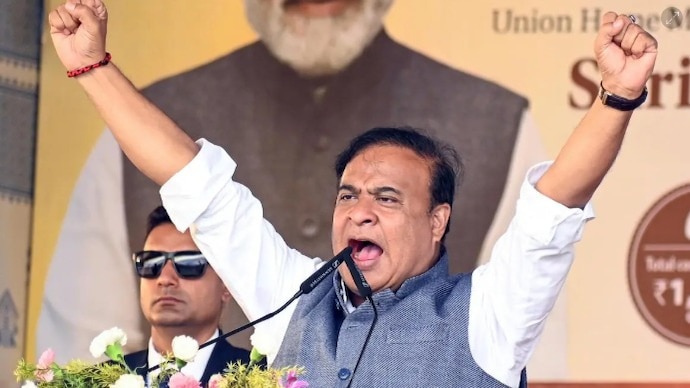


The Assam Assembly on Wednesday passed the Uniform Civil Code (UCC) Bill, becoming the third state after Uttarakhand and Gujarat to clear the legislation.
The contentious Bill, which came up for discussion on the final day of the ongoing five-day Assembly session, was passed despite the Opposition demanding that it be referred to a Select Committee for further deliberation.
Chief Minister Himanta Biswa Sarma hailed the passage of the Bill, saying the Uniform Civil Code was a key promise in the BJP’s election manifesto. “We are delighted that in the first session of the Assam Assembly, immediately after the election, we could adopt this historic Bill. Now, it will go for the assent of Rashtrapati Ji," he said.
The BJP government had tabled the Bill on Monday. The proposed law seeks to ban polygamy and make the registration of live-in relationships mandatory.
However, the Bill states that it will not apply to Scheduled Tribes residing in Assam. It also proposes several punitive measures, including imprisonment of up to seven years for bigamy or polygamy, and up to three months in jail for failing to register a live-in relationship.
Opposition parties, including the Indian National Congress, Raijor Dal and All India Trinamool Congress, opposed the Bill while demanding wider consultations with stakeholders.
'WILL CONSOLIDATE MARRIAGE, DIVORCE LAWS'
“The Bill aims to consolidate and simplify laws governing marriage, divorce, succession and live-in relationships,” Sarma said in the Statement of Objects and Reasons attached to the Bill.
The legislation fixes the minimum age of marriage at 21 years for men and 18 years for women, while prohibiting polygamy.
“Importantly, it protects Assam’s cultural diversity by allowing marriages to be performed according to existing religious and customary rites,” the Chief Minister added.
To safeguard legal rights, the Bill proposes compulsory registration of marriages and divorces, which the government said would help secure maintenance, inheritance and other legal protections for spouses.
For the first time, the Bill provides a legal framework for live-in relationships. By requiring registration, the soon-to-be law aims to safeguard the rights of partners — and any children born from such unions.
REFORMING INHERITANCE LAWS
The Chief Minister added that the UCC seeks to modernise succession laws to ensure fair and equal distribution of property.
“It introduces uniform rules for inheritance, ensuring that the transfer of assets is handled justly for all residents of the state,” he said.
Under the proposed law, intestate succession would follow a uniform, gender-equal order of preference among Class-1 heirs, including the spouse, children and parents of the deceased.
For testamentary succession, any adult of sound mind would be legally entitled to execute a written and witnessed will.
JAIL FOR BIGAMY, POLYGAMY
The Bill proposes a range of penal provisions for violations related to exploitation, fraud and unlawful practices in personal relationships.
Under the proposed law, bigamy and polygamy would attract imprisonment of up to seven years under Section 82 of the Bharatiya Nyaya Sanhita (BNS), 2023.
Child marriage and marriage without valid consent would invite imprisonment of up to two years, a fine, or both, under the Prohibition of Child Marriage Act, 2006.
Fraudulent or deceptive marriages carried out through force, coercion or concealment would be punishable with imprisonment of up to seven years along with a fine.
Marriage within prohibited relationships — unless protected under valid customs — would be punishable with imprisonment of up to six months and a fine of up to Rs 50,000.
OTHER PENALTIES
Violation of lawful divorce procedures and illegal dissolution of marriage would attract imprisonment of up to three years and a fine. Compelling a divorced person to fulfil unlawful conditions before remarriage would invite a jail term of up to three years and a penalty of Rs 1 lakh.
The Bill also proposes a penalty of Rs 10,000 for deliberate non-registration of marriages or divorces within 60 days.
Submission of forged or fabricated documents during registration would attract imprisonment of up to three months, a fine of up to Rs 25,000, or both.
Similarly, failure to register a live-in relationship within one month would invite imprisonment of up to three months or a fine of up to Rs 10,000. Concealment of material facts or furnishing false information in such declarations would attract imprisonment of up to three months and a fine of up to Rs 25,000.
3RD STATE TO PASS UCC
Uttarakhand became the first state in the country to implement the Uniform Civil Code (UCC) after the Bill, introduced by the government led by Chief Minister Pushkar Singh Dhami, was passed in the Assembly in February 2024.
The legislation sought to replace personal laws governing marriage, divorce, succession and live-in relationships. The Bill was passed despite the Opposition demanding that it be referred to a Select Committee of the House.
In March this year, Gujarat became the second state to pass a UCC Bill after a marathon seven-and-a-half-hour debate in the Assembly.
Chief Minister Bhupendra Patel said the legislation aimed to ensure equal rights for all citizens, while the Opposition termed it “anti-Muslim” and alleged that the government introduced it for electoral gains.