

Mamata's toughest test yet? Why TMC's emerging MP rebellion could reshape Bengal politics
Meetings between TMC parliamentarians and Union minister Bhupender Yadav in Delhi have intensified talk of unrest within the party. The episode has sharpened questions over loyalty, dissent and Mamata Banerjee's control of the organisation.
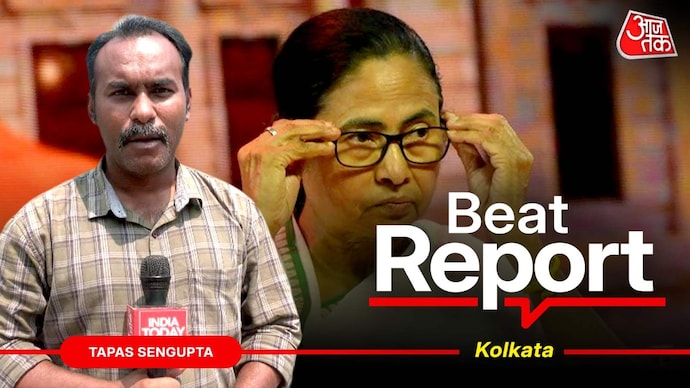


Political tension is rising in New Delhi, and West Bengal appears to be at the heart of it. What was initially described as a series of "courtesy calls" is increasingly being viewed as a sign of deeper unrest within the Trinamool Congress (TMC).
At the centre of the speculation is a quiet residence in the capital belonging to Union minister Bhupender Yadav, which has emerged as a meeting point for several TMC parliamentarians who are seen as increasingly distant from the party's central leadership.
The most prominent face among them was Sukhendu Sekhar Roy, who recently resigned from the Rajya Sabha. He was joined by several TMC lawmakers, including Jagadish Basunia, Prasun Banerjee, Sharmila Sarkar, Arup Chakraborty and Kalipada Soren, among others.
THE ANATOMY OF DISCONTENT
The developments did not emerge overnight. For months, signs of unease within the party have been visible beneath the surface.
Roy, while announcing his resignation, publicly raised concerns about issues that have long dogged the party, including allegations of corruption, crimes against women and what he described as an environment where dissent is discouraged.
The concerns expressed by Roy have added to speculation that dissatisfaction within sections of the party may be more widespread than previously acknowledged.
AN INSIDE PERSPECTIVE
Adding another layer to the unfolding story is the account of Ritabrata Bandopadhyay, who claims to have been in touch with several TMC MPs in recent days.
According to Bandopadhyay, multiple parliamentarians had contacted him over the past few days. He also claimed to have spoken with some of them as recently as the previous night while they were in Delhi.
His remarks raise an important question: Was the gathering in Delhi a spontaneous meeting among concerned lawmakers, or part of a more organised political mobilisation that had been anticipated by opposition leaders?
MORE THAN A COURTESY CALL
The timing of the meeting has elevated its political significance.
Several key figures in Bengal politics are currently in Delhi:
a) TMC supremo and former West Bengal Chief Minister Mamata Banerjee.
b) TMC national general secretary Abhishek Banerjee.
c) Chief Minister of West Bengal, Suvendu Adhikari.
d) Senior TMC leader Firhad Hakim, who reportedly met Bandopadhyay in the West Bengal Assembly earlier in the day. The meeting is said to have lasted nearly an hour while Mamata Banerjee was in New Delhi.
The simultaneous presence of these major political players in the capital has inevitably fuelled speculation about the significance of the ongoing developments.
Did Mamata Banerjee sense the growing dissatisfaction before it became public? That remains one of the key questions surrounding the unfolding episode.
THE METRICS OF ISOLATION
Political circles in Kolkata have for months been abuzz with claims of growing internal divisions within the TMC.
One claim frequently heard in opposition circles is that a substantial section of the party's MLAs has become increasingly aligned with the camp associated with Ritabrata Bandyopadhyay. However, these numbers remain difficult to independently verify.
What is easier to observe is the apparent decline in participation at some recent meetings convened by Mamata Banerjee. According to political observers, attendance at certain gatherings was noticeably lower than expected, despite invitations being sent to a wider group of MPs.
Many parliamentarians reportedly cited various reasons for their absence.
THE TELL-TALE SILENCE
Perhaps the most striking aspect of the current situation is Mamata Banerjee's relative silence.
Traditionally, her visits to Delhi have been accompanied by a flurry of media interactions, sharp political messaging and frequent engagements with journalists. This time, however, she has largely stayed away from the spotlight.
While she attended the broader INDIA bloc meeting, her public interactions with the media have been limited.
In Bengal's political culture, loyalty is often reflected through visibility and proximity to the leadership. Traditionally, when Mamata Banerjee visits Delhi, party MPs and ministers make their presence felt. This time, however, political attention appears to have shifted elsewhere, particularly towards the activities of Sukhendu Sekhar Roy and other leaders who have recently distanced themselves from the party leadership.
A MOMENT OF RECKONING?
It may still be premature to describe the current developments as a full-scale rebellion. Equally, it is becoming difficult to dismiss them as a routine series of courtesy meetings.
Whether the tensions culminate in a formal split, a negotiated settlement or a reassertion of central leadership remains uncertain. What is clear is that questions about unity, loyalty and succession within the TMC are now being discussed more openly than they have been in years.
For Mamata Banerjee, who has repeatedly navigated political crises throughout her career, the coming weeks may prove to be one of her most significant tests yet. The outcome could shape not only the future of the TMC but also the broader trajectory of West Bengal politics.