
Using AI to hire? You may not get the best possible candidate
A Stanford-led study found that AI hiring tools used by major employers produced racial disparities and repeat rejections across companies.
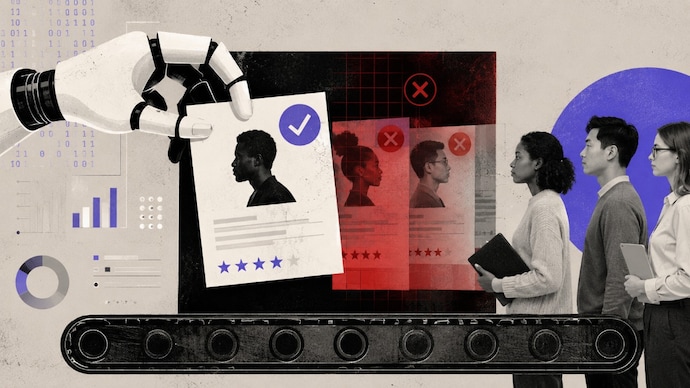

Artificial intelligence was supposed to make the hiring process smarter, faster and more objective for human resources departments. But a new Stanford-led study suggests that companies relying too heavily on AI hiring tools may actually be filtering out good candidates before a human recruiter even sees their application.
The study, titled Algorithmic Monocultures in Hiring which was conducted by researchers from Stanford University, Chapman University and Northeastern University, examined more than 4 million job applications submitted by over 3 million applicants across 156 employers and nearly 1,750 job roles. In the study, the researchers found that AI-based hiring systems can create clear racial disparities and even lead to what they described as “systemic rejection” across multiple companies.
Most of the applications in the study were screened using algorithms built by Pymetrics, a hiring platform now owned by Harver. Instead of reviewing CVs in the traditional way, the platform evaluates applicants through online games that measure traits such as reaction speed, attention span, risk tolerance, trust and social behaviour. Candidates whose patterns resemble those of existing high-performing employees are more likely to be recommended for the next stage.
The problem, according to the researchers, is that these systems may not be as neutral as companies believe. The study found that 10.62 per cent of jobs screened by the AI system showed adverse impact against Black applicants, while Asian applicants were also disproportionately affected. Nearly 26 per cent of Black applicants and almost 15 per cent of Asian applicants had applied to positions where the algorithm’s recommendations produced outcomes that federal guidelines could classify as discriminatory.
Researchers estimated that if Black and Asian applicants had been recommended at the same rate as the most-selected group, around 40,000 additional applications would have progressed to the next stage of hiring. The paper argues that these disparities become hidden when companies look only at overall hiring numbers rather than analysing results role by role.
Meanwhile, the study also raised concerns about companies increasingly relying on the same AI vendors. Researchers found that several employers were effectively using identical screening models. Since Pymetrics stores applicant scores for up to 330 days, a rejection from one employer could influence outcomes at another company using the same system. The researchers called this phenomenon an “algorithmic blackball”.
In addition, the study found that among candidates who applied to multiple jobs screened by the same AI vendor, some were repeatedly rejected across every role they applied for. In one analysis cited by the researchers, 10 per cent of applicants who submitted four applications were rejected from all of them.
The researchers are not arguing that AI should disappear from hiring altogether. Instead, they say the technology needs far greater transparency, independent audits and stronger oversight, especially as automated recruitment tools become more common across large corporations and government agencies.