
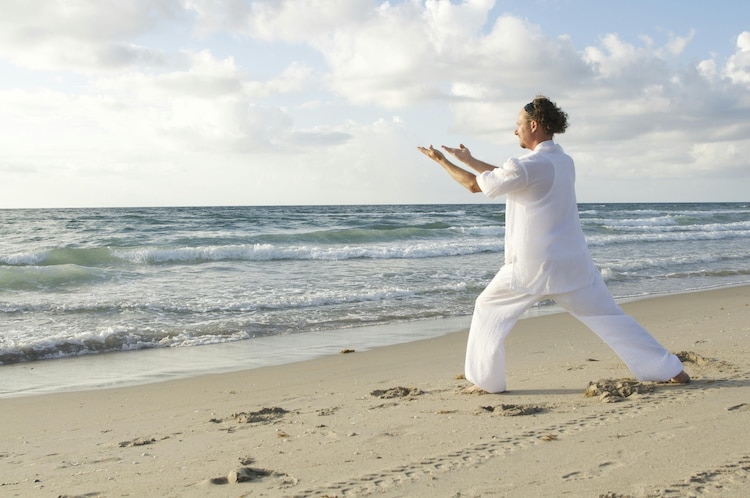
Elderly in India are suddenly obsessed with Tai Chi walking. But does it work?
What's new in the fitness world? Tai Chi walking is currently grabbing the attention of the elderly, especially. Experts weigh in on how beneficial it really is and whether the weight-loss claims hold any truth.
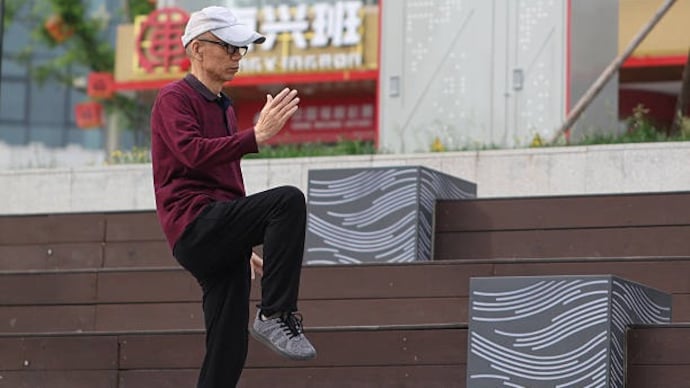
An eldelry man practising Tai Chi (Photo:Getty)

New Delhi,UPDATED: May 24, 2026 11:22 IST
One fine evening, during our regular gup-shup session, while everyone was sipping tea (coffee, in my case) and scrolling through their screens, my father asked me something unusual.
“Mujhe Tai Chi walking karni hai, zara pata karo kaun sikha sakta hai.”
(I want to learn Tai Chi walking. Find out who can teach me.)
Everyone looked up.
He went on to talk about how he had come across videos claiming it is beneficial for the elderly and can help with weight loss too.
Through further conversations here and there, I realised he was not the only one watching these videos. Several people around him, as well as my peers’ parents, had also come across “Tai Chi walking” - a fitness practice doing the rounds on social media.
Tai Chi walking, a gentle Chinese movement practice that looks deceptively simple, is becoming a wellness favourite among older adults, especially people in their 50s and 60s who want to move more without punishing their knees in the process.
But is it really that simple? And those “lose belly fat in seven minutes” claims floating around online, how much of that is actually true?
So, here’s a fact sheet.
What is Tai Chi walking?
Tai Chi walking is a slow and deliberate way of moving the body. The focus is on balance, posture, coordination, and controlled weight shifting without overloading the joints.
Sensai Sandeep Desai, a Mumbai-based Tai Chi master, makes an important clarification: “Tai Chi walking” is a part of the broader martial practice called Tai Chi. So, in itself, Tai Chi walking is more of an internet label focussing on one movement only."
He acknowledges how it has been gaining popularity lately, he is getting more queries about it too, especially because of the kind of videos we are seeing on social media.
“People are talking about it more. But Tai Chi is an internal martial art and a health exercise based on thousands of years of Chinese history and culture. What yoga is to India, Tai Chi is to China,” he tells India Today.
How do you do it?
According to Sensai Sandeep, who has over 28 years of experience, it is imperative to learn proper positioning.
"Tai Chi is based on yin and yang. You have to learn to shift your weight correctly — one leg becomes weighted (yang), and the other becomes light (yin)."
You shift your body weight onto one leg, gently move the other foot forward, place the heel down first, and then slowly transfer your weight before taking the next step. The idea is to move mindfully, without rushing or using momentum.
Without understanding how to open up your hip joints or distribute your weight, you may strain your ligaments instead of benefiting.
“Unless you stand well, you cannot move well. And if you don’t move well, you will not experience improved circulation or energy flow,” he says.
Why it works for elderly?
According to Dr Sanjib Kumar Behera, clinical director orthopaedic and joint replacement surgery, CARE Hospitals, Hyderabad, the biggest advantage is that it puts very little pressure on the joints.
For older adults, especially those dealing with knee pain, stiffness, or back discomfort, that matters a lot.
Balance is also a major reason why Tai Chi is suddenly becoming popular among the elderly. According to Dr Behera, the slow shifting of body weight from one leg to another trains the body to stabilise itself better, which may reduce the risk of falls. After all, one bad fall can change everything in older age.
“This practice also improves coordination and body awareness. Because the movements are controlled and rhythmic, they help activate muscles in the legs while also strengthening the connection between the mind and body,” Dr Hardik Patel, director of physical therapy, Fortis Hiranandani Hospital, Vashi tells India Today.
From a cardiovascular perspective, it also offers gentle aerobic movement that supports blood circulation, breathing, lung function, and overall well-being.
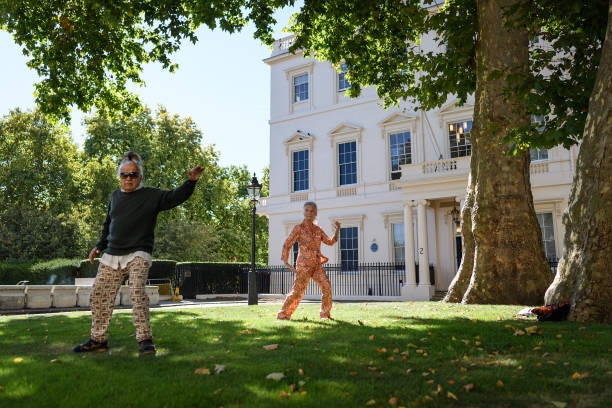
“It is especially beneficial for elderly individuals and patients with neurological conditions, as it promotes symmetrical walking patterns and enhances body and mind synchronisation,” Dr Patel emphasises.
“It may also hasten recovery from illness or injury. That is why it is widely used as an adjunct to rehabilitation programmes. Many athletes, sportspeople, yoga practitioners, and martial artists use Tai Chi to extend their peak performance years and heal injuries,” adds Sensai Sandeep.
Another reason why it works for the elderly is that it acts as a good entry point into fitness for someone who has been away from physical activity. Essentially, it is exercise without the intimidation factor.
What about weight loss?
This is where the internet may be overselling things a little.
No, seven minutes of Tai Chi alone will probably not magically melt belly fat. Experts say the practice is not a high-calorie-burning workout like running or intense cardio. So treating it as a shortcut to weight loss would be unrealistic.
But that doesn’t mean it has no role to play.
“For targeted fat loss, particularly abdominal fat, a combination of core strengthening exercises, higher-intensity workouts, and a balanced, protein-rich diet with controlled carbohydrate intake is more effective,” Dr Patel explains.
Sounds promising.
T&C apply
So yes, Tai Chi walking can help - but only if done with the right principles and guidance.
The only concern is when people try to copy movements from videos without proper guidance. Then posture or joint alignment may not be ideal, particularly for those who already have arthritis or spine problems.
“You will benefit, but only if you understand proper body alignment and structure. Tai Chi is not something you can just watch online and start doing correctly,” Sensai Sandeep says bluntly.
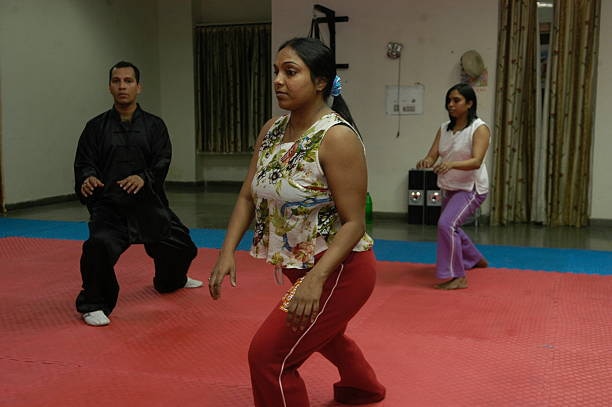
Tai Chi or Tai Chi walking is for everyone except those dealing with severe dizziness, serious heart conditions, recent injuries, or major balance issues.
Before you sign up
Well, I can now go back and tell my father that this age-old Chinese practice is, in fact, a fairly good way to ease into fitness. According to experts, even 15–30 minutes of regular practice, alongside healthier lifestyle choices, can make a difference.
At a time when Indian grandmothers are lifting weights and the elderly are even attempting Singapore’s geriatric parkour, the sudden buzz around Tai Chi walking seems to be resonating with Gen Xers and Boomers who want to ease into fitness but do not quite know how. On the surface, it looks simple, and perhaps that is exactly the appeal. But experts say there is a shortage of trained teachers here in India. For now, the Reels are arriving much faster than the real guidance.
- Ends