
Mild dust storm hits Delhi. Know the science behind it
A massive dust storm originating from the Thar Desert is expected to hit Delhi-NCR tonight, with IMD issuing a yellow alert for reduced visibility and gusty winds. Here is the science behind it and what you should do to stay safe.

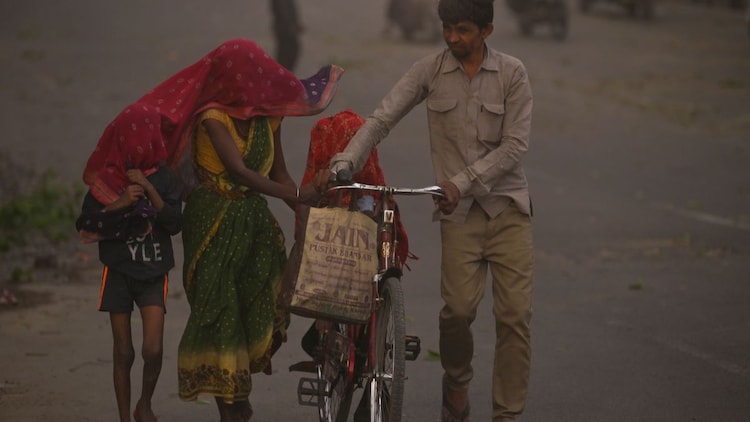
A thick brown wall of dust approaches Delhi-NCR as a powerful pre-monsoon Andhi sweeps in from Rajasthan, bearing reduced visibility and deteriorating air quality in its wake. (Photo: PTI)

A massive dust storm, known locally as an aandhi, is barrelling towards Delhi-NCR from the west.
The India Meteorological Department (IMD) has issued a yellow alert, warning residents of reduced visibility, gusty winds, and a sharp dip in air quality over the next several hours.
If the sky above you turns an eerie orange-brown this evening, do not panic. Science explains it all.
WHAT IS A DUST STORM, AND HOW DOES IT FORM?
Think of the Thar Desert in Rajasthan as a giant, Sun-baked powder keg.
Temperatures there routinely touch 44 to 45 degrees Celsius in May, baking the soil until it is bone dry. The tiniest grains of sand, silt, and dust sit loose and vulnerable on the surface.
When powerful thunderstorm clouds build up in the atmosphere, they unleash strong downward bursts of cold air called downdrafts.
These hit the scorching ground like a fist, pushing outward in every direction at speeds of up to 50 kilometres per hour.
As these winds race across the desert floor, they scoop up enormous quantities of dust and hurl it skyward, creating the towering brown wall we call a dust storm.
WHY IS DELHI IN THE PATH OF THE DUST STORM?
Northwest India sits directly in the corridor between Rajasthan and the Indo-Gangetic Plain.
Pre-monsoon westerly winds act like a conveyor belt, carrying dust from Rajasthan straight through Haryana into Delhi and beyond into Uttar Pradesh.
The dust storm is expected between 10 pm and 12 am.
WHAT DOES THIS MEAN FOR YOUR HEALTH?
Dust storms send PM10 and PM2.5 levels, the tiny airborne particles that damage your lungs, soaring within minutes.
The Air Quality Index (AQI) is expected to deteriorate significantly. People with asthma, allergies, or heart conditions should stay indoors, keep windows shut, and wear a mask if stepping out is unavoidable.
Temperatures may briefly drop by four to five degrees once the storm arrives, but the relief will be short-lived.
The system is expected to ease by midnight.
(With inputs from Ashutosh Mishra)
- Ends