
Nasa reveals Artemis-III astronauts for daring docking test ahead of Moon landing
Nasa has unveiled the four astronauts selected for Artemis III, a mission that will conduct critical docking demonstrations and collect scientific data to help pave the way for future lunar landings.
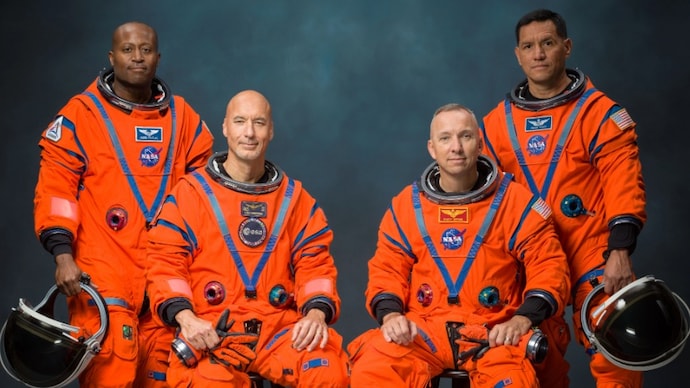

Nasa has announced the four-member crew for Artemis III, a mission aimed at testing key docking procedures and gathering crucial scientific data that will support future lunar exploration efforts.
The four astronauts that make up the Artemis-III crew include, Commander Randy Bresnik, Pilot Luca Parmitano of the European Space Agency (ESA), Mission Specialists Frank Rubio and Andre Douglas, both from Nasa.
The announcement was made during a live briefing from Nasa's headquarters, the Johnson Space Center in Houston, Texas, drawing global attention as the agency moved closer to its next crewed mission in the Artemis programme.
The selected crew brings together experienced astronauts with backgrounds in long-duration spaceflight, test piloting, and even leading missions aboard the International Space Station (ISS).
The agency said the team reflects “operational readiness and mission-specific expertise” required for deep-space missions beyond low-Earth orbit.
WHAT IS ARTEMIS-III?
Artemis-III is part of Nasa’s broader Artemis programme, which aims to return humans to the Moon and build the foundation for future missions to Mars.
It follows Artemis-I, an uncrewed test flight of the Orion spacecraft, and Artemis-II, the first crewed mission that sent four astronauts to fly around the Moon.
Artemis-I successfully demonstrated the performance of Nasa’s Space Launch System (SLS) rocket and Orion spacecraft in deep space conditions. Artemis-II, took that further, and sent four astronauts to fly around the Moon, marking the first crewed trip beyond low Earth orbit since 1972.
Following the success of the first missions in the programme, Artemis-III is expected to test other critical operational functions, focusing on crewed mission procedures beyond Earth orbit and testing integrated systems needed for sustained lunar exploration.
During the approximately 2-week-long mission, the crew of four astronauts will practise meeting and connecting with commercial lunar landers in low Earth orbit.
Artemis-III is all about Earth, and astronauts will be studying the planet during the mission. The crew's role will be a little different, as they will study Earth's atmosphere, the environment around Orion during the mission, and understand scientific procedures specifically aimed at ensuring the health and safety of astronauts for future Artemis missions.
What makes Artemis-III stand out is the significant role private companies will play in the mission.
Blue Origin is playing a key role in Nasa’s Artemis-III mission. Their Blue Moon lander prototype will launch into low Earth orbit for testing. The four-person crew aboard Orion will rendezvous and dock with it to practice important operations.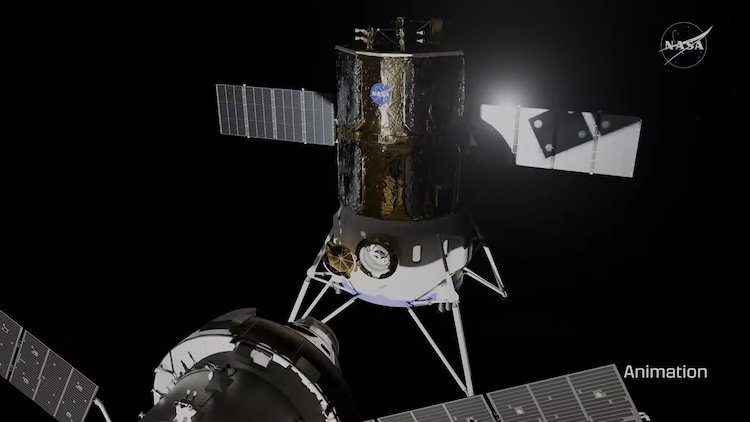
SpaceX will also take part, with its Starship human landing system joining similar docking tests.
Nasa said the best way to do this is by using real data from Artemis-III. The team will gather information that will help prepare for Artemis-IV and subsequent missions. In a way, the Artemis III crew will observe Earth to guide the next crew that will focus on observing and exploring the Moon.
WHY DOES ARTEMIS-III CREW ANNOUNCEMENT MATTER?
The announcement of the Artemis-III crew is more than just an update shared and streamed on social media. Instead, it signals that Nasa has moved from mission design into the advanced training and integration phase of its lunar programme.
Crew selection typically occurs only after spacecraft configuration, mission profiles, and safety parameters are sufficiently stable for long-duration training cycles. Meaning, the fact that Nasa has announced the Artemis-III crew also marks the transition from the mission's engineering phase to human flight readiness.
For Nasa, Artemis-III is a key milestone in re-establishing human presence beyond Earth orbit. Furthermore, for the global space community, it's a benchmark mission that will test next-generation spacecraft systems, international collaboration, and commercial partnerships supporting lunar exploration.
THE BIGGER PICTURE
Nasa’s long-term objective under Artemis is not just to land astronauts on the Moon, but to establish a sustainable lunar exploration architecture.
This includes building a base, a reusable transport system, and technologies that will eventually support sustained human missions to the Moon and then push to Mars.
Artemis-III now sits at the centre of this roadmap, linking early test flights to future lunar surface missions and shaping the next phase of human space exploration.
And if successful, it will pave the way for a 2028 launch of Artemis-IV that will land astronauts on the Moon.