Topic

Advertisement
TOPIC

CBSE

The Central Board of Secondary Education (CBSE) is one of India’s leading national education boards and functions under the Ministry of Education. It was established in 1962, with the objective of providing a uniform system of school education across the country, especially for children of central government employees who frequently moved between states.

For schools connected to it in India and beyond, it is in charge of establishing academic standards, establishing curricula, and administering tests. In order to ensure consistent learning standards across areas and to shape school education, CBSE is essential.

The Class 10 and Class 12 board exams, which are among the most significant school-level tests in the nation, are administered by CBSE. These tests, which are frequently utilised for college and university admission, are taken by millions of students each year.

The board's structured curriculum, which is mostly based on NCERT textbooks, attempts to offer a well-rounded combination of theoretical knowledge and real-world comprehension.

The CBSE has implemented changes in recent years to encourage concept-based and application-oriented education and lessen memorisation.

These days, question papers emphasise problem-solving, analytical thinking, and applying principles to real-world situations. In order to provide a comprehensive evaluation of students, internal assessments, project work, and practical exams have also become increasingly important.

Additionally, CBSE organises teacher training programs and publishes academic guidelines for schools in an effort to raise the standard of instruction. In order to stay up to date with changes in education policy, it adjusts affiliation norms, assessment patterns, and examination standards on a regular basis.

Beyond academics, CBSE places a strong emphasis on students' ethical principles, life skills, and mental health. It promotes schools to establish a conducive learning environment through a number of programs.

Overall, CBSE remains a key institution in India’s education system, influencing millions of students and shaping the future of school education in the country.

...Read More
  • ALL
  • STORIES
  • VIDEOS

STORIES

CBSE extends Class 12 answer book scan request deadline to May 25

CBSE has extended the last date to apply for scanned copies of evaluated Class 12 answer books to May 25, 2026. The board said the re-evaluation schedule will be announced separately, with the portal staying open for at least two days after the last scanned copy is released.

Do not feel anxious: CBSE responds after blurred pages, portal issues spark panic

CBSE has extended the deadline for applying for scanned answer books till May 24 after students reported portal crashes, blurred pages, payment issues and evaluation concerns. The board said all “genuine issues” will be reviewed by subject experts and assured students that nobody would be disadvantaged due to technical glitches.

CBSE Class 12 Result 2026: North-South gap widens across two key metrics

The CBSE Class 12 Result 2026 shows strong South India dominance across pass percentage and compartment data. Trivandrum, Chennai and Bengaluru lead both metrics, while Prayagraj and Patna remain lowest. The dual dataset highlights clear North vs South regional performance gaps in CBSE board exam result 2026.

CBSE revaluation fee jumps from Re 1 to Rs 69,420 in bizarre payment glitch

CBSE’s troubled reevaluation process has sparked fresh outrage after students reported bizarre fee fluctuations on the portal, with amounts allegedly changing from Re 1 to Rs 69,420 per subject. The latest glitch adds to days of complaints over crashing websites, payment failures and blurred answer sheet scans.

CBSE three-language policy in Class 9 challenged in Supreme Court, hearing next week

A PIL challenging CBSE’s newly announced three-language policy has been filed in the Supreme Court by senior advocate Mukul Rohatgi. He argued that forcing Class 9 students to suddenly study additional languages could create “chaos” for students preparing for Class 10 board examinations. The Supreme Court will hear the plea next week.

CBSE rechecking chaos: Blurry copies, payment glitches, portal crashes spark outrage

CBSE’s re-evaluation nightmare has stretched into a third straight day, with Class 12 students and parents battling crashing portals, failed payments, unreadable scanned copies and growing fears over evaluation quality. Amid JEE, NEET and CUET pressure, many say CBSE’s rechecking and post-result process has turned into a mentally exhausting mess.

CBSE's three-language policy in English-medium schools from 2026 raises questions

CBSE’s announcement on implementing the new language policy for Classes 9 and 10 a few days back has brought confusion and uncertainty. Voices are emerging from different corners of India. But how can a language policy trigger so much concern? R1, R2 and R3 may become the most discussed terms in schools in the coming months.

Load More

VIDEOS

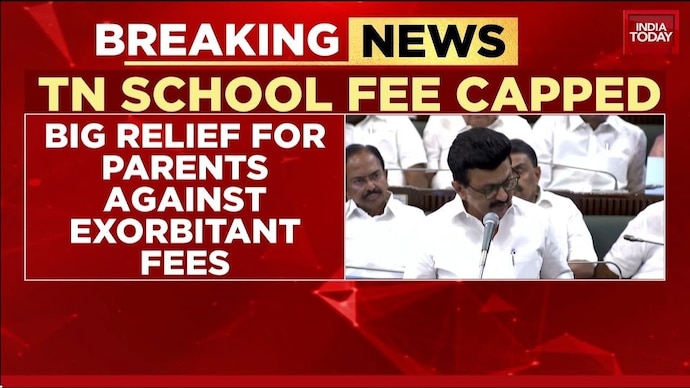
Anagha Reports: Tamil Nadu Passes Bill To Cap Private School Fees For Three Years

On this Special Report, the focus is on the Tamil Nadu government's significant move to regulate private school education costs. Reporter Anagha details the passage of the 'Tamil Nadu Schools Regulation of Collection of Fee Amendment Act 2026' in the state assembly. Anagha notes that the 'Tamil Nadu government that has imposed a cap on private school fees is coming in as a huge relief for parents'. The new legislation establishes a seven-member committee, led by a retired High Court judge, to determine mandatory fee structures valid for three academic years. Unlike the previous 2009 law, this committee includes a representative from the State Parent Teachers Association to ensure a balanced perspective. The bill aims to prevent arbitrary hikes and ensure fees remain non-exploitative. While the mandate covers most educational boards, its application to CBSE and ICSE schools remains unlikely due to sub judice status. The programme explores how this amendment seeks to protect parents from exorbitant charges across the state.

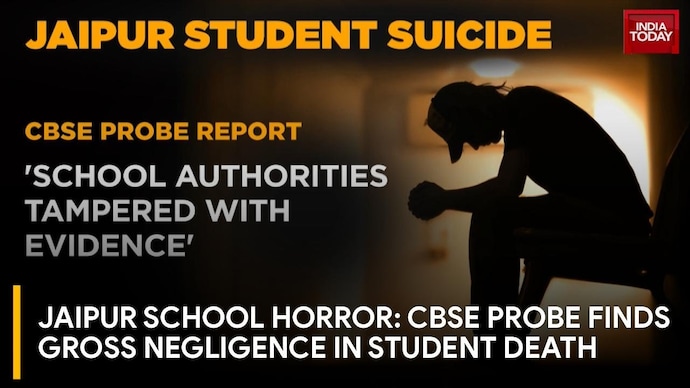
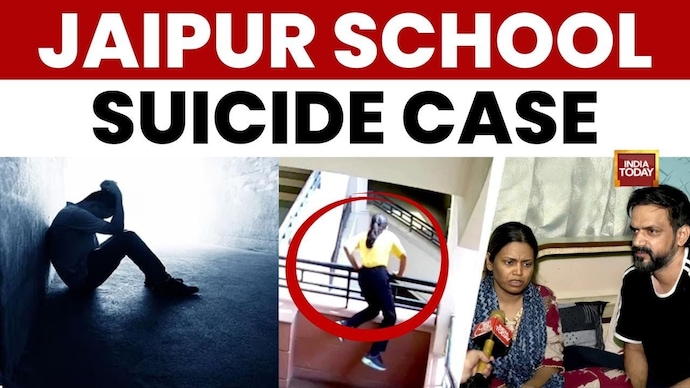
Jaipur Student Suicide: Teacher Ignored Pleas For Help, School 'Tampered' With Evidence: CBSE

A Central Board of Secondary Education (CBSE) probe finds Nirja Modi School in Jaipur ignored a Class 4 student's bullying complaints for 18 months before she died by suicide. The investigation revealed the school allegedly tampered with evidence and a teacher, Punita Sharma, dismissed the child's pleas for help. A parent of the deceased child stated, 'I request them to de-affiliate the school as 5000+ students are there already. The life is at risk.' Following the incident, an India Today reality check on other Jaipur schools, including Bharatiya Vidyabhavan Vidyashram and Oxford International Public School, revealed varying levels of safety and security measures, indicating persistent gaps in student protection across the city.

CBSE Probe: Jaipur School Ignored 18 Months of Bullying Before Student's Suicide

This special report covers the Central Board of Secondary Education (CBSE) probe into the death of a Class 4 student at Neerja Modi School in Jaipur, which found the school ignored 18 months of bullying complaints. The report also features an India Today reality check on safety measures at other prominent Jaipur schools, including Bhartiya Vidya Bhavan Vidyashram, Oxford International Public School, and Ryan International School. The student's parent states, 'I request them to de-affiliate the school as 5000+ students are there already. The life is at risk.' The CBSE probe report reveals the student, Amayra, was dismissed and scolded by her teacher, Punita Sharma, despite repeated pleas for help, and that school authorities allegedly tampered with evidence. According to the National Crime Records Bureau, students account for 7.6% of the country's total suicide deaths. The India Today reality check found varying levels of safety preparedness across different schools in the city.

Jaipur School Suicide: CBSE Probe Finds 18 Months Of Ignored Bullying, School Issued Notice

A Central Board of Secondary Education (CBSE) probe into the death of a Class 4 student at Jaipur's Neerja Modi School found the school ignored 18 months of bullying complaints. According to the latest National Crime Records Bureau (NCRB) report, student suicides account for 8.1% of the country's total suicide deaths. The girl's family member stated, 'I request them to de-affiliate the school as 5000+ students are there already. The life is at risk.' Following the incident, India Today conducted a reality check on safety measures at other Jaipur schools, including Bharatiya Vidya Bhavan Vidyashram, Oxford International Public School, and Ryan International School, revealing varying levels of preparedness. The CBSE has issued a notice to the Neerja Modi school for gross violations.

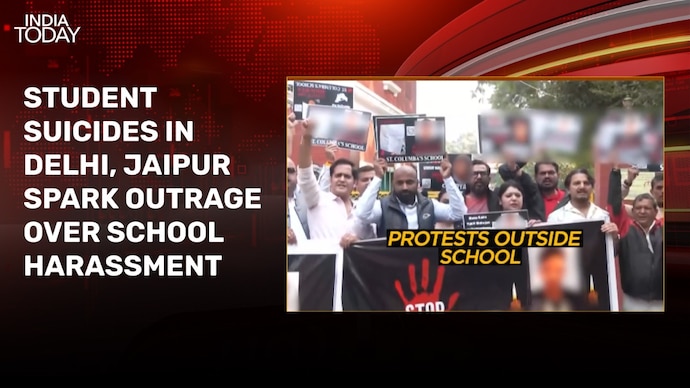
Delhi Student Suicide: Govt Forms Panel On Mental Health In Schools After Student Suicide Row

The Delhi government has responded to a student suicide by forming a high-level committee to investigate mental health programs in schools. Delhi Education Minister Ashish Sood announced that the panel will submit a report and that the government will write to all schools to ensure CBSE mental health standards are implemented, offering assistance where needed. The bulletin also covers the ongoing police investigation, protests by parents, and the contents of the student's suicide note which named several school officials. Delhi Education Minister Ashish Sood stated, 'We are concerned that our next generation remains mentally healthy and does not fall into depression.' The police have registered an FIR and are recording statements while reviewing CCTV footage related to the incidents mentioned by the student.

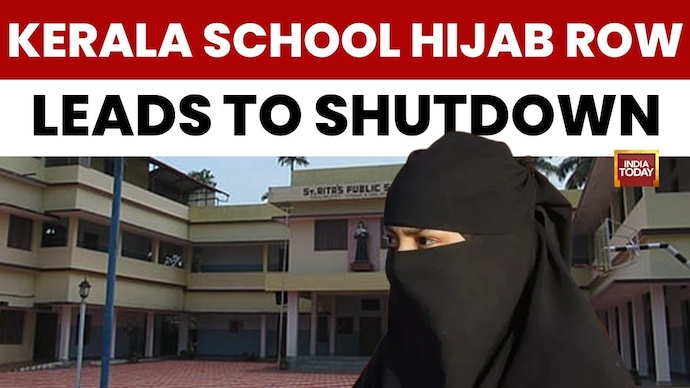
Hijab Row in Kerala: Catholic School Shuts Down, BJP Blames SDPI for Escalation

A major controversy has erupted in Kerala over a student's right to wear a hijab at a Catholic-run CBSE school, leading to its temporary closure. The key figures involved are the student, the school management, Kerala's Education Minister V. Sivankutty, the BJP, and the SDPI. Minister Sivankutty stated that 'Kerala cannot be like any other state where such an issue the dress code becomes problematic'. The school shut down for two days citing 'mental agony' among staff after the student alleged she was stopped and forced to remove her hijab. The BJP has claimed the issue was escalated by the involvement of the SDPI. The Kerala government is advocating for a balanced approach, emphasizing that while schools cannot dictate dress codes entirely, students must also respect uniform policies.

Hijab Row Explodes in Kerala: Catholic School Shut Down Amid High Tension

This special report covers the escalating tensions at St. Rita's Public School in Palluruthy, Kerala, a CBSE-affiliated institution run by the Latin Catholic Church, which shut down for two days after a dispute over a student wearing a hijab. The controversy involves the school management, led by Principal Lina, and the student's family, with BJP State Vice President Shon George adding a political dimension. In the midst of the controversy, Shon George claimed that political leaders 'involved themselves and they caused a lot of ruckus that has led to such a kind of issue over there.' The school's administration announced the holiday citing 'mental stress' among staff, while the government has called for a mature handling of the situation.