
Itamar Ben Gvir and Why the World Can No Longer Ignore Israel's Far Right
Israel National Security Minister Itamar Ben-Gvir has spent decades linked to extremist politics, racist incitement and settler violence. Yet despite international sanctions and global outrage over Gaza, he remains central to Prime Minister Benjamin Netanyahu's coalition government.
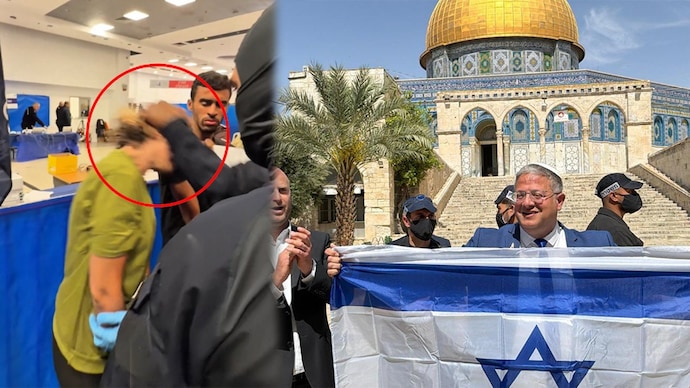

A video circulated online this week showing bound humanitarian activists kneeling on the deck of a military vessel. Israeli flags waved in the background while the Israeli national anthem played loudly. One activist shouting “Free Palestine” had her head pushed down as cameras rolled.
The footage did not come from an anonymous extremist account or an underground militia channel. It was posted by Itamar Ben-Gvir, Israel’s National Security Minister, alongside a mocking caption welcoming the activists to Israel.
The incident shocked many outside Israel. Inside the country, however, Ben Gvir’s conduct surprised few. His political rise has long rested on provocation, ultranationalism and open hostility towards Palestinians. The real question is no longer who Ben Gvir is. The world already knows that. The question is why governments that claim to defend democracy and human rights continue treating him as a normal political actor.
Roots in Extremism
Ben Gvir did not emerge suddenly after the Hamas attacks of October 7. His record stretches back decades. As a young far-right activist in the 1990s, he appeared on Israeli television holding an ornament removed from then Prime Minister Yitzhak Rabin’s vehicle. Looking into the camera, he warned that “we got to his car, and we’ll get to him too”. Weeks later, Rabin was assassinated by Jewish extremist Yigal Amir.
For years, Ben Gvir displayed a portrait of Baruch Goldstein in his living room. Goldstein killed 29 Palestinian worshippers inside Hebron’s Ibrahimi Mosque in 1994 before survivors beat him to death. While much of Israel viewed Goldstein as a terrorist, Ben Gvir openly admired him.
As a teenager, Ben Gvir joined the Kach movement founded by extremist rabbi Meir Kahane. Israel and the United States designated Kach as a terrorist organisation because of its violent anti-Arab ideology. Ben Gvir later claimed he distanced himself from some of the movement’s views, yet his rhetoric and political alliances continued reflecting the same worldview.
Convictions and Controversies
In 2007, an Israeli court convicted Ben Gvir of inciting racism and supporting a terrorist organisation. Israeli media reports over the years documented dozens of indictments and investigations linked to extremist activity and incitement. Former Shin Bet official Dvir Kariv once remarked that Ben Gvir’s security file was so extensive investigators had to replace printer ink while documenting it.
Even the Israeli military exempted him from compulsory service because authorities considered him too extreme.
Ben Gvir eventually qualified as a lawyer after initially facing resistance from the Israel Bar Association because of his criminal record. He built a career defending Jewish extremists and radical settlers accused of violence against Palestinians.
Among the most notorious cases was the 2015 Duma arson attack in the occupied West Bank. Jewish extremists firebombed the Dawabsheh family home, killing 18-month-old Ali Dawabsheh and later his parents. Israeli authorities described the attack as terrorism. Benjamin Netanyahu himself called it “Jewish terrorism”. Ben Gvir, who represented some of the accused, rejected the label and focused instead on attacking Israeli investigators for their interrogation methods.
Netanyahu’s Political Gamble
None of that prevented Netanyahu from bringing him into government.
The Israeli Prime Minister did not inherit Ben Gvir as an unavoidable coalition burden. He empowered him deliberately because he needed the parliamentary numbers to stay in power. Ben Gvir’s Otzma Yehudit party became essential to Netanyahu’s coalition arithmetic.
Before the Gaza war, Ben Gvir had already played a major role in escalating tensions in occupied East Jerusalem. In 2021, Palestinian families in the Sheikh Jarrah neighbourhood faced eviction cases backed by settler organisations seeking ownership claims over their homes.
Ben Gvir arrived in Sheikh Jarrah not as a mediator but as a political agitator. Using his parliamentary immunity as a Knesset member, he established a temporary office in the neighbourhood to demonstrate support for settlers. His presence intensified already explosive tensions during Ramadan and contributed to unrest that later spiralled into an 11-day conflict between Israel and Hamas.
October 7 and After
Then came October 7.
While Israelis mourned the Hamas attack that killed around 1,200 people and led to the kidnapping of hostages, Ben Gvir and other far-right ministers quickly pushed for harsher military measures and wider restrictions on Palestinians.
In January 2025, Ben Gvir resigned from Netanyahu’s cabinet in protest against a ceasefire agreement with Hamas. He described the deal as surrender. Two months later, he returned to government hours after Israel resumed large-scale airstrikes on Gaza. Palestinian health authorities reported that the renewed bombardment killed hundreds of Palestinians, including many children.
Ben Gvir celebrated his political return.
Calls That Alarmed Allies
In April 2025, he travelled to the United States and attended meetings with Republican figures at Mar-a-Lago. Afterwards, Ben Gvir claimed senior Republicans backed his proposal to bomb food and humanitarian aid warehouses in Gaza as a strategy to pressure Hamas over hostages. The U.S. State Department later rejected his account of the discussions.
Still, the fact that a serving minister could publicly advocate attacks on aid infrastructure revealed how far extremist rhetoric had entered mainstream Israeli politics.
Ben Gvir has repeatedly called for encouraging Palestinians to emigrate from Gaza. He has supported expanding Jewish prayer rights at the Al-Aqsa Mosque compound and previously suggested replacing the mosque with a synagogue. He once argued publicly that his freedom of movement in the occupied West Bank mattered more than Palestinian movement rights.
“My right, the right of my wife and children to move around Judea and Samaria is more important than freedom of movement for the Arabs,” he said in an interview.
That rhetoric alarmed even some of Israel’s allies. Former European Union foreign policy chief Josep Borrell accused Ben Gvir of incitement to war crimes and urged European governments to impose sanctions.
International Sanctions
Several eventually did.
In June 2025, the United Kingdom, Canada, Australia, New Zealand and Norway announced coordinated sanctions against Ben Gvir and Israeli Finance Minister Bezalel Smotrich. The measures included travel bans and financial restrictions. British officials said the sanctions responded to repeated incitement of violence against Palestinian civilians.
The sanctions reflected growing frustration even among Israel’s traditional partners. Yet the United States criticised the move, expressing concern about sanctions imposed on “democratically elected officials”.
That defence exposed a troubling contradiction in Western foreign policy. Democratic elections do not erase extremist records. Winning office does not neutralise incitement. A minister does not become immune from accountability because voters placed him in parliament.
Why Ben Gvir Still Holds Power
Ben Gvir remains powerful because Netanyahu depends on him politically. Without Ben Gvir’s support, Netanyahu risks losing his coalition majority and potentially his government. The arrangement reveals how deeply far-right politics has embedded itself inside Israel’s ruling structure.
This is no longer about fringe extremism operating outside the state. Ben Gvir represents the state. He oversees police forces. He shapes national security policy. He influences decisions affecting millions of Palestinians living under occupation or bombardment.
Meanwhile, Gaza’s humanitarian catastrophe continues worsening. International agencies and aid organisations have documented widespread destruction, severe food shortages and mass civilian casualties. Thousands of children have been killed or injured during the conflict. Many others now live without homes, schools or functioning hospitals.
Silence as Policy
Against that backdrop, Ben Gvir’s rhetoric matters. Words from powerful officials shape policy climates. They legitimise actions once considered unthinkable.
History often judges not only those who commit abuses but also those who tolerate them for political convenience. Many governments claim they support international law, human rights and civilian protection. Yet their responses remain cautious, fragmented and restrained even as extremist figures gain influence inside Israel’s cabinet.
The world cannot continue pretending Ben Gvir is an isolated radical whose views exist outside official policy. Israel elevated him. Netanyahu empowered him. Allied governments still engage with a coalition that depends on him.
That reality carries consequences far beyond Israeli politics. It shapes the lives of Palestinians living under occupation, blockade and war. It also shapes how the international community defines accountability when strategic alliances collide with human rights principles.
Silence is not neutrality anymore. Silence has become policy.