
Hormuz traffic to return to pre-war levels within 30 days after peace deal: Iran
A draft understanding under discussion between Washington and Tehran proposes that shipping through the strategic waterway would return to pre-war levels within 30 days, according to Iran's semi-official Tasnim news agency.
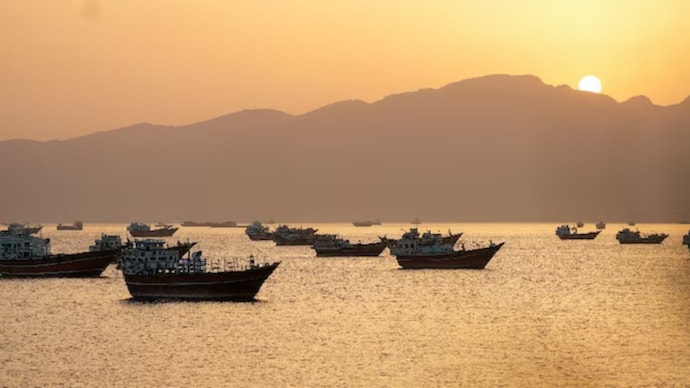

After months of war, soaring oil prices and mounting fears of a regional collapse, the United States and Iran now appear closer than ever to a deal that could reopen the Strait of Hormuz and ease one of the biggest global energy disruptions in recent years.
A draft understanding under discussion between Washington and Tehran proposes that shipping through the strategic waterway would return to pre-war levels within 30 days, according to Iran's semi-official Tasnim news agency. The report said the naval blockade around the strait would be fully lifted during that period, while part of Iran's frozen overseas funds would also be released in the first phase of the agreement.
The possible breakthrough comes nearly three months after conflict erupted between Iran, the US and Israel, which forced severe disruptions in maritime traffic through the Strait of Hormuz. Before the war began in February, around 125 to 140 ships crossed the strait daily. Since then, vessel movement has dropped sharply as Iran tightened control over the waterway and the US imposed a blockade on shipping linked to Iranian ports.
RUBIO SIGNALS SIGNIFICANT PROGRESS
US Secretary of State Marco Rubio, currently on a visit to India, hinted that negotiations may be nearing a turning point. Speaking alongside Indian External Affairs Minister S. Jaishankar, Rubio said there had been notable movement in the talks, though he stressed that no final agreement had yet been reached.
"Suffice it to say that some progress has been made - significant progress, although not final progress has been made," Rubio said.
US President Donald Trump also added to expectations surrounding a possible agreement. On Truth Social, Trump said Washington and Tehran had "largely negotiated" the framework of a peace arrangement that could reopen the Strait of Hormuz.
"Final aspects and details of the Deal are currently being discussed, and will be announced shortly," Trump wrote.
The proposed framework is reportedly being brokered with help from Pakistan. Multiple reports in both the US and Iran claims the agreement could include the lifting of restrictions on Iranian shipping, sanctions relief on oil exports and guarantees linked to regional security.
NUCLEAR ISSUE CONTINUES TO CAST SHADOW OVER TALKS
Despite the positive tone surrounding the negotiations, Iran has indicated that difficult issues remain unresolved. Tasnim reported that Tehran has not yet accepted any commitments related to curbing its nuclear activities. The report added that the draft agreement creates a 60-day period for future talks on nuclear matters, separate from the 30-day timeline related to maritime navigation in Hormuz.
Iranian President Masoud Pezeshkian attempted to reassure the international community while also maintaining a firm stance on national sovereignty.
"We are ready to reassure the world that we are not seeking nuclear weapons," Pezeshkian said. Meanwhile, he warned that Tehran's negotiating team would not compromise on core national interests.
"Our negotiating team will not compromise when it comes to our country's honour and dignity," he added.
Iran has repeatedly denied accusations that it seeks nuclear weapons, insisting that uranium enrichment is meant for civilian use. However, Western powers remain concerned because Iran has enriched uranium far beyond levels typically needed for energy production.
Reports also suggest that one proposed clause in the draft framework would require Iran to commit never to pursue nuclear weapons, while the US and its allies would agree not to launch attacks on Iran or its regional allies.
Any agreement that reopens the Strait of Hormuz would be closely watched by energy markets worldwide. Brent crude prices have surged more than 40 percent since the conflict erupted earlier this year, raising fuel and food costs across many countries.