Audi unveils third-gen Q7 with V6 diesel power and seven-seat practicality
Audi has revealed the all-new third-generation Q7, bringing a new design, advanced digital technology, seven-seat practicality and an electrified V6 diesel powertrain to its flagship luxury SUV.
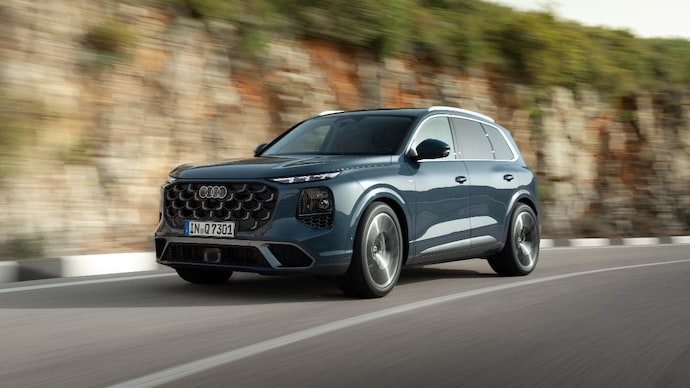
Audi has taken the wraps off the third-generation Q7, introducing a redesigned flagship SUV. The latest Q7 continues the nameplate's legacy as Audi's largest mainstream SUV, bringing a fresh design language, new digital technologies and an electrified diesel powertrain.
The new model will go on sale in the UK from July 2026, with deliveries expected to commence in September.
Exterior design
The latest Q7 adopts a more upright and imposing stance than its predecessor. At the front, Audi's signature grille sits higher than before and is flanked by advanced Digital Matrix LED headlamps featuring micro-LED technology. The SUV also gains a more sculpted profile, pronounced wheel arches and a cleaner shoulder line that extends into a redesigned rear section.
At the back, third-generation digital OLED tail lamps are connected by a full-width light strip and offer multiple configurable light signatures. Audi has also introduced a new ground-projection indicator that projects turn-signal graphics onto the road surface, improving visibility for pedestrians and cyclists at night.
Depending on specification, buyers can choose alloy wheels ranging from 20 inches to 23 inches.
Interior design
The new Q7 retains its family-friendly credentials with a standard seven-seat layout in the UK market. All rows feature electrically adjustable seating, while access to the third row has been designed to remain convenient even when child seats are installed in the second row.
Cargo capacity stands at 581 litres behind the second row and can expand to as much as 1,980 litres with the rear seats folded.
One of the standout additions is a large panoramic glass roof with switchable transparency. The roof can alternate between transparent and opaque modes across nine individual segments, allowing occupants to control light entering the cabin without requiring a conventional sunshade.
Audi has also redesigned the centre console, incorporating dual wireless smartphone charging pads compatible with the latest Qi2.2 standard, larger cupholders and additional storage spaces.
Inside, the Q7 features Audi's latest digital cockpit architecture, centred around the curved OLED-based MMI panoramic display. A dedicated passenger screen is offered as standard, while a head-up display projects key driving information directly into the driver's line of sight.
The SUV also receives an upgraded Bang and Olufsen 4D audio system with 22 speakers and up to 1,360 watts of output. Unlike conventional systems, the setup uses seat-mounted actuators that generate vibrations in sync with the music, creating a more immersive listening experience.
Audi's AI-powered voice assistant can manage vehicle functions, navigation and general information requests. If a query falls outside the vehicle's native capabilities, it can be routed through ChatGPT integration.
Mild-hybrid diesel powertrain debuts
At launch, the Q7 will be offered with a 3.0-litre V6 TDI diesel engine producing 299bhp and 630Nm of torque. The powertrain is supported by Audi's latest MHEV Plus mild-hybrid system, which can contribute an additional 24bhp and up to 370Nm of torque during acceleration.
An electrically powered compressor helps reduce turbo lag and improves throttle response by spinning up to 90,000rpm in just 250 milliseconds. Audi says the setup delivers performance characteristics closer to an electric vehicle while maintaining diesel efficiency.
Power is sent to all four wheels through an eight-speed automatic transmission and Audi's quattro all-wheel-drive system, which now features a revised limited-slip centre differential.
The engine is also compatible with HVO (Hydrotreated Vegetable Oil) fuel, which can significantly reduce lifecycle CO2 emissions compared with conventional diesel.
Air suspension, all-wheel steering and advanced driver aids
Audi has equipped the new Q7 with adaptive air suspension as standard, allowing the SUV to balance ride comfort and dynamic handling. All-wheel steering further improves manoeuvrability in urban environments while enhancing stability at higher speeds.
The SUV is packed with driver-assistance technologies, including adaptive driving assist, automated parking functions, reverse assist and a trained parking feature that can memorise frequently used parking manoeuvres.
A new emergency assist system can even guide the vehicle towards the roadside and bring it to a controlled stop if the driver becomes unresponsive.
Subscribe to Auto Today Magazine
Audi has taken the wraps off the third-generation Q7, introducing a redesigned flagship SUV. The latest Q7 continues the nameplate's legacy as Audi's largest mainstream SUV, bringing a fresh design language, new digital technologies and an electrified diesel powertrain.
The new model will go on sale in the UK from July 2026, with deliveries expected to commence in September.
Exterior design
The latest Q7 adopts a more upright and imposing stance than its predecessor. At the front, Audi's signature grille sits higher than before and is flanked by advanced Digital Matrix LED headlamps featuring micro-LED technology. The SUV also gains a more sculpted profile, pronounced wheel arches and a cleaner shoulder line that extends into a redesigned rear section.
At the back, third-generation digital OLED tail lamps are connected by a full-width light strip and offer multiple configurable light signatures. Audi has also introduced a new ground-projection indicator that projects turn-signal graphics onto the road surface, improving visibility for pedestrians and cyclists at night.
Depending on specification, buyers can choose alloy wheels ranging from 20 inches to 23 inches.
Interior design
The new Q7 retains its family-friendly credentials with a standard seven-seat layout in the UK market. All rows feature electrically adjustable seating, while access to the third row has been designed to remain convenient even when child seats are installed in the second row.
Cargo capacity stands at 581 litres behind the second row and can expand to as much as 1,980 litres with the rear seats folded.
One of the standout additions is a large panoramic glass roof with switchable transparency. The roof can alternate between transparent and opaque modes across nine individual segments, allowing occupants to control light entering the cabin without requiring a conventional sunshade.
Audi has also redesigned the centre console, incorporating dual wireless smartphone charging pads compatible with the latest Qi2.2 standard, larger cupholders and additional storage spaces.
Inside, the Q7 features Audi's latest digital cockpit architecture, centred around the curved OLED-based MMI panoramic display. A dedicated passenger screen is offered as standard, while a head-up display projects key driving information directly into the driver's line of sight.
The SUV also receives an upgraded Bang and Olufsen 4D audio system with 22 speakers and up to 1,360 watts of output. Unlike conventional systems, the setup uses seat-mounted actuators that generate vibrations in sync with the music, creating a more immersive listening experience.
Audi's AI-powered voice assistant can manage vehicle functions, navigation and general information requests. If a query falls outside the vehicle's native capabilities, it can be routed through ChatGPT integration.
Mild-hybrid diesel powertrain debuts
At launch, the Q7 will be offered with a 3.0-litre V6 TDI diesel engine producing 299bhp and 630Nm of torque. The powertrain is supported by Audi's latest MHEV Plus mild-hybrid system, which can contribute an additional 24bhp and up to 370Nm of torque during acceleration.
An electrically powered compressor helps reduce turbo lag and improves throttle response by spinning up to 90,000rpm in just 250 milliseconds. Audi says the setup delivers performance characteristics closer to an electric vehicle while maintaining diesel efficiency.
Power is sent to all four wheels through an eight-speed automatic transmission and Audi's quattro all-wheel-drive system, which now features a revised limited-slip centre differential.
The engine is also compatible with HVO (Hydrotreated Vegetable Oil) fuel, which can significantly reduce lifecycle CO2 emissions compared with conventional diesel.
Air suspension, all-wheel steering and advanced driver aids
Audi has equipped the new Q7 with adaptive air suspension as standard, allowing the SUV to balance ride comfort and dynamic handling. All-wheel steering further improves manoeuvrability in urban environments while enhancing stability at higher speeds.
The SUV is packed with driver-assistance technologies, including adaptive driving assist, automated parking functions, reverse assist and a trained parking feature that can memorise frequently used parking manoeuvres.
A new emergency assist system can even guide the vehicle towards the roadside and bring it to a controlled stop if the driver becomes unresponsive.
Subscribe to Auto Today Magazine

