Renault Bridger to get 1.2-litre turbo petrol and electric version: Key to India growth strategy
Renault is accelerating its India strategy with the upcoming Bridger, a compact SUV set to offer turbo-petrol and electric options, playing a crucial role in the brand's future growth plans.
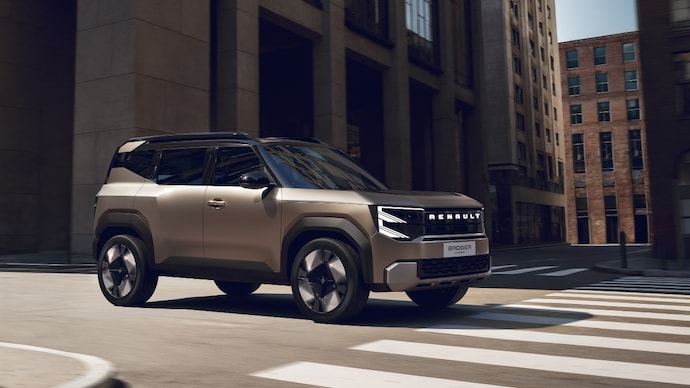
Renault is steadily building momentum around its India comeback plan, the Duster made a comeback and the upcoming Renault Bridger is shaping up to be a crucial part of that strategy. Positioned as a high-volume product in the fiercely contested sub-4-metre SUV segment, the Bridger will arrive with multiple powertrain options, including a 1.2-litre turbo-petrol engine and a fully electric derivative.
Turbo-petrol powertrain confirmed
The Renault Bridger will be powered by a 1.2-litre turbocharged petrol engine Entry-level variants could continue with a smaller 1.0-litre turbo-petrol engine.
Electric version in the pipeline
In line with Renault’s global multi-energy approach, the Bridger will also spawn a battery electric vehicle (BEV). This could potentially be Renault’s first EV offering in India. Although technical details remain under wraps, the electric Bridger is expected to feature battery options of up to around 40kWh.
Once launched, it is likely to rival electric compact SUVs such as the Tata Nexon EV, and Mahindra XUV 3XO EV, placing Renault firmly in India’s growing EV space.
New platform and positioning
The Bridger will be underpinned by Renault’s RGMP (Renault Group Modular Platform), which will also form the base for the Duster. It will be positioned between the Renault Kiger and the upcoming new-gen Renault Duster, giving Renault a stronger presence across key SUV segments.
Production is expected to begin around 2027.
Bold, lifestyle-focused design
The Bridger concept previews a rugged and adventure-oriented design direction, it adopts a more upright, squared-off stance with strong SUV proportions.
Design highlights include:
- Tailgate-mounted spare wheel, a rare feature in this segment
- Chunky body cladding and pronounced wheel arches
- Flat roofline with roof rails
- Large alloy wheels and blacked-out pillars
The front fascia follows Renault’s latest design language, featuring a bold grille, rectangular LED headlamps and a muscular bumper with skid-plate styling. At the rear, vertical tail lamps and a clean tailgate design reinforce its tough character, while the pillar-mounted rear door handles add a modern touch.
Central to Renault’s ‘futuREady’ India plan
The Bridger is more than just another product for Renault, it is a strategic cornerstone in Renault’s long-term vision for India. Under its ‘futuREady India’ plan, the company aims to expand its portfolio to seven models by 2030 and position India among its top three global markets.
The Bridger, alongside models like the new-gen Duster and an upcoming 7-seater SUV, will play a vital role in driving volumes and strengthening Renault’s foothold in one of the world’s most competitive automotive markets.
Subscribe to Auto Today Magazine
Renault is steadily building momentum around its India comeback plan, the Duster made a comeback and the upcoming Renault Bridger is shaping up to be a crucial part of that strategy. Positioned as a high-volume product in the fiercely contested sub-4-metre SUV segment, the Bridger will arrive with multiple powertrain options, including a 1.2-litre turbo-petrol engine and a fully electric derivative.
Turbo-petrol powertrain confirmed
The Renault Bridger will be powered by a 1.2-litre turbocharged petrol engine Entry-level variants could continue with a smaller 1.0-litre turbo-petrol engine.
Electric version in the pipeline
In line with Renault’s global multi-energy approach, the Bridger will also spawn a battery electric vehicle (BEV). This could potentially be Renault’s first EV offering in India. Although technical details remain under wraps, the electric Bridger is expected to feature battery options of up to around 40kWh.
Once launched, it is likely to rival electric compact SUVs such as the Tata Nexon EV, and Mahindra XUV 3XO EV, placing Renault firmly in India’s growing EV space.
New platform and positioning
The Bridger will be underpinned by Renault’s RGMP (Renault Group Modular Platform), which will also form the base for the Duster. It will be positioned between the Renault Kiger and the upcoming new-gen Renault Duster, giving Renault a stronger presence across key SUV segments.
Production is expected to begin around 2027.
Bold, lifestyle-focused design
The Bridger concept previews a rugged and adventure-oriented design direction, it adopts a more upright, squared-off stance with strong SUV proportions.
Design highlights include:
- Tailgate-mounted spare wheel, a rare feature in this segment
- Chunky body cladding and pronounced wheel arches
- Flat roofline with roof rails
- Large alloy wheels and blacked-out pillars
The front fascia follows Renault’s latest design language, featuring a bold grille, rectangular LED headlamps and a muscular bumper with skid-plate styling. At the rear, vertical tail lamps and a clean tailgate design reinforce its tough character, while the pillar-mounted rear door handles add a modern touch.
Central to Renault’s ‘futuREady’ India plan
The Bridger is more than just another product for Renault, it is a strategic cornerstone in Renault’s long-term vision for India. Under its ‘futuREady India’ plan, the company aims to expand its portfolio to seven models by 2030 and position India among its top three global markets.
The Bridger, alongside models like the new-gen Duster and an upcoming 7-seater SUV, will play a vital role in driving volumes and strengthening Renault’s foothold in one of the world’s most competitive automotive markets.
Subscribe to Auto Today Magazine

