Sales surge, service strain: India's auto boom is overwhelming serivce centres
India's auto sales boom is rewriting records, but an overstretched service network is struggling to cope, exposing cracks in aftersales support and turning ownership experience into a growing challenge for customers.
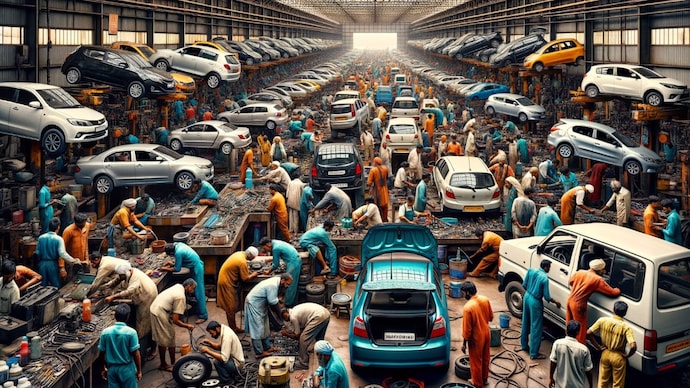
India’s automotive market is enjoying one of its strongest growth phases in recent years. Demand has surged, pushing several carmakers to record-breaking sales figures. Showrooms are bustling, waiting periods remain long for popular models, and order books continue to swell. But beneath this success story lies an increasingly visible crack, a service ecosystem that is struggling to keep up with the pace of sales.
The problem is simple, yet deeply consequential: while the number of cars being sold has grown exponentially, the expansion of service infrastructure has not kept pace. Workshops that were once adequate for a smaller customer base are now dealing with an overwhelming influx of vehicles. The result is a system stretched thin, where both customers and service personnel are feeling the pressure.
Since most working professionals can only visit service centres on Saturdays or Sundays, these days see a disproportionate surge in footfall, turning workshops into congested, chaotic spaces. This mismatch between demand and capacity has led to a growing sense of frustration among customers. Unlike the excitement associated with buying a new car, the ownership experience is increasingly being defined by inconvenience and delays. With limited alternatives, many customers are compelled to opt for pick-and-drop services. While this may seem like a solution on paper, it often comes with its own set of concerns, ranging from lack of transparency to delays in communication.
However, the issue goes beyond just wait times. One of the more worrying consequences of overloaded service centres is the apparent decline in the quality of vehicle handling. When workshops are flooded with cars and staff are under constant pressure to clear backlogs, the attention to detail that customers expect begins to slip. Instances of careless handling are becoming more common, with vehicles being moved hastily within cramped premises. Minor scrapes, bumper contacts, and rough parking are increasingly being reported, not necessarily out of negligence, but as a byproduct of an overburdened system operating at its limits.
From the perspective of service centre employees, the situation is equally challenging. Technicians and support staff are tasked with managing an ever-increasing workload, often without a corresponding increase in resources. The pressure to deliver faster turnaround times while maintaining quality standards can be immense. Over time, this strain can reflect in their interactions with customers, where patience and attentiveness may give way to fatigue and irritability. What customers perceive as indifference is often the result of an ecosystem stretched beyond its intended capacity.
Infrastructure constraints further aggravate the issue. Many service centres, particularly older ones, were not designed to handle the current volume of vehicles. Limited parking space within the premises forces workshops to accommodate cars wherever possible, often spilling over onto adjacent roads. This not only creates operational inefficiencies but also contributes to traffic congestion in already crowded urban areas. Vehicles lined up outside service centres can block lanes, disrupt traffic flow, and create friction with local communities.
The ripple effects of this imbalance are significant. A poor service experience can quickly overshadow the positives of a well-built product. In an era where customer satisfaction and brand loyalty are closely linked, neglecting the aftersales experience can have long-term consequences. Buyers today are more informed and vocal, and negative experiences, particularly those involving repeated inconvenience or perceived carelessness, can impact a brand’s reputation just as much as product quality.
What makes the situation more complex is that the surge in sales is, in many ways, a success story. Carmakers have invested heavily in product development, marketing, and distribution networks to capture a larger share of the market. However, the backend, the service network that supports these vehicles throughout their lifecycle has not received the same level of attention or investment.
Addressing this challenge will require a multipronged approach. Expanding the number of service centres is an obvious step, but it is not the only solution. Optimising existing infrastructure, introducing more efficient scheduling systems, and leveraging technology for better workflow management can also play a crucial role. For instance, staggered appointments, real-time updates, and improved customer communication can help ease some of the pressure.
Equally important is the need to invest in human resources. Training more technicians, improving working conditions, and ensuring adequate staffing levels can go a long way in restoring service quality. A well-supported workforce is more likely to deliver consistent and careful service, even under pressure.
Ultimately, the current situation serves as a reminder that the automotive journey does not end at the point of sale. In fact, for most customers, it is just the beginning. The real test of ownership lies in the years that follow, in how easy it is to maintain the vehicle, how reliable the service experience is, and how well the brand supports its customers over time.
The demand is strong, the products are competitive, and the market potential remains vast. But sustaining this momentum will require a shift in focus, from simply selling more cars to ensuring that every car sold is backed by a robust and reliable service ecosystem.
Because in the end, a successful automotive market is not just measured by the number of vehicles on the road, but by how well they are taken care of once they get there.
Subscribe to Auto Today Magazine
India’s automotive market is enjoying one of its strongest growth phases in recent years. Demand has surged, pushing several carmakers to record-breaking sales figures. Showrooms are bustling, waiting periods remain long for popular models, and order books continue to swell. But beneath this success story lies an increasingly visible crack, a service ecosystem that is struggling to keep up with the pace of sales.
The problem is simple, yet deeply consequential: while the number of cars being sold has grown exponentially, the expansion of service infrastructure has not kept pace. Workshops that were once adequate for a smaller customer base are now dealing with an overwhelming influx of vehicles. The result is a system stretched thin, where both customers and service personnel are feeling the pressure.
Since most working professionals can only visit service centres on Saturdays or Sundays, these days see a disproportionate surge in footfall, turning workshops into congested, chaotic spaces. This mismatch between demand and capacity has led to a growing sense of frustration among customers. Unlike the excitement associated with buying a new car, the ownership experience is increasingly being defined by inconvenience and delays. With limited alternatives, many customers are compelled to opt for pick-and-drop services. While this may seem like a solution on paper, it often comes with its own set of concerns, ranging from lack of transparency to delays in communication.
However, the issue goes beyond just wait times. One of the more worrying consequences of overloaded service centres is the apparent decline in the quality of vehicle handling. When workshops are flooded with cars and staff are under constant pressure to clear backlogs, the attention to detail that customers expect begins to slip. Instances of careless handling are becoming more common, with vehicles being moved hastily within cramped premises. Minor scrapes, bumper contacts, and rough parking are increasingly being reported, not necessarily out of negligence, but as a byproduct of an overburdened system operating at its limits.
From the perspective of service centre employees, the situation is equally challenging. Technicians and support staff are tasked with managing an ever-increasing workload, often without a corresponding increase in resources. The pressure to deliver faster turnaround times while maintaining quality standards can be immense. Over time, this strain can reflect in their interactions with customers, where patience and attentiveness may give way to fatigue and irritability. What customers perceive as indifference is often the result of an ecosystem stretched beyond its intended capacity.
Infrastructure constraints further aggravate the issue. Many service centres, particularly older ones, were not designed to handle the current volume of vehicles. Limited parking space within the premises forces workshops to accommodate cars wherever possible, often spilling over onto adjacent roads. This not only creates operational inefficiencies but also contributes to traffic congestion in already crowded urban areas. Vehicles lined up outside service centres can block lanes, disrupt traffic flow, and create friction with local communities.
The ripple effects of this imbalance are significant. A poor service experience can quickly overshadow the positives of a well-built product. In an era where customer satisfaction and brand loyalty are closely linked, neglecting the aftersales experience can have long-term consequences. Buyers today are more informed and vocal, and negative experiences, particularly those involving repeated inconvenience or perceived carelessness, can impact a brand’s reputation just as much as product quality.
What makes the situation more complex is that the surge in sales is, in many ways, a success story. Carmakers have invested heavily in product development, marketing, and distribution networks to capture a larger share of the market. However, the backend, the service network that supports these vehicles throughout their lifecycle has not received the same level of attention or investment.
Addressing this challenge will require a multipronged approach. Expanding the number of service centres is an obvious step, but it is not the only solution. Optimising existing infrastructure, introducing more efficient scheduling systems, and leveraging technology for better workflow management can also play a crucial role. For instance, staggered appointments, real-time updates, and improved customer communication can help ease some of the pressure.
Equally important is the need to invest in human resources. Training more technicians, improving working conditions, and ensuring adequate staffing levels can go a long way in restoring service quality. A well-supported workforce is more likely to deliver consistent and careful service, even under pressure.
Ultimately, the current situation serves as a reminder that the automotive journey does not end at the point of sale. In fact, for most customers, it is just the beginning. The real test of ownership lies in the years that follow, in how easy it is to maintain the vehicle, how reliable the service experience is, and how well the brand supports its customers over time.
The demand is strong, the products are competitive, and the market potential remains vast. But sustaining this momentum will require a shift in focus, from simply selling more cars to ensuring that every car sold is backed by a robust and reliable service ecosystem.
Because in the end, a successful automotive market is not just measured by the number of vehicles on the road, but by how well they are taken care of once they get there.
Subscribe to Auto Today Magazine

