Indira Jaising on courts, liberty and India's democratic backsliding
Indira Jaising says her new book frames the Constitution as her home and language of citizenship. She links that idea to resistance while raising concerns about democracy, liberty and judicial independence.
Indira Jaising On Constitution, Resistance And The Judiciary: ‘Affirming The Constitution Today Is Resistance’
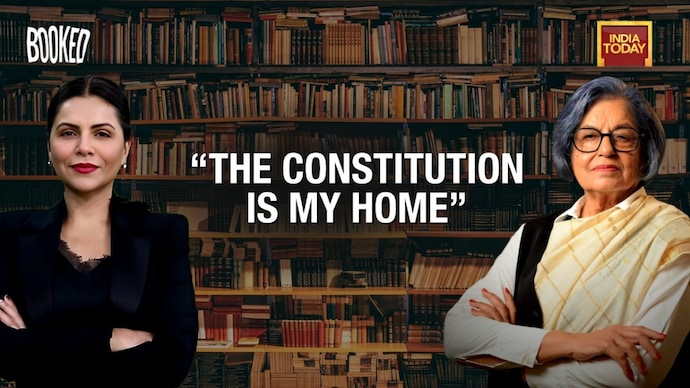
Senior advocate Indira Jaising says the title of her latest book, The Constitution Is My Home, is not merely literary — it is deeply personal and political. In a candid conversation with India Today’s Preeti Choudhary on Booked, Jaising said the Constitution represents belonging, identity and the terms on which she communicates with fellow citizens.
Calling the Constitution her “home”, Jaising linked the idea to the final line of her book — “home is resistance”. She explained that there were moments when she considered stepping away from the legal profession, exhausted by the battles inside and outside court. But she realised that resistance, for her, was not an act of rebellion against the Constitution, but an affirmation of it.
“Every time you walk into court or make an argument, you are affirming the Constitution of India,” she said, adding that in the current climate, such affirmation itself becomes resistance.
Jaising also spoke about her personal journey — from Karachi to Mumbai, Delhi and the Supreme Court — and the search for home as someone who could not identify with a linguistic state in India. She said writing the book helped her realise that the Constitution had become that place of belonging.
The interview also turned sharply to the state of Indian democracy and the judiciary. Jaising said she believes democracy in India has been backsliding, pointing to the use of criminal law and the denial of liberty as serious concerns. She argued that criminal law has increasingly been weaponised as a political tool, and criticised the judiciary for failing to recognise the larger pattern behind arrests and prolonged incarceration.
On the judiciary, Jaising said the institution remains central to her life, but questioned its independence, especially in the context of post-retirement appointments and conflicts of interest. She also expressed concern over the politicisation of the bar, saying a strong bar is essential to keeping the judiciary accountable.
Watch the video here:
The conversation moved to some of the defining gender justice battles of her career. Jaising recalled cases involving women judges, sexual harassment in legal spaces, the Sabarimala hearings and the loneliness of arguing in courtrooms she described as “reeking of misogyny”. She said the support of young women lawyers gave her renewed strength during difficult moments.
Jaising also reflected on being sexually harassed in court corridors and stressed the importance of resisting in real time. Despite professional attacks, raids and moments of deep personal pain, she said she has never stopped claiming the courts and the Constitution as her own.
Asked about retirement, Jaising said the bond between her, the courts and the Constitution would never be broken. Whether or not she appears in court every day, she said, she remains connected to that constitutional home.
Indira Jaising On Constitution, Resistance And The Judiciary: ‘Affirming The Constitution Today Is Resistance’
Senior advocate Indira Jaising says the title of her latest book, The Constitution Is My Home, is not merely literary — it is deeply personal and political. In a candid conversation with India Today’s Preeti Choudhary on Booked, Jaising said the Constitution represents belonging, identity and the terms on which she communicates with fellow citizens.
Calling the Constitution her “home”, Jaising linked the idea to the final line of her book — “home is resistance”. She explained that there were moments when she considered stepping away from the legal profession, exhausted by the battles inside and outside court. But she realised that resistance, for her, was not an act of rebellion against the Constitution, but an affirmation of it.
“Every time you walk into court or make an argument, you are affirming the Constitution of India,” she said, adding that in the current climate, such affirmation itself becomes resistance.
Jaising also spoke about her personal journey — from Karachi to Mumbai, Delhi and the Supreme Court — and the search for home as someone who could not identify with a linguistic state in India. She said writing the book helped her realise that the Constitution had become that place of belonging.
The interview also turned sharply to the state of Indian democracy and the judiciary. Jaising said she believes democracy in India has been backsliding, pointing to the use of criminal law and the denial of liberty as serious concerns. She argued that criminal law has increasingly been weaponised as a political tool, and criticised the judiciary for failing to recognise the larger pattern behind arrests and prolonged incarceration.
On the judiciary, Jaising said the institution remains central to her life, but questioned its independence, especially in the context of post-retirement appointments and conflicts of interest. She also expressed concern over the politicisation of the bar, saying a strong bar is essential to keeping the judiciary accountable.
Watch the video here:
The conversation moved to some of the defining gender justice battles of her career. Jaising recalled cases involving women judges, sexual harassment in legal spaces, the Sabarimala hearings and the loneliness of arguing in courtrooms she described as “reeking of misogyny”. She said the support of young women lawyers gave her renewed strength during difficult moments.
Jaising also reflected on being sexually harassed in court corridors and stressed the importance of resisting in real time. Despite professional attacks, raids and moments of deep personal pain, she said she has never stopped claiming the courts and the Constitution as her own.
Asked about retirement, Jaising said the bond between her, the courts and the Constitution would never be broken. Whether or not she appears in court every day, she said, she remains connected to that constitutional home.

