When goodbyes too become ephemeral: Ravi Shankar Etteth looks back over his shoulder
Combining fiction with autobiography in a neat autofiction meld, the tales in Ravi Shankar Etteth's The Little Book of Goodbyes give a glimpse of lives led before the inevitability of the long goodbye.
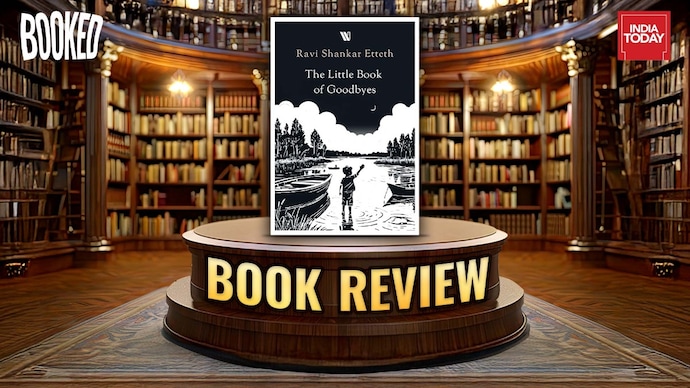
It’s like Ravi Shankar Etteth is sitting across you and telling you family stories, taking a drag of his cigar, leaning forward to emphasise some delightful detail. In this book of frankly piquant short stories, the veteran author mines his past and that of his family and friends in a warm, approachable manner. Combining fiction with autobiography in a neat autofiction meld, the tales give us a glimpse of lives led before the inevitability of the long goodbye. A strong sense of an ending permeates all the stories, though in no way, rendering them maudlin or sentimental.
Many of the stories are set in Kerala, where Etteth hails from, a few from other places that the author has stayed in or visited, from Delhi to Dresden and such like, each place a repository of a memory.
Past lives
In Kerala, we are transported to the past where the author’s grandfather was commanding a battalion of the Malabar Special Police during the Moplah insurrection, a time when Muslim farmers revolted against the British rulers. There is a whole cast of characters that one encounters in this section and all of them seem to have something to do with the author’s grandparents. A woman is grievously wronged and then given an official farewell complete with soldiers and guns as an act of atonement. The grandfather’s assistant, Ramaswamy, who seems equally skilled in matters of medicine and astronomy, finds his past catching up with him. Then there is a colourful character called ‘Nonayan Master’, nonayan meaning liar in Malayalam; the liar eventually becomes an MLA and is redeemed by his life as a Comrade. An ancestor called Puka Vella makes one of the stories quite fascinating. Dogs make an appearance, all called Fang but spanning different generations.
And yes, women play an important part in these accounts; women, mostly in the author’s family, all those with both agency and voice. There is a woman who will go see Gandhi speaking in Madras despite knowing that her husband would not approve. A `cursed` tree is saved because the woman of the family says it must be saved. Another woman discovers how the source of the family’s riches is tied to the house they live in. Poignantly, there are women who handle a terminal illness with grace and courage. Then there are other women: acquaintances and lovers. In one of the more affecting stories, we meet one such character briefly, a woman with a red rose tucked behind her ear, a woman who does what she must to keep the family afloat, a woman who stays with the reader long after the read is finished.
Matters of caste
One sees how matters of caste played out in the Kerala of yore. The pecking order was dictated by the hierarchy of caste and the rules that governed it Etteth’s family are Ezhava landowners, who treated their workers (the kudiyans or tenant farmers and adimas or slaves) better than the higher caste Namboodiris did. These workers were usually transferred like possession, if the land was sold. The kudiyan could be beaten or denied his share; the adima sold. The law imposed on the lower castes required that the women go bare-breasted. By those rules, the Ezhavas being considered of a lower caste, the author wryly states, ‘had it been the 1900’s, reciting the Gayatri mantra in Kerala would have earned me a flogging, a spell in prison, my tongue cut out and hot lead poured into my ears since it was forbidden by members of lower castes to hear Sanskrit, let alone speak it.`
A certain pensiveness is evoked where the author bids an actual goodbye to friends and relationships. A last round of cards played with an ailing school friend; the decision to not keep visiting an old lover in order to preserve the memories rather than let it get sullied by the present; and in the most moving piece in this collection, the author’s mother’s love for letters sent and received. Bits of family history at different time periods are revealed in the letters that she stored and kept safe. In the author’s decision to continue writing letters and keep them as time capsules, there is both acknowledgement and respect of his inheritance of letters.
The aftermath
With Etteth’s vast and storied experience in the creative field, there is no surprise in the fact that the book is so fluidly written.
The author writes that there is nothing like closure in the human condition because a loved one will always stay with you. But perhaps closure also comes with remembering and reflecting on love and loss. Which is one thing this book does so well.
It’s like Ravi Shankar Etteth is sitting across you and telling you family stories, taking a drag of his cigar, leaning forward to emphasise some delightful detail. In this book of frankly piquant short stories, the veteran author mines his past and that of his family and friends in a warm, approachable manner. Combining fiction with autobiography in a neat autofiction meld, the tales give us a glimpse of lives led before the inevitability of the long goodbye. A strong sense of an ending permeates all the stories, though in no way, rendering them maudlin or sentimental.
Many of the stories are set in Kerala, where Etteth hails from, a few from other places that the author has stayed in or visited, from Delhi to Dresden and such like, each place a repository of a memory.
Past lives
In Kerala, we are transported to the past where the author’s grandfather was commanding a battalion of the Malabar Special Police during the Moplah insurrection, a time when Muslim farmers revolted against the British rulers. There is a whole cast of characters that one encounters in this section and all of them seem to have something to do with the author’s grandparents. A woman is grievously wronged and then given an official farewell complete with soldiers and guns as an act of atonement. The grandfather’s assistant, Ramaswamy, who seems equally skilled in matters of medicine and astronomy, finds his past catching up with him. Then there is a colourful character called ‘Nonayan Master’, nonayan meaning liar in Malayalam; the liar eventually becomes an MLA and is redeemed by his life as a Comrade. An ancestor called Puka Vella makes one of the stories quite fascinating. Dogs make an appearance, all called Fang but spanning different generations.
And yes, women play an important part in these accounts; women, mostly in the author’s family, all those with both agency and voice. There is a woman who will go see Gandhi speaking in Madras despite knowing that her husband would not approve. A `cursed` tree is saved because the woman of the family says it must be saved. Another woman discovers how the source of the family’s riches is tied to the house they live in. Poignantly, there are women who handle a terminal illness with grace and courage. Then there are other women: acquaintances and lovers. In one of the more affecting stories, we meet one such character briefly, a woman with a red rose tucked behind her ear, a woman who does what she must to keep the family afloat, a woman who stays with the reader long after the read is finished.
Matters of caste
One sees how matters of caste played out in the Kerala of yore. The pecking order was dictated by the hierarchy of caste and the rules that governed it Etteth’s family are Ezhava landowners, who treated their workers (the kudiyans or tenant farmers and adimas or slaves) better than the higher caste Namboodiris did. These workers were usually transferred like possession, if the land was sold. The kudiyan could be beaten or denied his share; the adima sold. The law imposed on the lower castes required that the women go bare-breasted. By those rules, the Ezhavas being considered of a lower caste, the author wryly states, ‘had it been the 1900’s, reciting the Gayatri mantra in Kerala would have earned me a flogging, a spell in prison, my tongue cut out and hot lead poured into my ears since it was forbidden by members of lower castes to hear Sanskrit, let alone speak it.`
A certain pensiveness is evoked where the author bids an actual goodbye to friends and relationships. A last round of cards played with an ailing school friend; the decision to not keep visiting an old lover in order to preserve the memories rather than let it get sullied by the present; and in the most moving piece in this collection, the author’s mother’s love for letters sent and received. Bits of family history at different time periods are revealed in the letters that she stored and kept safe. In the author’s decision to continue writing letters and keep them as time capsules, there is both acknowledgement and respect of his inheritance of letters.
The aftermath
With Etteth’s vast and storied experience in the creative field, there is no surprise in the fact that the book is so fluidly written.
The author writes that there is nothing like closure in the human condition because a loved one will always stay with you. But perhaps closure also comes with remembering and reflecting on love and loss. Which is one thing this book does so well.

