When centralised manufacturing, record irregularities conveniently escaped detection
In the eighth part of this series on labour laws and Inspector Raj, this article examines how seemingly separate establishments functioned as one operational unit, while material irregularities in records and manufacturing activity went unnoticed.
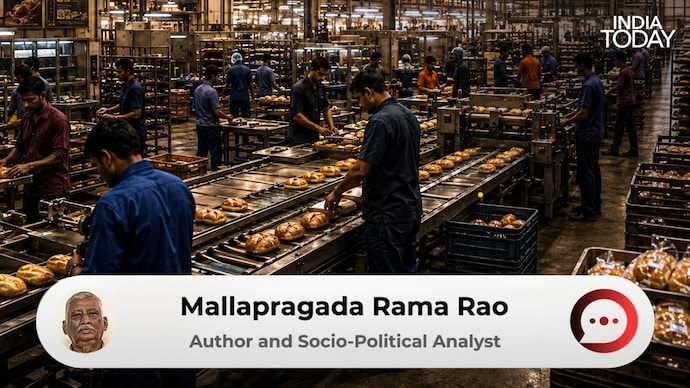
Three establishments operated side by side at the town bus stand under different names — ....Bakery and Ice Bar, ....Ice & Sweets, and ....Stores. At first glance, they appeared to be separate businesses functioning independently. However, a closer look revealed a carefully arranged ownership structure, suggesting that control remained concentrated within the same family.
Up to March 31, 1990, the Bakery was owned solely by a woman proprietor. From April 1, 1990, it was converted into a partnership firm, with her son inducted as the second partner.
The ownership history of Ice & Sweets reflected a similar arrangement. The woman’s son remained proprietor up to August 31, 1988. Thereafter, from September 1, 1988 to March 31, 1990, ownership was transferred to the woman herself. From April 1, 1990, the concern was reconstituted as a partnership firm, with the woman’s daughter-in-law as the second partner.
The Stores establishment remained continuously under the woman’s ownership since its inception.
Significantly, she was also the lessee of all three adjoining premises.
These repeated transfers among immediate family members, while maintaining operational continuity, clearly indicated centralised family control despite formal changes in legal ownership.
The Insurance Inspector, who reported that he had verified the ledgers, cash books and wage records of the establishments for the period from April 1, 1985 to March 31, 1990 on June 5, 1990, rightly recommended that the three concerns be treated as a single unit. He, however, reported that the factory be covered under the Act with effect from April 1, 1989, as prior to that date fewer than 20 persons were employed and power was not used in the manufacturing process. The Regional Office acted accordingly.
Upon being assigned a special inspection of the factory, I conducted the same on January 30, 1992 and February 6, 1992.
WHAT THE RECORDS REVEALED AND THE INSPECTOR CONCEALED
The ledgers revealed that the Bakery had purchased a 20 K.V. bread-baking machine and a half-horsepower bread slicer on October 10, 1986, followed by a 2 H.P. flour-kneading machine on February 19, 1987.
Similarly, Ice & Sweets had purchased an ice cream freezer machine on March 11, 1987.
These records conclusively established that power-driven manufacturing activity had commenced well before April 1, 1989. This omission, which was materially significant, could only have been deliberate.
On my request to inspect the said machinery, the accountant led me through a lane to a separate building away from the three shops.
No workers were present at the premises at the time of my visit. Upon enquiry, the management admitted that workers not only from the three establishments under inspection, but also from M/s ....Bakery and Restaurant, M/s ....Sweets, and M/s ....Ice Cream and Cool Drinks, located on another road and owned by the same family, regularly worked on those machines to manufacture bakery products, sweets, ice creams and cool drinks.
This admission conclusively established the existence of a centralised manufacturing centre servicing multiple business units under common ownership and labour deployment.
A further irregularity emerged upon scrutiny of wage records.
Taken together, omissions and discrepancies in wage accounting during the period from 1988–89 to 1989–90 aggregated to Rs 15,493.25 across the three establishments, a material variation directly affecting contribution liability under the Act.
In light of my findings, I stated in my report that the establishment provisionally attracted coverage from October 10, 1986, the date on which power-driven manufacturing commenced, and that the final date of coverage should be decided only after verification of records from 1985–86.
COMPLIANCE UNDER THE EPF ACT ONLY
It was seen from the general ledgers of the three firms that the employer, who was contesting coverage under the ESI Act, had covered the three firms under the EPF Act and paid contributions up to March 31, 1990. When this was pointed out, the employer agreed to pay contributions on total wages amounting to Rs 1,25,502.30 for the period from April 1990 to March 1991.
This case illustrates how statutory liability is sometimes sought to be postponed through cosmetic restructuring among family members and the creation of paper distinctions between operationally unified establishments. It also raises questions about what prompts inspecting officers to overlook such violations.
DECADES HAVE PASSED, BUT THE OLD STORY CONTINUES
On December 24, 2025, while travelling to a city about 200 km away, we stopped at a restaurant for tea. About 90 employees were working there. Some were said to be covered under EPF, but none under ESI.
On our return journey on December 26, 2025, we again stopped at another wayside restaurant for snacks. Upon enquiry, I was told that about 40 persons were employed and none of them was covered under either EPF or ESI.
These cases serve as a reminder that while “ease of doing business” is laudable, social security legislation can be defeated in the absence of effective enforcement.
(Views expressed in this opinion piece are those of the author)
Read earlier parts in the series:
Part 1: The end of Inspector Raj: A reform that assumes too much
Part 2: When employers evade, enforcement looks away
Part 3: On paper, compliant: How labour laws are quietly undermined
Part 4: Between records and reality: What a special inspection revealed about labour law gaps
Part 5: The case of the missing workers: How labour law evasion persists in plain sight
Part 6: Two inspections, one pattern: Labour off the books
Part 7: Selective compliance, systemic exclusion: How workers are left out
Three establishments operated side by side at the town bus stand under different names — ....Bakery and Ice Bar, ....Ice & Sweets, and ....Stores. At first glance, they appeared to be separate businesses functioning independently. However, a closer look revealed a carefully arranged ownership structure, suggesting that control remained concentrated within the same family.
Up to March 31, 1990, the Bakery was owned solely by a woman proprietor. From April 1, 1990, it was converted into a partnership firm, with her son inducted as the second partner.
The ownership history of Ice & Sweets reflected a similar arrangement. The woman’s son remained proprietor up to August 31, 1988. Thereafter, from September 1, 1988 to March 31, 1990, ownership was transferred to the woman herself. From April 1, 1990, the concern was reconstituted as a partnership firm, with the woman’s daughter-in-law as the second partner.
The Stores establishment remained continuously under the woman’s ownership since its inception.
Significantly, she was also the lessee of all three adjoining premises.
These repeated transfers among immediate family members, while maintaining operational continuity, clearly indicated centralised family control despite formal changes in legal ownership.
The Insurance Inspector, who reported that he had verified the ledgers, cash books and wage records of the establishments for the period from April 1, 1985 to March 31, 1990 on June 5, 1990, rightly recommended that the three concerns be treated as a single unit. He, however, reported that the factory be covered under the Act with effect from April 1, 1989, as prior to that date fewer than 20 persons were employed and power was not used in the manufacturing process. The Regional Office acted accordingly.
Upon being assigned a special inspection of the factory, I conducted the same on January 30, 1992 and February 6, 1992.
WHAT THE RECORDS REVEALED AND THE INSPECTOR CONCEALED
The ledgers revealed that the Bakery had purchased a 20 K.V. bread-baking machine and a half-horsepower bread slicer on October 10, 1986, followed by a 2 H.P. flour-kneading machine on February 19, 1987.
Similarly, Ice & Sweets had purchased an ice cream freezer machine on March 11, 1987.
These records conclusively established that power-driven manufacturing activity had commenced well before April 1, 1989. This omission, which was materially significant, could only have been deliberate.
On my request to inspect the said machinery, the accountant led me through a lane to a separate building away from the three shops.
No workers were present at the premises at the time of my visit. Upon enquiry, the management admitted that workers not only from the three establishments under inspection, but also from M/s ....Bakery and Restaurant, M/s ....Sweets, and M/s ....Ice Cream and Cool Drinks, located on another road and owned by the same family, regularly worked on those machines to manufacture bakery products, sweets, ice creams and cool drinks.
This admission conclusively established the existence of a centralised manufacturing centre servicing multiple business units under common ownership and labour deployment.
A further irregularity emerged upon scrutiny of wage records.
Taken together, omissions and discrepancies in wage accounting during the period from 1988–89 to 1989–90 aggregated to Rs 15,493.25 across the three establishments, a material variation directly affecting contribution liability under the Act.
In light of my findings, I stated in my report that the establishment provisionally attracted coverage from October 10, 1986, the date on which power-driven manufacturing commenced, and that the final date of coverage should be decided only after verification of records from 1985–86.
COMPLIANCE UNDER THE EPF ACT ONLY
It was seen from the general ledgers of the three firms that the employer, who was contesting coverage under the ESI Act, had covered the three firms under the EPF Act and paid contributions up to March 31, 1990. When this was pointed out, the employer agreed to pay contributions on total wages amounting to Rs 1,25,502.30 for the period from April 1990 to March 1991.
This case illustrates how statutory liability is sometimes sought to be postponed through cosmetic restructuring among family members and the creation of paper distinctions between operationally unified establishments. It also raises questions about what prompts inspecting officers to overlook such violations.
DECADES HAVE PASSED, BUT THE OLD STORY CONTINUES
On December 24, 2025, while travelling to a city about 200 km away, we stopped at a restaurant for tea. About 90 employees were working there. Some were said to be covered under EPF, but none under ESI.
On our return journey on December 26, 2025, we again stopped at another wayside restaurant for snacks. Upon enquiry, I was told that about 40 persons were employed and none of them was covered under either EPF or ESI.
These cases serve as a reminder that while “ease of doing business” is laudable, social security legislation can be defeated in the absence of effective enforcement.
(Views expressed in this opinion piece are those of the author)
Read earlier parts in the series:
Part 1: The end of Inspector Raj: A reform that assumes too much
Part 2: When employers evade, enforcement looks away
Part 3: On paper, compliant: How labour laws are quietly undermined
Part 4: Between records and reality: What a special inspection revealed about labour law gaps
Part 5: The case of the missing workers: How labour law evasion persists in plain sight
Part 6: Two inspections, one pattern: Labour off the books
Part 7: Selective compliance, systemic exclusion: How workers are left out

