Will AI reduce hiring? TCS Chairman explains what lies ahead for IT jobs
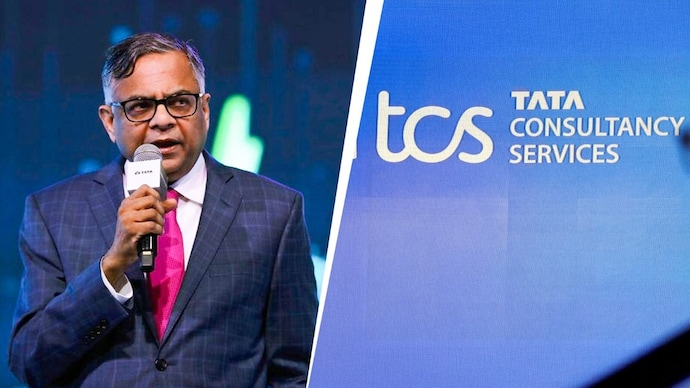
Speaking at TCS's 31st annual general meeting, N Chandrasekaran outlined a future where AI agents become an integral part of the workforce.
For years, India's IT industry has followed a familiar pattern: companies win more business, hire thousands of fresh graduates and expand their workforce. But that model could be changing faster than many expected.
Tata Consultancy Services (TCS), India's largest IT services company, has indicated that artificial intelligence (AI) could significantly alter the way technology firms hire in the future. The company's chairman, N Chandrasekaran, has said that AI agents will increasingly take over some tasks currently performed by humans, reducing the need for the massive recruitment drives that have long been a hallmark of the sector.
AI AGENTS AND EMPLOYEES WILL WORK TOGETHER
Speaking at TCS's 31st annual general meeting, Chandrasekaran outlined a future where AI agents become an integral part of the workforce.
"The company will have equal number of AI workers. We call them AI agents as there are employees. If the company has half a million employees, the day is not far when the company will have half a million agents," he said.
He further mentioned, “So the question will be what all can be done by agents, and those things will be done by agents and the company's employees and the agents will work together. And that will be the future.”
HIRING WILL CONTINUE, BUT NOT AT THE SAME SCALE
The TCS chairman acknowledged that the rise of AI will inevitably affect recruitment across the IT industry.
"Will it definitely lead to decrease in hiring? Absolutely. The company will not be hiring the kind of numbers that you used to hire," Chandrasekaran said.
He added that this is not a challenge unique to TCS. Instead, it is a transition that the entire technology industry will have to navigate.
"Why the company, the industry is likely to hire the same number of people they used to hire because certain portions of the work, in the current scheme of things, will go to AI agents," he said.
The comments suggest a structural shift in workforce planning, particularly for entry-level hiring that has traditionally fuelled employment growth in India's IT services sector.
AI SEEN AS THE BIGGEST OPPORTUNITY YET
Despite the impact on hiring, Chandrasekaran struck an optimistic tone about the opportunities AI could create.
"I am of the firm belief that every technology disruption enhances tech spending," he said.
Calling AI the most significant opportunity TCS has ever encountered, he added, "The magnitude of the possibility of AI is going to be so huge that, in my firm belief, it is the biggest opportunity TCS has had so far."
Industry experts have often argued that major technological shifts initially replace some jobs but eventually create new roles and business opportunities. Chandrasekaran echoed a similar view.
AI SKILLS WILL BE CRITICAL
While some existing tasks may move to AI systems, Chandrasekaran believes new types of jobs will emerge as companies adapt to the AI era.
"That does not mean there are no future opportunities. Once the transition happens, the AI world will produce so much more opportunities, there will be new talent that will be required," he said.
He stressed that companies, employees and governments must focus on developing AI-related skills to prepare workers for the changing landscape.
"So we need to build a lot of AI skills so that people can begin re-employed," he added.
A TURNING POINT FOR INDIA'S IT INDUSTRY
TCS's comments come at a time when AI is rapidly reshaping businesses across the world. For India's IT industry, which has traditionally relied on large workforces to deliver services, the shift could mark the beginning of a new chapter.
While hiring is unlikely to stop altogether, the days of recruiting tens of thousands of employees every year may gradually give way to a model where humans and AI agents share the workload. The challenge for companies and workers alike will be adapting quickly enough to make the most of the opportunities that this transformation creates.
For years, India's IT industry has followed a familiar pattern: companies win more business, hire thousands of fresh graduates and expand their workforce. But that model could be changing faster than many expected.
Tata Consultancy Services (TCS), India's largest IT services company, has indicated that artificial intelligence (AI) could significantly alter the way technology firms hire in the future. The company's chairman, N Chandrasekaran, has said that AI agents will increasingly take over some tasks currently performed by humans, reducing the need for the massive recruitment drives that have long been a hallmark of the sector.
AI AGENTS AND EMPLOYEES WILL WORK TOGETHER
Speaking at TCS's 31st annual general meeting, Chandrasekaran outlined a future where AI agents become an integral part of the workforce.
"The company will have equal number of AI workers. We call them AI agents as there are employees. If the company has half a million employees, the day is not far when the company will have half a million agents," he said.
He further mentioned, “So the question will be what all can be done by agents, and those things will be done by agents and the company's employees and the agents will work together. And that will be the future.”
HIRING WILL CONTINUE, BUT NOT AT THE SAME SCALE
The TCS chairman acknowledged that the rise of AI will inevitably affect recruitment across the IT industry.
"Will it definitely lead to decrease in hiring? Absolutely. The company will not be hiring the kind of numbers that you used to hire," Chandrasekaran said.
He added that this is not a challenge unique to TCS. Instead, it is a transition that the entire technology industry will have to navigate.
"Why the company, the industry is likely to hire the same number of people they used to hire because certain portions of the work, in the current scheme of things, will go to AI agents," he said.
The comments suggest a structural shift in workforce planning, particularly for entry-level hiring that has traditionally fuelled employment growth in India's IT services sector.
AI SEEN AS THE BIGGEST OPPORTUNITY YET
Despite the impact on hiring, Chandrasekaran struck an optimistic tone about the opportunities AI could create.
"I am of the firm belief that every technology disruption enhances tech spending," he said.
Calling AI the most significant opportunity TCS has ever encountered, he added, "The magnitude of the possibility of AI is going to be so huge that, in my firm belief, it is the biggest opportunity TCS has had so far."
Industry experts have often argued that major technological shifts initially replace some jobs but eventually create new roles and business opportunities. Chandrasekaran echoed a similar view.
AI SKILLS WILL BE CRITICAL
While some existing tasks may move to AI systems, Chandrasekaran believes new types of jobs will emerge as companies adapt to the AI era.
"That does not mean there are no future opportunities. Once the transition happens, the AI world will produce so much more opportunities, there will be new talent that will be required," he said.
He stressed that companies, employees and governments must focus on developing AI-related skills to prepare workers for the changing landscape.
"So we need to build a lot of AI skills so that people can begin re-employed," he added.
A TURNING POINT FOR INDIA'S IT INDUSTRY
TCS's comments come at a time when AI is rapidly reshaping businesses across the world. For India's IT industry, which has traditionally relied on large workforces to deliver services, the shift could mark the beginning of a new chapter.
While hiring is unlikely to stop altogether, the days of recruiting tens of thousands of employees every year may gradually give way to a model where humans and AI agents share the workload. The challenge for companies and workers alike will be adapting quickly enough to make the most of the opportunities that this transformation creates.

