Delhi hikes ration card income limit to Rs 2.5 lakh amid surging living costs
The Delhi government has raised the annual income limit for ration card eligibility to Rs 2.5 lakh. The move is aimed at widening food security coverage and will be followed by a phased CBDC-based ration system.
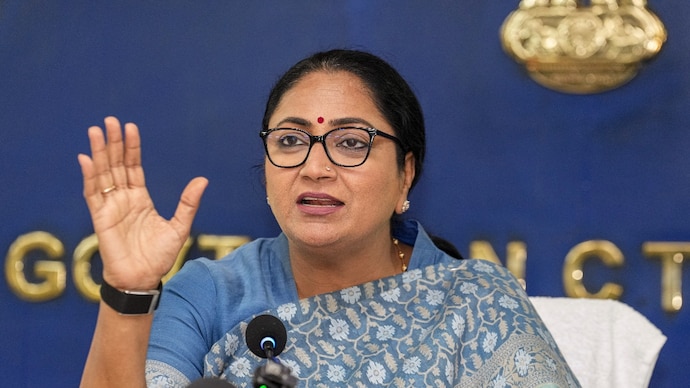
In a major decision aimed at providing substantial relief to the public, the Delhi government has approved a significant increase in the income ceiling for ration card eligibility.
In a cabinet meeting chaired by Chief Minister Rekha Gupta, the annual income limit for securing a ration card was raised to Rs 2.5 lakh. This landmark move is set to benefit thousands of families in the capital who were previously excluded from the government’s subsidised ration scheme due to the restrictive income cap.
Prior to this decision, the income threshold for obtaining a ration card in Delhi was considerably low. Initially set at Rs 1 lakh, the limit was subsequently adjusted to Rs 1.2 lakh per annum. However, against the backdrop of rising inflation and the high cost of urban living, this limit proved inadequate for many households.
Under the newly approved policy, anyone earning up to Rs 2.5 lakh annually will qualify, extending a vital safety net to a large segment of middle and lower-middle-class families. Food and Civil Supplies Minister Manjinder Singh Sirsa emphasised that the government's primary objective is to ensure that no needy family is deprived of basic food security. The expansion is expected to bring more households into the Public Distribution System (PDS), providing affordable food grains and direct financial relief from inflationary pressures.
Alongside expanding access, the Delhi government is set to modernise the distribution framework by introducing a Central Bank Digital Currency (CBDC) based ration system. This digital model aims to phase out traditional cash transactions, allowing financial assistance to be credited directly, which beneficiaries can then use via digital currency to purchase food grains at ration shops. To streamline the rollout, the government plans a phased implementation that will eventually integrate both public and private banks into the system. Officials believe that linking the model with the banking system will simplify payments, curb corruption, ensure accurate distribution, and mark a major step toward transparency and digital advancement in governance.
In a major decision aimed at providing substantial relief to the public, the Delhi government has approved a significant increase in the income ceiling for ration card eligibility.
In a cabinet meeting chaired by Chief Minister Rekha Gupta, the annual income limit for securing a ration card was raised to Rs 2.5 lakh. This landmark move is set to benefit thousands of families in the capital who were previously excluded from the government’s subsidised ration scheme due to the restrictive income cap.
Prior to this decision, the income threshold for obtaining a ration card in Delhi was considerably low. Initially set at Rs 1 lakh, the limit was subsequently adjusted to Rs 1.2 lakh per annum. However, against the backdrop of rising inflation and the high cost of urban living, this limit proved inadequate for many households.
Under the newly approved policy, anyone earning up to Rs 2.5 lakh annually will qualify, extending a vital safety net to a large segment of middle and lower-middle-class families. Food and Civil Supplies Minister Manjinder Singh Sirsa emphasised that the government's primary objective is to ensure that no needy family is deprived of basic food security. The expansion is expected to bring more households into the Public Distribution System (PDS), providing affordable food grains and direct financial relief from inflationary pressures.
Alongside expanding access, the Delhi government is set to modernise the distribution framework by introducing a Central Bank Digital Currency (CBDC) based ration system. This digital model aims to phase out traditional cash transactions, allowing financial assistance to be credited directly, which beneficiaries can then use via digital currency to purchase food grains at ration shops. To streamline the rollout, the government plans a phased implementation that will eventually integrate both public and private banks into the system. Officials believe that linking the model with the banking system will simplify payments, curb corruption, ensure accurate distribution, and mark a major step toward transparency and digital advancement in governance.

