Who is Suraj Pasi, the Gen-Z leader at centre of Lucknow's temple-mosque dispute?
A long-running dispute over Lucknow's Kasmandi Kala fort has reignited ahead of Bakri Eid, with the Pasi and Muslim communities asserting rival claims over the site. The row has put Lakhan Army leader Suraj Pasi at the centre of protests as police step up security.
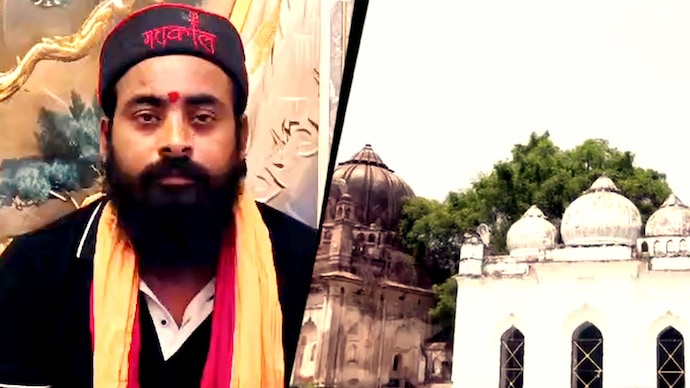
A decades-old dispute surrounding the Kasmandi Kala fort in Lucknow has resurfaced ahead of Bakri Eid, triggering fresh tensions between the Pasi and Muslim communities over the ownership and identity of the site.
The Pasi community, one of Uttar Pradesh's largest Dalit groups, claims the fort is the ancestral palace of Maharaja Kansa Pasi and houses an ancient Shiva temple, insisting that namaz cannot be offered there. The Muslim side, however, maintains that the structure is a mosque.
At the centre of the escalating row, however, is 27-year-old Suraj Pasi, an emerging and increasingly influential GenZ leader who has become the face of the agitation.
Projecting himself as the voice of a new generation seeking social dignity and historical recognition, Suraj Pasi has turned the Kasmandi dispute into a campaign centred on identity, heritage and community mobilisation.
Supporters describe him as a grassroots organiser working to unite Dalit youth, while critics accuse him of escalating communal tensions around a sensitive religious site.
RISE OF A GEN-Z LEADER
Suraj Pasi's life reportedly changed dramatically when his father died when he was 17-years-old. Only a teenager, he was forced to shoulder family responsibilities while simultaneously continuing his education and social outreach.
During this period, he began studying the history and social position of the Pasi community. According to Suraj Pasi, the community once possessed a rich legacy and warrior identity but gradually lost social and economic standing over time.
Driven by this belief, he started organising local youth around themes of identity, self-respect, education and social awareness. His outreach increasingly focused on persuading young people to reconnect with what he described as the community’s forgotten history.
LAKHAN ARMY
On February 27, 2023, Suraj Pasi launched the Lakhan Ekta Mission, which later evolved into the Lakhan Army. The organisation positions itself as a social movement primarily aimed at the GenZ population from marginalised communities.
The group campaigns on issues including education, social reform, self-respect and drug de-addiction. One of the organisation’s central rules, according to its members, is that entrants must pledge to remain free from drugs, alcohol and criminal activity.
This anti-addiction campaign has helped the organisation gain traction among the younger population is rural areas across Uttar Pradesh. Supporters claim the movement offers an alternative social identity to unemployed or vulnerable people who might otherwise drift towards substance abuse or crime.
The Lakhan Army has also expanded beyond purely caste-centric mobilisation. The organisation says it works among tribal and indigenous communities on education, awareness and social rights campaigns.
Another major plank of the organisation’s ideology is opposition to religious conversion. The Lakhan Army has repeatedly spoken against the conversion of Dalits and marginalised groups and advocates reconnecting communities with their “history, traditions and culture”.
From an initially local outfit, the organisation now claims to have a network spread across nearly 30 districts in Uttar Pradesh, including Hardoi, Unnao, Sitapur, Lakhimpur Kheri, Gorakhpur, Shahjahanpur, Pilibhit and Azamgarh. It is also attempting to expand into Bihar and Uttarakhand.
KASMANDI FORT DISPUTE: TEMPLE, TOMB OR MOSQUE?
Besides claiming the existance of the Shiva Temple, Pasi community members also alleged that Urdu plaques were installed inside the premises and tomb-like structures were constructed within the fort complex.
They claimed that these additions altered the original identity of the site.
The Muslim side, however, maintains that the structure is a mosque and a dargah where prayers have been offered for years.
FRESH PROTESTS
Fresh protests erupted after namaz was offered at disputed site on May 22, with the Muslim side reiterating that the fort belonged to them.
The situation escalated further after members of the Pasi community responded by organising protests and demanding that Hanuman Chalisa be recited at the location if namaz continued there.
In response, the police barricaded the entire area to prevent clashes and registered cases against 15 members of the Lakhan Army
Suraj Pasi strongly condemned the police action and alleged that the administration was favouring what he described as “foreign invaders”.
He warned that if the cases against Lakhan Army members were not withdrawn, the organisation would launch a large-scale agitation across Uttar Pradesh.
On Monday, members of the Hindu Mahasabha recited the Hanuman Chalisa at the site despite police presence.
Authorities have increased surveillance of the area and heavy security has been deployed to maintain law aand order.
A decades-old dispute surrounding the Kasmandi Kala fort in Lucknow has resurfaced ahead of Bakri Eid, triggering fresh tensions between the Pasi and Muslim communities over the ownership and identity of the site.
The Pasi community, one of Uttar Pradesh's largest Dalit groups, claims the fort is the ancestral palace of Maharaja Kansa Pasi and houses an ancient Shiva temple, insisting that namaz cannot be offered there. The Muslim side, however, maintains that the structure is a mosque.
At the centre of the escalating row, however, is 27-year-old Suraj Pasi, an emerging and increasingly influential GenZ leader who has become the face of the agitation.
Projecting himself as the voice of a new generation seeking social dignity and historical recognition, Suraj Pasi has turned the Kasmandi dispute into a campaign centred on identity, heritage and community mobilisation.
Supporters describe him as a grassroots organiser working to unite Dalit youth, while critics accuse him of escalating communal tensions around a sensitive religious site.
RISE OF A GEN-Z LEADER
Suraj Pasi's life reportedly changed dramatically when his father died when he was 17-years-old. Only a teenager, he was forced to shoulder family responsibilities while simultaneously continuing his education and social outreach.
During this period, he began studying the history and social position of the Pasi community. According to Suraj Pasi, the community once possessed a rich legacy and warrior identity but gradually lost social and economic standing over time.
Driven by this belief, he started organising local youth around themes of identity, self-respect, education and social awareness. His outreach increasingly focused on persuading young people to reconnect with what he described as the community’s forgotten history.
LAKHAN ARMY
On February 27, 2023, Suraj Pasi launched the Lakhan Ekta Mission, which later evolved into the Lakhan Army. The organisation positions itself as a social movement primarily aimed at the GenZ population from marginalised communities.
The group campaigns on issues including education, social reform, self-respect and drug de-addiction. One of the organisation’s central rules, according to its members, is that entrants must pledge to remain free from drugs, alcohol and criminal activity.
This anti-addiction campaign has helped the organisation gain traction among the younger population is rural areas across Uttar Pradesh. Supporters claim the movement offers an alternative social identity to unemployed or vulnerable people who might otherwise drift towards substance abuse or crime.
The Lakhan Army has also expanded beyond purely caste-centric mobilisation. The organisation says it works among tribal and indigenous communities on education, awareness and social rights campaigns.
Another major plank of the organisation’s ideology is opposition to religious conversion. The Lakhan Army has repeatedly spoken against the conversion of Dalits and marginalised groups and advocates reconnecting communities with their “history, traditions and culture”.
From an initially local outfit, the organisation now claims to have a network spread across nearly 30 districts in Uttar Pradesh, including Hardoi, Unnao, Sitapur, Lakhimpur Kheri, Gorakhpur, Shahjahanpur, Pilibhit and Azamgarh. It is also attempting to expand into Bihar and Uttarakhand.
KASMANDI FORT DISPUTE: TEMPLE, TOMB OR MOSQUE?
Besides claiming the existance of the Shiva Temple, Pasi community members also alleged that Urdu plaques were installed inside the premises and tomb-like structures were constructed within the fort complex.
They claimed that these additions altered the original identity of the site.
The Muslim side, however, maintains that the structure is a mosque and a dargah where prayers have been offered for years.
FRESH PROTESTS
Fresh protests erupted after namaz was offered at disputed site on May 22, with the Muslim side reiterating that the fort belonged to them.
The situation escalated further after members of the Pasi community responded by organising protests and demanding that Hanuman Chalisa be recited at the location if namaz continued there.
In response, the police barricaded the entire area to prevent clashes and registered cases against 15 members of the Lakhan Army
Suraj Pasi strongly condemned the police action and alleged that the administration was favouring what he described as “foreign invaders”.
He warned that if the cases against Lakhan Army members were not withdrawn, the organisation would launch a large-scale agitation across Uttar Pradesh.
On Monday, members of the Hindu Mahasabha recited the Hanuman Chalisa at the site despite police presence.
Authorities have increased surveillance of the area and heavy security has been deployed to maintain law aand order.

