Heatwave & dust push up Delhi AQI in May, but air still cleaner than previous years
Delhi's average AQI in May 2026 stood at 156, lower than in several years in the last decade.
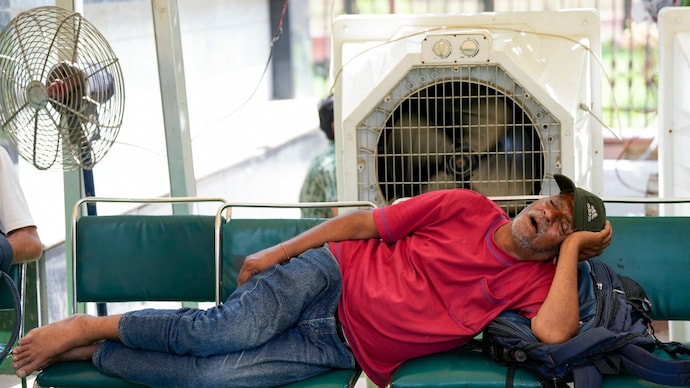
Delhi recorded its warmest May night in 14 years this Monday, with the minimum temperature touching 32.4 degrees Celsius. Meanwhile, the city’s air quality index touched 254 the same day, slipping into the “poor” category. Dust-laden winds, haze, and trapped pollutants added to the discomfort as the capital battled an intense heatwave.
But is May 2026 as polluted as it is being perceived? Data from the Central Pollution Control Board shows that between May 1 and May 25, Delhi’s average AQI this year was 156, lower than several recent years and well below the levels recorded during some of the city’s summers in the late 2010s.
The worst May in the last decade was 2017, when the average AQI reached 266 and crossed the 300 mark multiple times. Conditions remained poor in 2019 as well, with an average AQI of 227. Even 2024 had a much higher May average AQI of 224.
The cleanest phase came during the Covid-19 pandemic years of 2020 and 2021, when the average AQI fell to 148 and 150, respectively, due to very low road traffic and reduced industrial and construction activities.
Delhi’s recent deterioration in air quality also prompted the Commission for Air Quality Management to invoke Stage 1 of the Graded Response Action Plan across Delhi-NCR on May 19 after AQI entered the “poor” category.
Heatwave conditions are likely to ease from May 28 onwards. The India Meteorological Department forecasts a spell of light to very light rainfall accompanied by thunderstorms and gusty winds of up to 60 kmph between May 28 and May 31. The IMD also said there is likely to be no big change in maximum temperatures till May 27. But following that, there may be a fall of around 7–8 degrees Celsius.
Delhi recorded its warmest May night in 14 years this Monday, with the minimum temperature touching 32.4 degrees Celsius. Meanwhile, the city’s air quality index touched 254 the same day, slipping into the “poor” category. Dust-laden winds, haze, and trapped pollutants added to the discomfort as the capital battled an intense heatwave.
But is May 2026 as polluted as it is being perceived? Data from the Central Pollution Control Board shows that between May 1 and May 25, Delhi’s average AQI this year was 156, lower than several recent years and well below the levels recorded during some of the city’s summers in the late 2010s.
The worst May in the last decade was 2017, when the average AQI reached 266 and crossed the 300 mark multiple times. Conditions remained poor in 2019 as well, with an average AQI of 227. Even 2024 had a much higher May average AQI of 224.
The cleanest phase came during the Covid-19 pandemic years of 2020 and 2021, when the average AQI fell to 148 and 150, respectively, due to very low road traffic and reduced industrial and construction activities.
Delhi’s recent deterioration in air quality also prompted the Commission for Air Quality Management to invoke Stage 1 of the Graded Response Action Plan across Delhi-NCR on May 19 after AQI entered the “poor” category.
Heatwave conditions are likely to ease from May 28 onwards. The India Meteorological Department forecasts a spell of light to very light rainfall accompanied by thunderstorms and gusty winds of up to 60 kmph between May 28 and May 31. The IMD also said there is likely to be no big change in maximum temperatures till May 27. But following that, there may be a fall of around 7–8 degrees Celsius.

