Caught in crossfire: How war is forcing Iranians to run for safety
More than 32 lakh Iranians have been displaced since February 28, fleeing Isfahan, Kermanshah, Tehran and other large cities.
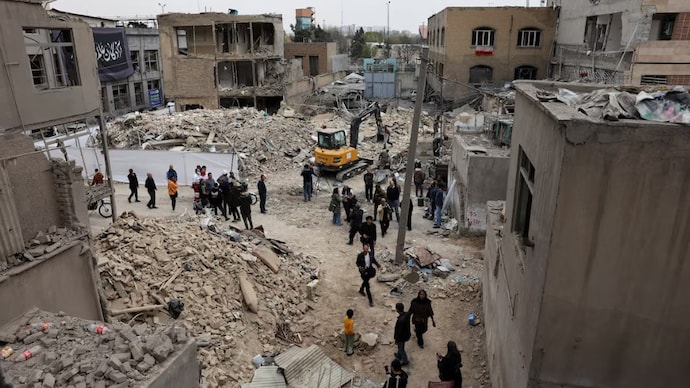
The war between the US and Iran has spiralled into a severe humanitarian crisis. Aside from civilian casualties, the war has forced widespread displacement across Iran.
According to the Iranian Health Ministry, at least 1,937 people have been killed, and 24,800 have been injured in US-Israeli attacks since February 28.
According to the United Nations High Commissioner for Refugees, more than 32 lakh Iranians have been displaced since February 28, fleeing major urban centres targeted by airstrikes. The highest concentration of air and drone strikes has been recorded in Isfahan, Kermanshah, Tehran and other large cities. Rural districts and northern provinces near the Caspian Sea, though also being targeted, are perceived as relatively safer.
According to the International Organisation for Migration, the exodus has also spilt beyond Iran’s borders. As of March 19, more than 80,000 people have left the country. The largest flow has been toward Afghanistan, which received 70,808, followed by 6,726 crossing into Pakistan, 2,545 into Azerbaijan, and smaller numbers moving into Iraq and Turkmenistan.
Outside Iran, Israel has issued evacuation orders, to allegedly create a security zone, in part of Southern Lebanon, Beirut’s Southern Suburb, and parts of Bekaa, amounting to 1,470 square kilometres or 14 per cent of the Lebanese landmass.
Most people leaving their countries, per the International Organisation for Migration, are doing so because of growing fear for their physical safety. Many are also forced to move because of damage to homes, infrastructure, and essential services.
The war between the US and Iran has spiralled into a severe humanitarian crisis. Aside from civilian casualties, the war has forced widespread displacement across Iran.
According to the Iranian Health Ministry, at least 1,937 people have been killed, and 24,800 have been injured in US-Israeli attacks since February 28.
According to the United Nations High Commissioner for Refugees, more than 32 lakh Iranians have been displaced since February 28, fleeing major urban centres targeted by airstrikes. The highest concentration of air and drone strikes has been recorded in Isfahan, Kermanshah, Tehran and other large cities. Rural districts and northern provinces near the Caspian Sea, though also being targeted, are perceived as relatively safer.
According to the International Organisation for Migration, the exodus has also spilt beyond Iran’s borders. As of March 19, more than 80,000 people have left the country. The largest flow has been toward Afghanistan, which received 70,808, followed by 6,726 crossing into Pakistan, 2,545 into Azerbaijan, and smaller numbers moving into Iraq and Turkmenistan.
Outside Iran, Israel has issued evacuation orders, to allegedly create a security zone, in part of Southern Lebanon, Beirut’s Southern Suburb, and parts of Bekaa, amounting to 1,470 square kilometres or 14 per cent of the Lebanese landmass.
Most people leaving their countries, per the International Organisation for Migration, are doing so because of growing fear for their physical safety. Many are also forced to move because of damage to homes, infrastructure, and essential services.

