Siddaramaiah set to hand over baton after record tenure in Karnataka
Siddaramaiah resigned as Karnataka Chief Minister, clearing the way for DK Shivakumar. The handover follows a long power struggle and leaves the Congress managing caste and factional pressures.
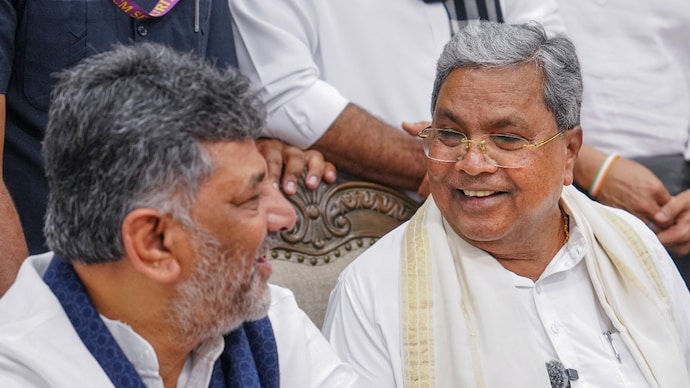


Three years after the Congress returned to power in Karnataka, the long-running power struggle between Chief Minister Siddaramaiah and his deputy DK Shivakumar has finally reached a decisive moment. Siddaramaiah resigned as Chief Minister on Thursday, paving the way for DK Shivakumar to take over the state’s top post after months of speculation over leadership transition.
The Congress government, formed in May 2023 after defeating the BJP, had witnessed competing claims over the chief minister’s post from the very beginning. While Siddaramaiah emerged as the consensus choice because of his mass appeal and AHINDA social coalition, Shivakumar, credited with rebuilding the Congress organisation in Karnataka, was appointed Deputy Chief Minister. Reports of a rotational power-sharing arrangement had continued to surface since then.
Siddaramaiah exits office as Karnataka’s longest-serving Chief Minister, surpassing the record of Devaraj Urs earlier this year.
During his tenure, the Congress government aggressively implemented its flagship welfare guarantees, including free bus travel for women, direct cash transfers, and subsidised schemes aimed at women, youth, and low-income families. These welfare measures also became a template for the promises the Congress made during elections in other states.
However, the transition has not come without political tension. Just before stepping down, Siddaramaiah accepted Karnataka’s contentious caste census report, a move widely seen as leaving difficult political choices for Shivakumar and the Congress leadership.
The development also shows the instability that has often characterised Karnataka politics. Since Independence, many chief ministers have remained in office for less than two years, reflecting frequent leadership changes, coalition pressures, defections, and political realignments in the state.
Only a few leaders have managed to stay in power for more than four or five years. The relatively small number of long-serving chief ministers highlights how rare political continuity has been in Karnataka, making Siddaramaiah’s rise among the state’s longest-serving leaders a significant political milestone.
Visuals of Shivakumar embracing Siddaramaiah and touching his feet during a breakfast meeting ahead of the resignation were projected by the Congress leadership as a sign of unity.
Lingayats and Vokkaligas have remained the most influential communities in Karnataka politics for decades. Most of the state’s chief ministers have come from these two groups, with Lingayats contributing the highest number of CMs so far. Compared to them, leaders from other OBC groups, Brahmins, and other communities have had fewer opportunities to become chief minister.
The leadership transition marks a major political moment for the Karnataka Congress, where balancing caste equations, factional ambitions, and governance ahead of the 2028 Assembly elections will remain a critical challenge.
Three years after the Congress returned to power in Karnataka, the long-running power struggle between Chief Minister Siddaramaiah and his deputy DK Shivakumar has finally reached a decisive moment. Siddaramaiah resigned as Chief Minister on Thursday, paving the way for DK Shivakumar to take over the state’s top post after months of speculation over leadership transition.
The Congress government, formed in May 2023 after defeating the BJP, had witnessed competing claims over the chief minister’s post from the very beginning. While Siddaramaiah emerged as the consensus choice because of his mass appeal and AHINDA social coalition, Shivakumar, credited with rebuilding the Congress organisation in Karnataka, was appointed Deputy Chief Minister. Reports of a rotational power-sharing arrangement had continued to surface since then.
Siddaramaiah exits office as Karnataka’s longest-serving Chief Minister, surpassing the record of Devaraj Urs earlier this year.
During his tenure, the Congress government aggressively implemented its flagship welfare guarantees, including free bus travel for women, direct cash transfers, and subsidised schemes aimed at women, youth, and low-income families. These welfare measures also became a template for the promises the Congress made during elections in other states.
However, the transition has not come without political tension. Just before stepping down, Siddaramaiah accepted Karnataka’s contentious caste census report, a move widely seen as leaving difficult political choices for Shivakumar and the Congress leadership.
The development also shows the instability that has often characterised Karnataka politics. Since Independence, many chief ministers have remained in office for less than two years, reflecting frequent leadership changes, coalition pressures, defections, and political realignments in the state.
Only a few leaders have managed to stay in power for more than four or five years. The relatively small number of long-serving chief ministers highlights how rare political continuity has been in Karnataka, making Siddaramaiah’s rise among the state’s longest-serving leaders a significant political milestone.
Visuals of Shivakumar embracing Siddaramaiah and touching his feet during a breakfast meeting ahead of the resignation were projected by the Congress leadership as a sign of unity.
Lingayats and Vokkaligas have remained the most influential communities in Karnataka politics for decades. Most of the state’s chief ministers have come from these two groups, with Lingayats contributing the highest number of CMs so far. Compared to them, leaders from other OBC groups, Brahmins, and other communities have had fewer opportunities to become chief minister.
The leadership transition marks a major political moment for the Karnataka Congress, where balancing caste equations, factional ambitions, and governance ahead of the 2028 Assembly elections will remain a critical challenge.

