India's endowment boom: Big alumni cheques may push colleges to global stage faster
A wave of big alumni donations is hitting India's top colleges. As founders shift from building wealth to building legacy with large donations flowing into IITs, IIMs and private universities, India could compress a century-long Western endowment model into a decade, with major implications for autonomy, access and global standing in higher education.
Something subtle is shifting in Indian higher education, and it is not happening slowly.
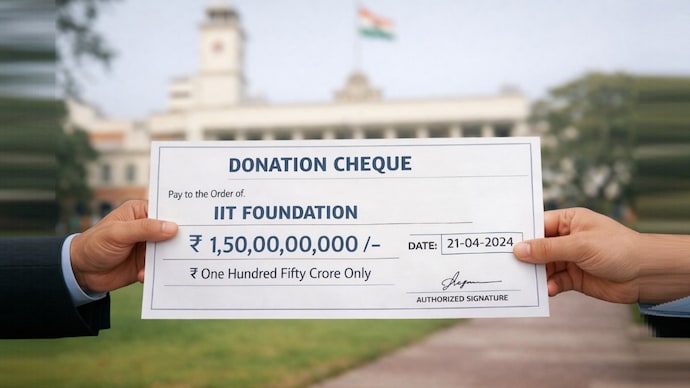
Large alumni donations are no longer rare headlines. They are starting to cluster. A Rs 150 crore commitment to IIT Delhi. A Rs 70 crore contribution from a single graduating batch. Earlier gifts running into hundreds of crores across IITs, IIMs and a handful of private universities.
Taken together, these are not isolated acts of generosity. They point to a generational turn. India’s first wave of global wealth creators is beginning to move from building companies to building legacy.
For decades, that transition defined how universities in the West became powerful. India may be entering the same phase, just faster and far more concentrated.
NOT JUST DONATIONS, BUT A DIFFERENT KIND OF MONEY
There is a difference between funding and endowments, and it matters.
Most Indian institutions have survived on government budgets or tuition fees. Donations, when they came, were often tied to buildings or one-time projects.
Endowments work differently. The money stays invested. Only the returns are spent. That creates a steady, independent financial backbone.
It also quietly shifts power.
A well-funded endowment allows a university to take risks. Hire global faculty. Fund long term research. Offer scholarships without waiting for policy changes, or build entire schools almost overnight.
This is why the recent wave feels important. It is not just about size. It is about intent.
THE NUMBERS TELL THE STORY
India’s big alumni gifts may look recent, but the build-up has been quietly happening for nearly a decade. What’s changed now is the size and frequency.
Year | Institution | Donor | Amount |
|---|---|---|---|
2024 | IIT Delhi | Anonymous alum | 150 crore commitment |
2023 | IIT Bombay | Nandan Nilekani | 315 crore |
2023 | IIM Ahmedabad | Pankaj Patel | 200 crore |
2022 | IIT Madras | Krishna Chivukula | 228 crore |
2021 | Ashoka University | Multiple donors | 100+ crore combined |
2020 | IIT Kharagpur | Alumni cohort | 90+ crore |
2019 | IIT Bombay | Class of 1978, others | 100+ crore combined |
2018 | BITS Pilani | Alumni network | 80+ crore |
2017 | IIT Delhi | Class of 1992 | 50 crore |
2016 | IIM Bangalore | Alumni donors | 40+ crore |
2015 | IIT Madras | Multiple alumni | 35+ crore |
A few things stand out when you look at this over time.
First, the cheques are getting bigger. What used to be Rs 30–50 crore a decade ago is now comfortably crossing Rs 100 crore, even Rs 300 crore.
Second, the donors are changing. Earlier, contributions often came from batches pooling money together. Now, individual alumni are writing very large cheques, signalling a different level of wealth creation.
Third, the ecosystem is still tight. The money is flowing largely into IITs, IIMs, and a few private universities like Ashoka and BITS Pilani.
That concentration tells its own story.
On one hand, it shows where alumni identity and institutional trust are strongest. These are campuses that people feel proud of, and worth investing in long term.
On the other, it highlights a gap. Thousands of colleges across India still do not have this kind of alumni engagement, let alone funding.
So while India’s endowment moment is clearly taking shape, it is not evenly distributed. Not yet.
And that is what makes this phase interesting. It is both a breakthrough and a preview of the inequalities that could deepen if this culture does not spread beyond the top tier.
HOW THE US PLAYED THE LONG GAME
To understand where this could go, look at Harvard University or Stanford University.
Their dominance was not built on rankings first. It was built on endowments that kept growing, decade after decade.
Year | University | Donor | Amount |
|---|---|---|---|
2023 | Harvard University | Kenneth Griffin | $300 million |
2018 | Harvard University | John Paulson | $400 million |
2016 | University of Chicago | David Booth | $300 million |
2015 | Stanford University | Phil Knight | $400 million |
2014 | Harvard University | Kenneth Griffin | $150 million |
2013 | Johns Hopkins University | Michael Bloomberg | $350 million |
2012 | Stanford University | Nike co-founder Phil Knight | $500 million (total commitments over time) |
2008 | Princeton University | Anonymous alum | $300 million |
1990s | Multiple Ivy League schools | Alumni networks | $50–100 million gifts become common |
Early 1900s | Harvard, Yale, Princeton | Industrial era donors | Foundations of modern endowments |
The important part is not just the size of these gifts. It is the consistency.
By the late 20th century, giving back had become part of alumni identity in the US. Not donating was the exception.
Over time, that created massive endowment pools. Harvard University today sits on an endowment of over $50 billion.
That kind of financial cushion allows universities to think long-term. They can fund research for years without worrying about immediate returns. They can take bets on ideas that may not pay off quickly.
This is how academic leadership is built. Slowly, but with compounding effect.
CHINA’S FASTER CATCH UP
China tells a very different story. One that is much closer to what India could become.
Universities like Tsinghua University and Peking University were not always global leaders. Their rise has been far more recent, and far more compressed.
Year | University | Donor | Amount |
|---|---|---|---|
2023 | Tsinghua University | Tech alumni, corporate donors | $200 million+ combined |
2021 | Tsinghua University | Alumni groups | $150 million+ |
2020 | Peking University | Corporate and alumni donors | $120 million+ |
2019 | Peking University | Tech founders | $100 million+ |
2018 | Zhejiang University | Alumni network | $140 million |
2016 | Fudan University | Alumni donors | $90 million+ |
2015 | Tsinghua University | Mixed donors | $80 million+ |
But here is the key difference from the US.
China did not rely on alumni culture alone. The state played a massive role in funding universities, especially through initiatives like Project 985 and Double First Class.
Alumni donations came in as an accelerator, not the base.
This combination worked. Within two decades, Chinese universities climbed global rankings, improved research output and built strong international collaborations.
The giving culture followed success, rather than creating it from scratch.
WHY INDIA COULD MOVE EVEN FASTER
Put the US and China side by side, and India’s moment starts to come into focus.
The US shows how endowments become powerful when they grow slowly and turn into habit. China shows how quickly things can move when funding, ambition and policy line up at the same time.
India sits somewhere in between, but with its own twist.
It does not yet have a deep-rooted culture of alumni giving like the US. It also does not have the same level of centralised push that China used to accelerate its universities.
What it does have is something newer and more volatile. A sudden surge of private wealth, a strong emotional connect with elite campuses, and a generation of alumni that now has both the capacity and the intent to give back.
That combination is what makes this moment feel different.
The recent donations are not just bigger versions of what came before. They are a shift in behaviour. The kind that usually takes decades is showing up in a few years.
And that is why India could move faster than expected.
India now has three ingredients that did not exist together before.
First, a large pool of wealthy alumni from the IT and startup boom.
Second, globally visible institutions like the IITs and IIMs that already have strong brand recall.
Third, a growing sense of institutional pride. Alumni are no longer distant from their campuses. They are emotionally invested.
This combination makes acceleration possible.
Unlike the US, where endowments grew gradually, India could see sharp jumps. A few large cheques can change the financial trajectory of an institution almost overnight.
If this continues, India may not follow the US path of a century. It may not fully mirror China’s state driven model either.
It may end up creating a third path, where a small but powerful set of institutions rapidly build endowments through concentrated alumni wealth, and in doing so, pull themselves into the global league much faster than expected.
The opportunity is massive.
But so is the question it leaves behind. Whether this momentum spreads across the system, or stays within the few top institutes where the spotlight already is.
BUT WHO REALLY BENEFITS
This is where the optimism needs a pause.
Right now, the endowment wave is narrow. It is flowing into institutions that are already ahead.
If that continues, India may end up with a small cluster of extremely well-funded global campuses, while the rest struggle with basic resources.
That divide already exists. Endowments could widen it further.
There is also the question of governance. As private money grows, how much influence will donors have. And how will institutions balance autonomy with accountability.
MORE THAN JUST MONEY
Still, something fundamental is changing.
For a long time, success for Indian graduates meant leaving the system behind. Building careers elsewhere. Rarely looking back.
That loop is breaking.
Alumni are returning, not physically, but financially and strategically. They are backing research, mentoring students, shaping direction.
This is what legacy looks like in practice.
A MOMENT THAT COULD COMPOUND
If this trend sustains, Indian higher education could look very different in the next decade.
A handful of institutions could rise sharply in global rankings. Research output could expand. International collaborations could deepen.
But the real impact will depend on whether this culture spreads.
If giving becomes a norm across campuses, not just the elite ones, the system could transform from within.
If not, this moment may still matter, but only for a few.
Right now, India stands at that edge.
Something subtle is shifting in Indian higher education, and it is not happening slowly.
Large alumni donations are no longer rare headlines. They are starting to cluster. A Rs 150 crore commitment to IIT Delhi. A Rs 70 crore contribution from a single graduating batch. Earlier gifts running into hundreds of crores across IITs, IIMs and a handful of private universities.
Taken together, these are not isolated acts of generosity. They point to a generational turn. India’s first wave of global wealth creators is beginning to move from building companies to building legacy.
For decades, that transition defined how universities in the West became powerful. India may be entering the same phase, just faster and far more concentrated.
NOT JUST DONATIONS, BUT A DIFFERENT KIND OF MONEY
There is a difference between funding and endowments, and it matters.
Most Indian institutions have survived on government budgets or tuition fees. Donations, when they came, were often tied to buildings or one-time projects.
Endowments work differently. The money stays invested. Only the returns are spent. That creates a steady, independent financial backbone.
It also quietly shifts power.
A well-funded endowment allows a university to take risks. Hire global faculty. Fund long term research. Offer scholarships without waiting for policy changes, or build entire schools almost overnight.
This is why the recent wave feels important. It is not just about size. It is about intent.
THE NUMBERS TELL THE STORY
India’s big alumni gifts may look recent, but the build-up has been quietly happening for nearly a decade. What’s changed now is the size and frequency.
Year | Institution | Donor | Amount |
|---|---|---|---|
2024 | IIT Delhi | Anonymous alum | 150 crore commitment |
2023 | IIT Bombay | Nandan Nilekani | 315 crore |
2023 | IIM Ahmedabad | Pankaj Patel | 200 crore |
2022 | IIT Madras | Krishna Chivukula | 228 crore |
2021 | Ashoka University | Multiple donors | 100+ crore combined |
2020 | IIT Kharagpur | Alumni cohort | 90+ crore |
2019 | IIT Bombay | Class of 1978, others | 100+ crore combined |
2018 | BITS Pilani | Alumni network | 80+ crore |
2017 | IIT Delhi | Class of 1992 | 50 crore |
2016 | IIM Bangalore | Alumni donors | 40+ crore |
2015 | IIT Madras | Multiple alumni | 35+ crore |
A few things stand out when you look at this over time.
First, the cheques are getting bigger. What used to be Rs 30–50 crore a decade ago is now comfortably crossing Rs 100 crore, even Rs 300 crore.
Second, the donors are changing. Earlier, contributions often came from batches pooling money together. Now, individual alumni are writing very large cheques, signalling a different level of wealth creation.
Third, the ecosystem is still tight. The money is flowing largely into IITs, IIMs, and a few private universities like Ashoka and BITS Pilani.
That concentration tells its own story.
On one hand, it shows where alumni identity and institutional trust are strongest. These are campuses that people feel proud of, and worth investing in long term.
On the other, it highlights a gap. Thousands of colleges across India still do not have this kind of alumni engagement, let alone funding.
So while India’s endowment moment is clearly taking shape, it is not evenly distributed. Not yet.
And that is what makes this phase interesting. It is both a breakthrough and a preview of the inequalities that could deepen if this culture does not spread beyond the top tier.
HOW THE US PLAYED THE LONG GAME
To understand where this could go, look at Harvard University or Stanford University.
Their dominance was not built on rankings first. It was built on endowments that kept growing, decade after decade.
Year | University | Donor | Amount |
|---|---|---|---|
2023 | Harvard University | Kenneth Griffin | $300 million |
2018 | Harvard University | John Paulson | $400 million |
2016 | University of Chicago | David Booth | $300 million |
2015 | Stanford University | Phil Knight | $400 million |
2014 | Harvard University | Kenneth Griffin | $150 million |
2013 | Johns Hopkins University | Michael Bloomberg | $350 million |
2012 | Stanford University | Nike co-founder Phil Knight | $500 million (total commitments over time) |
2008 | Princeton University | Anonymous alum | $300 million |
1990s | Multiple Ivy League schools | Alumni networks | $50–100 million gifts become common |
Early 1900s | Harvard, Yale, Princeton | Industrial era donors | Foundations of modern endowments |
The important part is not just the size of these gifts. It is the consistency.
By the late 20th century, giving back had become part of alumni identity in the US. Not donating was the exception.
Over time, that created massive endowment pools. Harvard University today sits on an endowment of over $50 billion.
That kind of financial cushion allows universities to think long-term. They can fund research for years without worrying about immediate returns. They can take bets on ideas that may not pay off quickly.
This is how academic leadership is built. Slowly, but with compounding effect.
CHINA’S FASTER CATCH UP
China tells a very different story. One that is much closer to what India could become.
Universities like Tsinghua University and Peking University were not always global leaders. Their rise has been far more recent, and far more compressed.
Year | University | Donor | Amount |
|---|---|---|---|
2023 | Tsinghua University | Tech alumni, corporate donors | $200 million+ combined |
2021 | Tsinghua University | Alumni groups | $150 million+ |
2020 | Peking University | Corporate and alumni donors | $120 million+ |
2019 | Peking University | Tech founders | $100 million+ |
2018 | Zhejiang University | Alumni network | $140 million |
2016 | Fudan University | Alumni donors | $90 million+ |
2015 | Tsinghua University | Mixed donors | $80 million+ |
But here is the key difference from the US.
China did not rely on alumni culture alone. The state played a massive role in funding universities, especially through initiatives like Project 985 and Double First Class.
Alumni donations came in as an accelerator, not the base.
This combination worked. Within two decades, Chinese universities climbed global rankings, improved research output and built strong international collaborations.
The giving culture followed success, rather than creating it from scratch.
WHY INDIA COULD MOVE EVEN FASTER
Put the US and China side by side, and India’s moment starts to come into focus.
The US shows how endowments become powerful when they grow slowly and turn into habit. China shows how quickly things can move when funding, ambition and policy line up at the same time.
India sits somewhere in between, but with its own twist.
It does not yet have a deep-rooted culture of alumni giving like the US. It also does not have the same level of centralised push that China used to accelerate its universities.
What it does have is something newer and more volatile. A sudden surge of private wealth, a strong emotional connect with elite campuses, and a generation of alumni that now has both the capacity and the intent to give back.
That combination is what makes this moment feel different.
The recent donations are not just bigger versions of what came before. They are a shift in behaviour. The kind that usually takes decades is showing up in a few years.
And that is why India could move faster than expected.
India now has three ingredients that did not exist together before.
First, a large pool of wealthy alumni from the IT and startup boom.
Second, globally visible institutions like the IITs and IIMs that already have strong brand recall.
Third, a growing sense of institutional pride. Alumni are no longer distant from their campuses. They are emotionally invested.
This combination makes acceleration possible.
Unlike the US, where endowments grew gradually, India could see sharp jumps. A few large cheques can change the financial trajectory of an institution almost overnight.
If this continues, India may not follow the US path of a century. It may not fully mirror China’s state driven model either.
It may end up creating a third path, where a small but powerful set of institutions rapidly build endowments through concentrated alumni wealth, and in doing so, pull themselves into the global league much faster than expected.
The opportunity is massive.
But so is the question it leaves behind. Whether this momentum spreads across the system, or stays within the few top institutes where the spotlight already is.
BUT WHO REALLY BENEFITS
This is where the optimism needs a pause.
Right now, the endowment wave is narrow. It is flowing into institutions that are already ahead.
If that continues, India may end up with a small cluster of extremely well-funded global campuses, while the rest struggle with basic resources.
That divide already exists. Endowments could widen it further.
There is also the question of governance. As private money grows, how much influence will donors have. And how will institutions balance autonomy with accountability.
MORE THAN JUST MONEY
Still, something fundamental is changing.
For a long time, success for Indian graduates meant leaving the system behind. Building careers elsewhere. Rarely looking back.
That loop is breaking.
Alumni are returning, not physically, but financially and strategically. They are backing research, mentoring students, shaping direction.
This is what legacy looks like in practice.
A MOMENT THAT COULD COMPOUND
If this trend sustains, Indian higher education could look very different in the next decade.
A handful of institutions could rise sharply in global rankings. Research output could expand. International collaborations could deepen.
But the real impact will depend on whether this culture spreads.
If giving becomes a norm across campuses, not just the elite ones, the system could transform from within.
If not, this moment may still matter, but only for a few.
Right now, India stands at that edge.

