Rajasthan's 'paper universities' spent crores despite empty campuses, no students
An India Today investigation into Rajasthan's so-called "paper universities" has exposed empty campuses, missing students and crores spent on salaries, vehicles and offices despite little academic activity. Following the report, the Rajasthan government removed VC Dev Swaroop amid allegations of corruption, fake documents and recruitment irregularities.
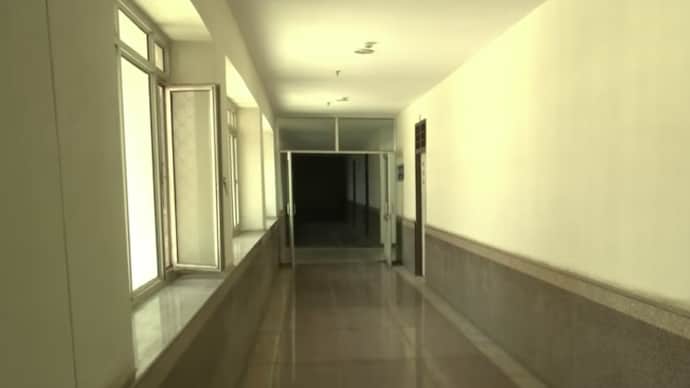
A university with no students. Another running out of borrowed rooms. Crores spent every year on salaries, cars, furniture and offices despite barely any academic activity.
What sounds like satire has now exploded into one of Rajasthan's biggest education controversies after an India Today investigation exposed how several state universities allegedly existed more on paper than in reality.
The fallout came quickly. Following the report, Rajasthan Governor Haribhau Bagde removed Vice Chancellor Dev Swaroop from his positions at Baba Amte Divyang University and Vishwakarma Skill University with immediate effect.
The action was linked to allegations of serious irregularities during his earlier tenure at Rajasthan University between 2011 and 2014. A high-level inquiry reportedly found manipulation of interview marks, forged documents, fake meeting minutes and violations of UGC norms.
UNIVERSITIES INSIDE A BOARD OFFICE
The investigation found that three universities were functioning from Rajasthan Board offices inside Jaipur’s Shiksha Sankul complex.
Boards and arrows pointed visitors toward Baba Amte Divyang University, Vishwakarma Skill University and Haridev Joshi Journalism University.
But behind the signboards, the reality appeared startlingly hollow.
At Baba Amte Divyang University, the Vice Chancellor’s office reportedly sat empty despite ACs and fans running. In the neighbouring Vishwakarma Skill University office, only a few staff members were present, many reportedly unsure what work the institution actually carried out.
Both universities were being overseen by the same Vice Chancellor, Dev Swaroop, who was nearing retirement.
According to the report, when questioned about the functioning of the universities, officials struggled to provide clear answers.
CRORES SPENT, BUT WHERE ARE THE STUDENTS?
Baba Amte Divyang University was launched in 2023 during Ashok Gehlot’s tenure and was envisioned as a major institution for students with disabilities.
The university reportedly received 10 acres of land in Jamdoli. But years later, no affiliated colleges, no real campus expansion and almost no students had materialised.
Yet expenses continued.
The report claimed nearly Rs 3.27 crore had already been spent. Around Rs 2.5 crore allegedly went into salaries and allowances, while lakhs more were spent on vehicles, accommodation, ACs, furniture and office expenses.
Vishwakarma Skill University tells a similar story.
Originally launched in 2008 under Vasundhara Raje’s government, it was projected as a Singapore-style skill university with 138 training courses. But nearly 18 years later, the promised transformation never arrived.
The institution reportedly functioned with a tiny staff while crores continued to be allocated annually.
GOVERNOR HIMSELF FLAGGED THE ISSUE
What makes the controversy bigger is that even Governor Haribhau Bagde had publicly questioned how universities with almost no students were continuing to operate.
The latest action against Dev Swaroop appears to have brought that frustration into official decision-making.
The inquiry committee reportedly concluded that during his earlier tenure as Rajasthan University Vice Chancellor, rules were bypassed to favour selected candidates in appointments. Allegations included inflated interview marks for preferred candidates while deserving applicants were marked down despite strong academic records.
THE BIGGER QUESTION
The controversy has also reignited criticism over how universities are announced before elections with grand promises, only to later struggle without infrastructure, faculty or students.
In Rajasthan’s case, some institutions allegedly became symbols of bureaucratic expansion without actual education happening on the ground.
For many, the biggest question now is not just how crores were spent, but how such universities continued functioning for years without triggering alarms much earlier.
A university with no students. Another running out of borrowed rooms. Crores spent every year on salaries, cars, furniture and offices despite barely any academic activity.
What sounds like satire has now exploded into one of Rajasthan's biggest education controversies after an India Today investigation exposed how several state universities allegedly existed more on paper than in reality.
The fallout came quickly. Following the report, Rajasthan Governor Haribhau Bagde removed Vice Chancellor Dev Swaroop from his positions at Baba Amte Divyang University and Vishwakarma Skill University with immediate effect.
The action was linked to allegations of serious irregularities during his earlier tenure at Rajasthan University between 2011 and 2014. A high-level inquiry reportedly found manipulation of interview marks, forged documents, fake meeting minutes and violations of UGC norms.
UNIVERSITIES INSIDE A BOARD OFFICE
The investigation found that three universities were functioning from Rajasthan Board offices inside Jaipur’s Shiksha Sankul complex.
Boards and arrows pointed visitors toward Baba Amte Divyang University, Vishwakarma Skill University and Haridev Joshi Journalism University.
But behind the signboards, the reality appeared startlingly hollow.
At Baba Amte Divyang University, the Vice Chancellor’s office reportedly sat empty despite ACs and fans running. In the neighbouring Vishwakarma Skill University office, only a few staff members were present, many reportedly unsure what work the institution actually carried out.
Both universities were being overseen by the same Vice Chancellor, Dev Swaroop, who was nearing retirement.
According to the report, when questioned about the functioning of the universities, officials struggled to provide clear answers.
CRORES SPENT, BUT WHERE ARE THE STUDENTS?
Baba Amte Divyang University was launched in 2023 during Ashok Gehlot’s tenure and was envisioned as a major institution for students with disabilities.
The university reportedly received 10 acres of land in Jamdoli. But years later, no affiliated colleges, no real campus expansion and almost no students had materialised.
Yet expenses continued.
The report claimed nearly Rs 3.27 crore had already been spent. Around Rs 2.5 crore allegedly went into salaries and allowances, while lakhs more were spent on vehicles, accommodation, ACs, furniture and office expenses.
Vishwakarma Skill University tells a similar story.
Originally launched in 2008 under Vasundhara Raje’s government, it was projected as a Singapore-style skill university with 138 training courses. But nearly 18 years later, the promised transformation never arrived.
The institution reportedly functioned with a tiny staff while crores continued to be allocated annually.
GOVERNOR HIMSELF FLAGGED THE ISSUE
What makes the controversy bigger is that even Governor Haribhau Bagde had publicly questioned how universities with almost no students were continuing to operate.
The latest action against Dev Swaroop appears to have brought that frustration into official decision-making.
The inquiry committee reportedly concluded that during his earlier tenure as Rajasthan University Vice Chancellor, rules were bypassed to favour selected candidates in appointments. Allegations included inflated interview marks for preferred candidates while deserving applicants were marked down despite strong academic records.
THE BIGGER QUESTION
The controversy has also reignited criticism over how universities are announced before elections with grand promises, only to later struggle without infrastructure, faculty or students.
In Rajasthan’s case, some institutions allegedly became symbols of bureaucratic expansion without actual education happening on the ground.
For many, the biggest question now is not just how crores were spent, but how such universities continued functioning for years without triggering alarms much earlier.

