I cracked 5 hackathons and earned Rs 8 lakh before completing my second year of BTech
Agnik Misra is a second-year BTech student in Computer Science and Engineering. In just 24 months, he has won five hackathons, secured multiple internships, and earned nearly Rs 8 lakh. He is also working on his startup, Inculcate.
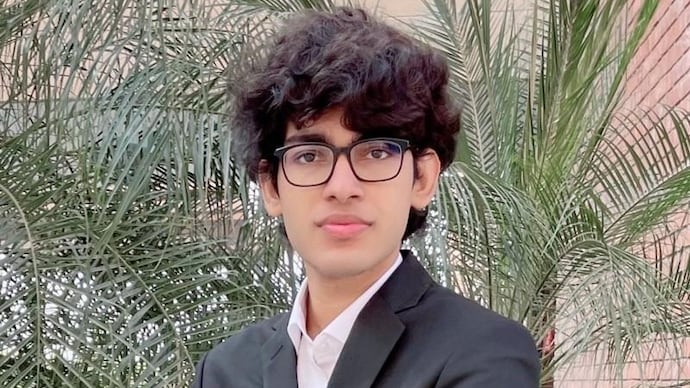
(Agnik was interviewed by Editor Rishabh Chauhan. The interview has been presented in the first person to help readers relate to his experiences and connect with his journey more closely.)
I never knew coding.
I completed Class 12 from my hometown with the usual science subjects. There was no exposure to artificial intelligence, software development or programming. Like many students, I was unsure about what to do after school. My JEE rank was not good enough to get into an IIT or even an NIT. For some time, I was confused about which college to choose and what path to follow.
That uncertainty eventually led me to Newton School of Technology – Rishihood University. At the time, it was still relatively new. What attracted me was that it was offering something I could not find elsewhere. The focus was not just on degrees, it was on building skills. Looking back now, that decision changed my life.
It has been two years since I joined. During this time, I have won five hackathons, including one at IIT Roorkee. During my first two semesters, I learned about several internship opportunities and went on to complete three major internships, earning nearly Rs 8 lakh.
More importantly, I have gained a deeper understanding of how technology is changing the way students build their careers.
The biggest lesson I have learned is that companies are increasingly looking beyond marks and degrees. Recruiters want people who can solve problems.
Today, hackathons, internships and real-world projects carry significant weight on a resume. Companies want students who have built products, worked with teams and tackled practical challenges.
That shift is happening rapidly because of AI and the speed at which technology is evolving.
LEARNING CODING FROM SCRATCH
When I joined college, I had no background in coding.
In my first semester, I was introduced to programming fundamentals. What stood out was the curriculum. Many of the concepts that are introduced in later years at traditional engineering colleges were being taught much earlier.
Frontend and backend development became part of my learning journey from the beginning.
I realised that the technology industry moves much faster than academic systems. While fundamentals remain important, students also need exposure to current tools and real-world applications.
The classroom alone is no longer enough.
THE INTERNSHIPS THAT CHANGED EVERYTHING
One of the most important milestones in my journey was getting selected for Google Summer of Code. I was selected not once but twice, once in my first year and again in my second year.
Google Summer of Code, commonly known as GSoC, is a global programme where students contribute to open-source projects under the guidance of experienced mentors. Every year, Google works with selected organisations worldwide and chooses students to build projects that are later used by real communities and companies.
My work involved building and contributing to open-source systems. Each internship lasted around three months and came with a stipend. I was also selected for Linux Foundation's LFX Mentorship Programme, where I worked on 5G telecom infrastructure and DevOps-related projects.
These experiences exposed me to technologies and challenges that cannot be fully understood through textbooks alone.
WHY HACKATHONS MATTER
Winning five hackathons remains one of my proudest achievements. Hackathons teach students something that classrooms often cannot: how to solve a problem within limited time and resources.
You learn teamwork. You learn communication. You learn how products are built. Many people think hackathons are only competitions. I see them differently.
They are miniature versions of startups. In a hackathon, one person handles design, another handles coding, someone else manages planning and presentations. The same structure exists inside successful startups.
Many of the people I work with today are individuals I first met through hackathons.
BUILDING A STARTUP AND AI INCLUSION IN CLASSROOMS
Alongside internships and competitions, I have also been working on my own startup. The venture recently received funding and is currently valued at around Rs 5 crore. Choosing the startup route is not easy.
It would have been simpler to focus only on internships or corporate jobs. A startup demands uncertainty. Most startups fail. Everyone knows that. But I have always felt that building something of my own is worth attempting. Right now, that remains my primary focus.
AI has transformed the way students learn. I have personally experienced this while working on research projects.
Recently, I worked on a project related to MRI scans. When I started, I had no knowledge of the subject. Over two months, I read research papers, collected information from hundreds of sources and created extensive notes.
AI helped me understand concepts that would have taken far longer to grasp on my own. It can explain research papers, summarise information and assist with learning. At the same time, I do not believe AI will replace teachers anytime soon.
Teachers provide experience, judgement and mentorship. AI works best as a companion, not a replacement.
When I look around today, I see a clear shift taking place. Students are no longer waiting until graduation to gain experience. They are building products, joining open-source projects, participating in hackathons and launching startups while still in college.
Companies are noticing this. A degree still matters. But what matters more is whether you can solve a real problem.
Two years ago, I was a student with no coding experience and no clear roadmap. Today, after five hackathon wins, three internships and countless hours spent learning, I am convinced of one thing: the future will belong to builders, not just degree holders.
(Agnik was interviewed by Editor Rishabh Chauhan. The interview has been presented in the first person to help readers relate to his experiences and connect with his journey more closely.)
I never knew coding.
I completed Class 12 from my hometown with the usual science subjects. There was no exposure to artificial intelligence, software development or programming. Like many students, I was unsure about what to do after school. My JEE rank was not good enough to get into an IIT or even an NIT. For some time, I was confused about which college to choose and what path to follow.
That uncertainty eventually led me to Newton School of Technology – Rishihood University. At the time, it was still relatively new. What attracted me was that it was offering something I could not find elsewhere. The focus was not just on degrees, it was on building skills. Looking back now, that decision changed my life.
It has been two years since I joined. During this time, I have won five hackathons, including one at IIT Roorkee. During my first two semesters, I learned about several internship opportunities and went on to complete three major internships, earning nearly Rs 8 lakh.
More importantly, I have gained a deeper understanding of how technology is changing the way students build their careers.
The biggest lesson I have learned is that companies are increasingly looking beyond marks and degrees. Recruiters want people who can solve problems.
Today, hackathons, internships and real-world projects carry significant weight on a resume. Companies want students who have built products, worked with teams and tackled practical challenges.
That shift is happening rapidly because of AI and the speed at which technology is evolving.
LEARNING CODING FROM SCRATCH
When I joined college, I had no background in coding.
In my first semester, I was introduced to programming fundamentals. What stood out was the curriculum. Many of the concepts that are introduced in later years at traditional engineering colleges were being taught much earlier.
Frontend and backend development became part of my learning journey from the beginning.
I realised that the technology industry moves much faster than academic systems. While fundamentals remain important, students also need exposure to current tools and real-world applications.
The classroom alone is no longer enough.
THE INTERNSHIPS THAT CHANGED EVERYTHING
One of the most important milestones in my journey was getting selected for Google Summer of Code. I was selected not once but twice, once in my first year and again in my second year.
Google Summer of Code, commonly known as GSoC, is a global programme where students contribute to open-source projects under the guidance of experienced mentors. Every year, Google works with selected organisations worldwide and chooses students to build projects that are later used by real communities and companies.
My work involved building and contributing to open-source systems. Each internship lasted around three months and came with a stipend. I was also selected for Linux Foundation's LFX Mentorship Programme, where I worked on 5G telecom infrastructure and DevOps-related projects.
These experiences exposed me to technologies and challenges that cannot be fully understood through textbooks alone.
WHY HACKATHONS MATTER
Winning five hackathons remains one of my proudest achievements. Hackathons teach students something that classrooms often cannot: how to solve a problem within limited time and resources.
You learn teamwork. You learn communication. You learn how products are built. Many people think hackathons are only competitions. I see them differently.
They are miniature versions of startups. In a hackathon, one person handles design, another handles coding, someone else manages planning and presentations. The same structure exists inside successful startups.
Many of the people I work with today are individuals I first met through hackathons.
BUILDING A STARTUP AND AI INCLUSION IN CLASSROOMS
Alongside internships and competitions, I have also been working on my own startup. The venture recently received funding and is currently valued at around Rs 5 crore. Choosing the startup route is not easy.
It would have been simpler to focus only on internships or corporate jobs. A startup demands uncertainty. Most startups fail. Everyone knows that. But I have always felt that building something of my own is worth attempting. Right now, that remains my primary focus.
AI has transformed the way students learn. I have personally experienced this while working on research projects.
Recently, I worked on a project related to MRI scans. When I started, I had no knowledge of the subject. Over two months, I read research papers, collected information from hundreds of sources and created extensive notes.
AI helped me understand concepts that would have taken far longer to grasp on my own. It can explain research papers, summarise information and assist with learning. At the same time, I do not believe AI will replace teachers anytime soon.
Teachers provide experience, judgement and mentorship. AI works best as a companion, not a replacement.
When I look around today, I see a clear shift taking place. Students are no longer waiting until graduation to gain experience. They are building products, joining open-source projects, participating in hackathons and launching startups while still in college.
Companies are noticing this. A degree still matters. But what matters more is whether you can solve a real problem.
Two years ago, I was a student with no coding experience and no clear roadmap. Today, after five hackathon wins, three internships and countless hours spent learning, I am convinced of one thing: the future will belong to builders, not just degree holders.

