India's Rs 2,352 crore Chenab–Beas link tunnel: The project that has Pakistan on edge
India has proposed the Chenab-Beas Link Tunnel to divert surplus water from the upper Chenab basin into the Beas system. The plan has drawn attention in Pakistan because the Chenab is covered by the Indus Waters Treaty and downstream flows remain sensitive.
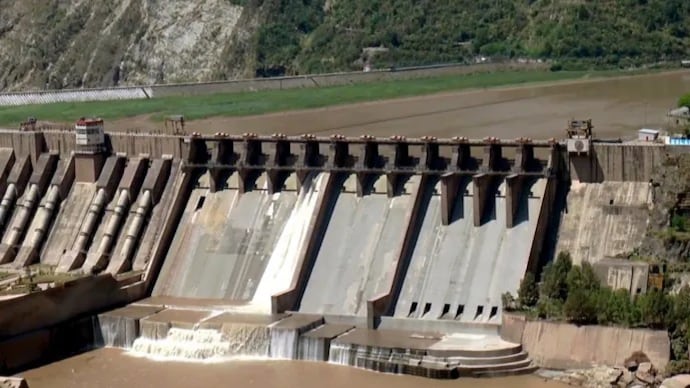
India recently announced a project to link two rivers, the Chenab and the Beas, known as the Chenab–Beas Link Tunnel Project. The announcement has drawn attention in Pakistan, as the diversion of water could have implications for it.
The strategic project involves the construction of an 8.7-kilometre tunnel to divert surplus water from the Chenab basin to the Beas river system, which often experiences low water levels during the summer months. The total estimated cost of the project is Rs 2,352 crore.
The Chenab is part of the Indus river system, which includes the western rivers, Indus, Jhelum and Chenab, and the eastern rivers, Ravi, Beas and Sutlej.
The proposed diversion is intended to supplement water flows in the Beas basin while also supporting hydropower generation.
The project aims to transfer water from the Chandra and Bhaga rivers, which form the upper Chenab, to the Beas basin through a 113-kilometre canal network.
While the Chenab's annual flow is estimated at about 35 million acre-feet, the proposed diversion would account for less than 1 million acre-feet of that volume.
WHERE WILL THE PROJECT BE BUILT?
Phase 1 of the project includes the construction of a proposed 19-metre-high barrage on the Chandra River near Koksar village in the Lahaul Valley of Himachal Pradesh.
The Chandra River is a tributary of the upper Chenab basin in the western Himalayas.
The Chandra River is one of the headwater tributaries of the Chenab River. Located in the western Himalayas, the region forms part of the upper Chenab basin.
Water diverted from this area would be channelled through the proposed tunnel into the Beas river system.
WHO IS IMPLEMENTING THE PROJECT?
The project is expected to be implemented by the National Hydroelectric Power Corporation (NHPC), a central public sector enterprise involved in hydropower development across India.
According to project plans, the diversion could support nearly 4,000 MW of additional hydropower generation capacity in Himachal Pradesh.
The project is therefore being viewed not only as a water-transfer initiative but also as an energy infrastructure project.
WHY DOES PAKISTAN CARE?
The answer lies in the geography of the Indus river system.
The Chenab is one of the western rivers covered under the Indus Waters Treaty signed between India and Pakistan in 1960. The treaty allocates the waters of the eastern rivers, Ravi, Beas and Sutlej to India, while the western rivers, Indus, Jhelum and Chenab, are largely reserved for Pakistan, with certain rights retained by India.
Because the Chenab eventually flows into Pakistan, any project involving the river attracts attention across the border.
The Chenab–Beas Link Tunnel is part of a broader idea that has appeared in Indian water planning for decades: transferring water from river basins with perceived surpluses to regions facing shortages.
It is also a strategfic move countering the questions of geopolitical uncertanity.
Such projects are often linked to irrigation, flood control, water security and power generation.
For now, the Chenab–Beas Link Tunnel remains on the drawing board. Yet its location, the rivers involved and the wider context of India-Pakistan water relations have already made it one of the most discussed infrastructure proposals in the Himalayan region.
India recently announced a project to link two rivers, the Chenab and the Beas, known as the Chenab–Beas Link Tunnel Project. The announcement has drawn attention in Pakistan, as the diversion of water could have implications for it.
The strategic project involves the construction of an 8.7-kilometre tunnel to divert surplus water from the Chenab basin to the Beas river system, which often experiences low water levels during the summer months. The total estimated cost of the project is Rs 2,352 crore.
The Chenab is part of the Indus river system, which includes the western rivers, Indus, Jhelum and Chenab, and the eastern rivers, Ravi, Beas and Sutlej.
The proposed diversion is intended to supplement water flows in the Beas basin while also supporting hydropower generation.
The project aims to transfer water from the Chandra and Bhaga rivers, which form the upper Chenab, to the Beas basin through a 113-kilometre canal network.
While the Chenab's annual flow is estimated at about 35 million acre-feet, the proposed diversion would account for less than 1 million acre-feet of that volume.
WHERE WILL THE PROJECT BE BUILT?
Phase 1 of the project includes the construction of a proposed 19-metre-high barrage on the Chandra River near Koksar village in the Lahaul Valley of Himachal Pradesh.
The Chandra River is a tributary of the upper Chenab basin in the western Himalayas.
The Chandra River is one of the headwater tributaries of the Chenab River. Located in the western Himalayas, the region forms part of the upper Chenab basin.
Water diverted from this area would be channelled through the proposed tunnel into the Beas river system.
WHO IS IMPLEMENTING THE PROJECT?
The project is expected to be implemented by the National Hydroelectric Power Corporation (NHPC), a central public sector enterprise involved in hydropower development across India.
According to project plans, the diversion could support nearly 4,000 MW of additional hydropower generation capacity in Himachal Pradesh.
The project is therefore being viewed not only as a water-transfer initiative but also as an energy infrastructure project.
WHY DOES PAKISTAN CARE?
The answer lies in the geography of the Indus river system.
The Chenab is one of the western rivers covered under the Indus Waters Treaty signed between India and Pakistan in 1960. The treaty allocates the waters of the eastern rivers, Ravi, Beas and Sutlej to India, while the western rivers, Indus, Jhelum and Chenab, are largely reserved for Pakistan, with certain rights retained by India.
Because the Chenab eventually flows into Pakistan, any project involving the river attracts attention across the border.
The Chenab–Beas Link Tunnel is part of a broader idea that has appeared in Indian water planning for decades: transferring water from river basins with perceived surpluses to regions facing shortages.
It is also a strategfic move countering the questions of geopolitical uncertanity.
Such projects are often linked to irrigation, flood control, water security and power generation.
For now, the Chenab–Beas Link Tunnel remains on the drawing board. Yet its location, the rivers involved and the wider context of India-Pakistan water relations have already made it one of the most discussed infrastructure proposals in the Himalayan region.

