NEET paper leak: Rs 30-lakh deals and how papers reached phones
Before many students even opened their NEET question papers, alleged Rs 30-lakh deals and leaked PDFs were already circulating on mobile phones. Now, students are revealing how the underground system allegedly works.
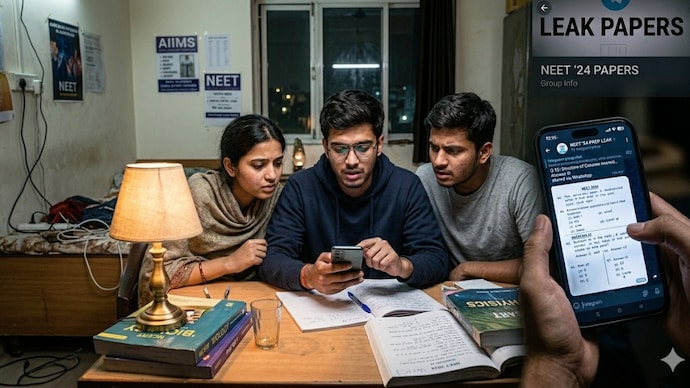
By the time the National Testing Agency (NTA) cancelled NEET UG 2026 held on May 3, the panic had already spread far beyond exam halls.
Students were no longer discussing biology answers or cut-offs, they were discussing screenshots, forwarded PDFs, Telegram channels, deleted chats and names of coaching centres that allegedly “predicted” too much. For lakhs of aspirants, the cancellation felt less like a shocking twist and more like the moment an open secret finally exploded into public view.
Over the last few days, India Today.in spoke to three NEET aspirants and recent qualifiers from different cities who described a strange parallel world that quietly comes alive before almost every major entrance examination.
None of them claimed to have seen an actual leaked paper, but all three described an ecosystem built on rumours, coded language, panic and the constant fear that somebody else may know more than you.
AK says: ‘It starts with innocent-looking groups’
The first student, Akshit Khurrana (28) from New Delhi, now pursuing MBBS in Delhi, laughed awkwardly when asked when this process usually begins. “Much earlier than people actually think,” he said.
According to him, the first layer looks completely harmless.
A friend from coaching adds you to a Telegram group. Then a senior shares another link. Somebody forwards a WhatsApp invite saying there are free revision notes inside. The group names sound routine and forgettable, nothing immediately looks suspicious.
“At first, it’s the usual stuff,” Khurrana tells us. “NCERT notes, previous year questions, chapter tests, mock papers. Even teachers are sometimes inside these groups."
But around two months before NEET, the atmosphere suddenly starts changing.
The public groups slowly split into smaller private channels. Some suddenly become “VIP groups”. Others ask students to contact admins personally for “important material”. Messages begin disappearing after a few hours, and new groups appear with slightly altered names. Some stop allowing screenshots.
“Nobody directly says paper leak. That word is almost never used. They use terms like ‘high probability questions’, ‘trusted source’, ‘internal pattern’, ‘final selection’. But everybody understands what is being hinted at.”
Riya says: ‘The night before NEET is complete madness’
A second student from Kota said the pressure becomes unbearable during the final week before the exam. “You start feeling stupid if you stay out of these groups,” Riya Pillai (name changed because she requested anonymity) admits quietly. She is originally from Kerala but has been staying in Kota for four years pursuing coaching for the NEET. She is 26.
By the last week, she says, students were emotionally exhausted after two years of preparation, mock tests and hostel life. Sleep cycles collapse, parents call constantly. Coaching centres conduct marathon revision sessions. And somewhere in the middle of all that anxiety, PDFs begin flooding student groups every few hours.
“One person says this came from a faculty source. Another says somebody in Delhi confirmed it. Somebody claims an AIIMS professor prepared it. Nobody knows what’s real any more.”
The strange part, she said, is that many students themselves do not fully trust the material they are downloading. But they still cannot ignore it. “Because what if somebody else got something genuine?”
That fear changes student behaviour in ways outsiders rarely understand.
The night before NEET, she said, many aspirants are no longer revising properly. They are comparing screenshots, matching chemistry questions, checking biology diagrams and refreshing Telegram channels every few minutes to see if a “new file” has appeared.
“People panic – buy these PDFs. Sometimes 500, sometimes 2,000, sometimes much more. And because the payments are usually through personal UPI IDs, nobody even knows who is actually behind the groups.”
Faisal Iqbal says: ‘The groups disappear after the exam’
The third student, who appeared for NEET this year from Hyderabad, said the cancellation of the exam did not surprise many aspirants as much as it shocked their parents.
“Students already knew something felt wrong,” Iqbal tells us. The feeling, according to him, became much stronger after the NEET 2024 controversy. Since then, rumours around “inside access” have become almost impossible to separate from genuine preparation advice.
He described a strange hierarchy inside these digital spaces. Large public groups mostly circulate generic material. But then there are invite-only groups where admins claim to provide “final shortlists” or “most expected sets”.
Entry often comes through referrals from coaching students or seniors. Some groups vanish immediately after the exam. Others rename themselves and quietly restart next season. “It operates like a seasonal underground market. People enter, trade information, disappear and come back again next year.”
As the Rajasthan Police Special Operations Group began investigating alleged similarities between a circulated “guess paper” and the actual NEET exam, and the case was later handed over to the CBI, conversations inside many student groups reportedly became quieter. Some channels were deleted altogether, others disabled messaging permissions.
The bigger damage may be psychological
But for these students, the bigger issue now goes far beyond one alleged leak. They believe the real damage is psychological. An entire generation of aspirants has slowly started believing that information itself may be more important than hard work.
And once that belief enters the exam system, suspicion spreads everywhere. A student scoring well suddenly faces whispers. A coaching institute predicting accurately has become controversial. Every forwarded PDF begins looking dangerous.
Iqbal paused for a few seconds before saying something that captures the anxiety hanging over India’s entrance exam culture right now.
“NEET has two syllabi now,” he said. “There’s the official syllabus. And then there’s the underground one.”
By the time the National Testing Agency (NTA) cancelled NEET UG 2026 held on May 3, the panic had already spread far beyond exam halls.
Students were no longer discussing biology answers or cut-offs, they were discussing screenshots, forwarded PDFs, Telegram channels, deleted chats and names of coaching centres that allegedly “predicted” too much. For lakhs of aspirants, the cancellation felt less like a shocking twist and more like the moment an open secret finally exploded into public view.
Over the last few days, India Today.in spoke to three NEET aspirants and recent qualifiers from different cities who described a strange parallel world that quietly comes alive before almost every major entrance examination.
None of them claimed to have seen an actual leaked paper, but all three described an ecosystem built on rumours, coded language, panic and the constant fear that somebody else may know more than you.
AK says: ‘It starts with innocent-looking groups’
The first student, Akshit Khurrana (28) from New Delhi, now pursuing MBBS in Delhi, laughed awkwardly when asked when this process usually begins. “Much earlier than people actually think,” he said.
According to him, the first layer looks completely harmless.
A friend from coaching adds you to a Telegram group. Then a senior shares another link. Somebody forwards a WhatsApp invite saying there are free revision notes inside. The group names sound routine and forgettable, nothing immediately looks suspicious.
“At first, it’s the usual stuff,” Khurrana tells us. “NCERT notes, previous year questions, chapter tests, mock papers. Even teachers are sometimes inside these groups."
But around two months before NEET, the atmosphere suddenly starts changing.
The public groups slowly split into smaller private channels. Some suddenly become “VIP groups”. Others ask students to contact admins personally for “important material”. Messages begin disappearing after a few hours, and new groups appear with slightly altered names. Some stop allowing screenshots.
“Nobody directly says paper leak. That word is almost never used. They use terms like ‘high probability questions’, ‘trusted source’, ‘internal pattern’, ‘final selection’. But everybody understands what is being hinted at.”
Riya says: ‘The night before NEET is complete madness’
A second student from Kota said the pressure becomes unbearable during the final week before the exam. “You start feeling stupid if you stay out of these groups,” Riya Pillai (name changed because she requested anonymity) admits quietly. She is originally from Kerala but has been staying in Kota for four years pursuing coaching for the NEET. She is 26.
By the last week, she says, students were emotionally exhausted after two years of preparation, mock tests and hostel life. Sleep cycles collapse, parents call constantly. Coaching centres conduct marathon revision sessions. And somewhere in the middle of all that anxiety, PDFs begin flooding student groups every few hours.
“One person says this came from a faculty source. Another says somebody in Delhi confirmed it. Somebody claims an AIIMS professor prepared it. Nobody knows what’s real any more.”
The strange part, she said, is that many students themselves do not fully trust the material they are downloading. But they still cannot ignore it. “Because what if somebody else got something genuine?”
That fear changes student behaviour in ways outsiders rarely understand.
The night before NEET, she said, many aspirants are no longer revising properly. They are comparing screenshots, matching chemistry questions, checking biology diagrams and refreshing Telegram channels every few minutes to see if a “new file” has appeared.
“People panic – buy these PDFs. Sometimes 500, sometimes 2,000, sometimes much more. And because the payments are usually through personal UPI IDs, nobody even knows who is actually behind the groups.”
Faisal Iqbal says: ‘The groups disappear after the exam’
The third student, who appeared for NEET this year from Hyderabad, said the cancellation of the exam did not surprise many aspirants as much as it shocked their parents.
“Students already knew something felt wrong,” Iqbal tells us. The feeling, according to him, became much stronger after the NEET 2024 controversy. Since then, rumours around “inside access” have become almost impossible to separate from genuine preparation advice.
He described a strange hierarchy inside these digital spaces. Large public groups mostly circulate generic material. But then there are invite-only groups where admins claim to provide “final shortlists” or “most expected sets”.
Entry often comes through referrals from coaching students or seniors. Some groups vanish immediately after the exam. Others rename themselves and quietly restart next season. “It operates like a seasonal underground market. People enter, trade information, disappear and come back again next year.”
As the Rajasthan Police Special Operations Group began investigating alleged similarities between a circulated “guess paper” and the actual NEET exam, and the case was later handed over to the CBI, conversations inside many student groups reportedly became quieter. Some channels were deleted altogether, others disabled messaging permissions.
The bigger damage may be psychological
But for these students, the bigger issue now goes far beyond one alleged leak. They believe the real damage is psychological. An entire generation of aspirants has slowly started believing that information itself may be more important than hard work.
And once that belief enters the exam system, suspicion spreads everywhere. A student scoring well suddenly faces whispers. A coaching institute predicting accurately has become controversial. Every forwarded PDF begins looking dangerous.
Iqbal paused for a few seconds before saying something that captures the anxiety hanging over India’s entrance exam culture right now.
“NEET has two syllabi now,” he said. “There’s the official syllabus. And then there’s the underground one.”

