NEET is going online: Will it stop the leaks or give hackers a new playground?
Addressing a packed press conference today, the Education Minister finally dropped the bombshell. NEET-UG is ditching paper and going digital by 2027. But in a country where even "unhackable" exams have been compromised, is this a real fix or just a high-tech distraction? We ask experts to join the debate.
If you have been following the absolute chaos surrounding the NEET-UG exams lately, you know the system didn't just stumble, it literally fell off a cliff. Between the grace-marks drama and the widespread paper leaks that saw question papers being sold in the dark of night, the trust of 23 lakh students was completely shattered.
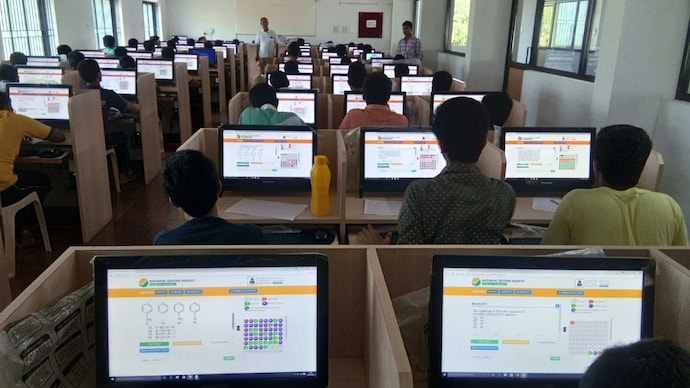
Addressing these concerns in a high-stakes press conference at Teen Murti today, Education Minister Dharmendra Pradhan, finally laid out a roadmap for reform. The headline? By 2027, the traditional pen-and-paper OMR format for NEET-UG will be a thing of the past. The exam is moving to a Computer-Based Test (CBT) format.
Read more on what changes for the students here.
The government’s logic is a simple one. If there’s no physical paper to print, transport, or store in trunks, there’s no paper to leak. By doing so, they are strictly adhering to the hybrid exam model suggestion made by the Radhakrishnan Commission set up by the Education Ministry after the initial NEET fiasco in 2024.
But as anyone who has followed India’s digital journey knows, "online" doesn't always mean "bulletproof."
THE DIGITAL TRACK RECORD: NOT EXACTLY LEAK-PROOF
The move to online testing is being framed as the ultimate solution to corruption. However, we’ve been down this "digital-is-safer" road before, and it has some pretty nasty potholes.
Take the JEE Main, for example. It’s been conducted online for years and was long considered the gold standard for security. That was until 2021, when the CBI busted a massive scam. It wasn't about stolen papers; it was about "remote access." They had then called it digital manipulation.
A private coaching centre in Jamshedpur was caught using specialised software to let hackers, allegedly even some from Russia, log into students' computers remotely and solve the paper for them. When the exam is on a screen, the thief doesn’t need to break into a warehouse; they just need a login.
Then there’s the SSC CGL (Staff Selection Commission) allegations of 2018. Thousands of candidates took to the streets after screenshots of the "online" exam started circulating on social media while the test was still happening. It turned out that the "secure" labs were actually compromised, with remote-sharing tools allowing outsiders to see the questions in real-time.
Even the CAT (Common Admission Test) for IIMs, arguably India’s most sophisticated digital exam, has faced issues where specific labs had to cancel tests due to technical glitches or localised mismanagement.
In 2016, the Railway Recruitment Control Board (RRB) Non-Technical Popular Category (Graduate) examination was rescheduled due to a paper leak. The exam was supposed to be conducted from April 26 to April 30.
THE GREAT DEBATE: TECH VERSUS REALITY
The Education Minister's announcement from Teen Murti today has sparked a massive debate among experts. Some see it as a necessary evolution, while others fear it’s a "leap of faith" without a safety net.
Jayaprakash Gandhi, a prominent career consultant who has long campaigned for this shift, is firmly in the pro-digital camp. He believes that while no system is perfect, CBT is a massive upgrade over the current mess.
"Because it can avoid 80% of malpractices, as today we have the technology to check and protect cyber piracy, and we can have many AI cybersecurity tools to protect the sanctity of the exams," Gandhi says. He argues that by cutting out the logistics of printing and physical transport, you remove the biggest human vulnerabilities in the chain.
Agreed.
But on the ground, some teachers are worried that this change might leave some students behind. Sunita Sharma, a veteran NEET tutor based in Rajasthan, thinks the government is ignoring the "Digital Divide."
"It sounds great in a Delhi press conference, but think about a student from a remote village in Bihar or Odisha. Many of these kids have never sat in front of a computer for three hours straight. Forcing them into a CBT format adds a layer of 'tech-anxiety' on top of the hardest exam of their lives. Plus, we’ve seen that these private testing labs are often the ones who take bribes to look the other way while someone hacks the server."
Aman Gupta, a cybersecurity analyst who monitors competitive exams, adds another layer of caution. "The question we need to ask is that are we moving from a 'physical' leak to a 'systemic' leak? In the OMR era, you needed to steal a paper. In the CBT era, a single corrupt IT admin at a regional centre could give remote access to fifty students at once. Unless the government builds its own dedicated, high-security testing centres, rather than renting out dodgy private colleges, we are just changing the method of cheating, not stopping it."
WHAT HAPPENS NOW
The 2027 deadline gives the National Testing Agency (NTA) three years to build an infrastructure that can handle 25 lakh simultaneous users without crashing or being hacked.
The shift to online testing is a bold move, and it might indeed kill the "paper-in-a-suitcase" style of corruption. But as history shows us, when you build a higher wall, the scammers just find a longer ladder.
For the students of 2027, the hope is that by the time they sit for their exams, the government will have more than just a new format, they will have a system that actually works.
If you have been following the absolute chaos surrounding the NEET-UG exams lately, you know the system didn't just stumble, it literally fell off a cliff. Between the grace-marks drama and the widespread paper leaks that saw question papers being sold in the dark of night, the trust of 23 lakh students was completely shattered.
Addressing these concerns in a high-stakes press conference at Teen Murti today, Education Minister Dharmendra Pradhan, finally laid out a roadmap for reform. The headline? By 2027, the traditional pen-and-paper OMR format for NEET-UG will be a thing of the past. The exam is moving to a Computer-Based Test (CBT) format.
Read more on what changes for the students here.
The government’s logic is a simple one. If there’s no physical paper to print, transport, or store in trunks, there’s no paper to leak. By doing so, they are strictly adhering to the hybrid exam model suggestion made by the Radhakrishnan Commission set up by the Education Ministry after the initial NEET fiasco in 2024.
But as anyone who has followed India’s digital journey knows, "online" doesn't always mean "bulletproof."
THE DIGITAL TRACK RECORD: NOT EXACTLY LEAK-PROOF
The move to online testing is being framed as the ultimate solution to corruption. However, we’ve been down this "digital-is-safer" road before, and it has some pretty nasty potholes.
Take the JEE Main, for example. It’s been conducted online for years and was long considered the gold standard for security. That was until 2021, when the CBI busted a massive scam. It wasn't about stolen papers; it was about "remote access." They had then called it digital manipulation.
A private coaching centre in Jamshedpur was caught using specialised software to let hackers, allegedly even some from Russia, log into students' computers remotely and solve the paper for them. When the exam is on a screen, the thief doesn’t need to break into a warehouse; they just need a login.
Then there’s the SSC CGL (Staff Selection Commission) allegations of 2018. Thousands of candidates took to the streets after screenshots of the "online" exam started circulating on social media while the test was still happening. It turned out that the "secure" labs were actually compromised, with remote-sharing tools allowing outsiders to see the questions in real-time.
Even the CAT (Common Admission Test) for IIMs, arguably India’s most sophisticated digital exam, has faced issues where specific labs had to cancel tests due to technical glitches or localised mismanagement.
In 2016, the Railway Recruitment Control Board (RRB) Non-Technical Popular Category (Graduate) examination was rescheduled due to a paper leak. The exam was supposed to be conducted from April 26 to April 30.
THE GREAT DEBATE: TECH VERSUS REALITY
The Education Minister's announcement from Teen Murti today has sparked a massive debate among experts. Some see it as a necessary evolution, while others fear it’s a "leap of faith" without a safety net.
Jayaprakash Gandhi, a prominent career consultant who has long campaigned for this shift, is firmly in the pro-digital camp. He believes that while no system is perfect, CBT is a massive upgrade over the current mess.
"Because it can avoid 80% of malpractices, as today we have the technology to check and protect cyber piracy, and we can have many AI cybersecurity tools to protect the sanctity of the exams," Gandhi says. He argues that by cutting out the logistics of printing and physical transport, you remove the biggest human vulnerabilities in the chain.
Agreed.
But on the ground, some teachers are worried that this change might leave some students behind. Sunita Sharma, a veteran NEET tutor based in Rajasthan, thinks the government is ignoring the "Digital Divide."
"It sounds great in a Delhi press conference, but think about a student from a remote village in Bihar or Odisha. Many of these kids have never sat in front of a computer for three hours straight. Forcing them into a CBT format adds a layer of 'tech-anxiety' on top of the hardest exam of their lives. Plus, we’ve seen that these private testing labs are often the ones who take bribes to look the other way while someone hacks the server."
Aman Gupta, a cybersecurity analyst who monitors competitive exams, adds another layer of caution. "The question we need to ask is that are we moving from a 'physical' leak to a 'systemic' leak? In the OMR era, you needed to steal a paper. In the CBT era, a single corrupt IT admin at a regional centre could give remote access to fifty students at once. Unless the government builds its own dedicated, high-security testing centres, rather than renting out dodgy private colleges, we are just changing the method of cheating, not stopping it."
WHAT HAPPENS NOW
The 2027 deadline gives the National Testing Agency (NTA) three years to build an infrastructure that can handle 25 lakh simultaneous users without crashing or being hacked.
The shift to online testing is a bold move, and it might indeed kill the "paper-in-a-suitcase" style of corruption. But as history shows us, when you build a higher wall, the scammers just find a longer ladder.
For the students of 2027, the hope is that by the time they sit for their exams, the government will have more than just a new format, they will have a system that actually works.

