Too tough, too vague: Why UPSC aspirants are angry after prelims
UPSC aspirants have questioned this year's prelims, calling the paper unusually tough, vague and time-consuming. Their complaints have widened the debate on language equality, accessibility and fairness in competitive exams.
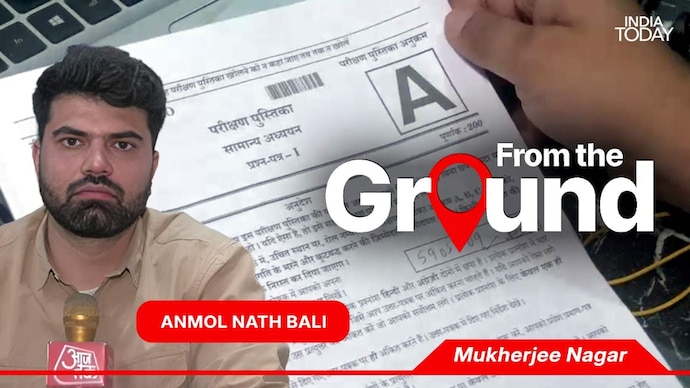
Concerns over the country’s examination system have now reached one of India’s most prestigious competitive tests, the Union Public Service Commission’s Civil Services Preliminary Examination. Candidates described this year’s paper as unusually confusing, exhausting and unpredictable.
Nearly 5.5 lakh aspirants appeared for the UPSC Civil Services Preliminary Examination on Sunday, May 24. The exam was conducted in two stages -- General Studies (GS Paper 1) and the Civil Services Aptitude Test (CSAT). Soon after the exam ended, social media was flooded with reactions from candidates questioning the pattern, language and overall fairness of the paper.
Many aspirants said the GS Paper 1 was far tougher than expected, with lengthy and complex questions that consumed more time than usual. Several candidates claimed that even bureaucrats and senior mentors struggled to solve the paper.
The debate comes amid wider concerns over examination processes in the country following controversies surrounding the NEET-UG paper leak and criticism of the CBSE’s On-Screen Marking system.
In Delhi’s Mukherjee Nagar, a major coaching and preparation hub for Civil Services aspirants, candidates voiced frustration over the changing nature of the examination.
Abhishek Pandey, who appeared for the exam, said the GS Paper 1 pattern felt significantly different this year.
“The language of the questions was complicated, and many questions took a lot of time just to understand,” he said. “There were also fewer direct questions from traditional subjects compared to previous years.”
Another candidate, Nandan Pandey, raised concerns over the experience of Hindi-medium aspirants. He alleged that translations of several questions were difficult to comprehend and required repeated reading.
“There was a noticeable difference between the experience of English-medium and Hindi-medium candidates,” he said.
Candidates also highlighted time-management issues in the CSAT paper.
Prashant Singh said many mathematics questions were lengthy and multi-layered, making them difficult to solve within the limited time.
“Some comprehension passages were also very dense and academic in language,” he said.
Kaustubh Vajpayee, another aspirant, said the issue went beyond the difficulty level of the paper and touched upon inclusivity and equal opportunity.
“The UPSC examination is meant to provide equal opportunities to candidates from diverse backgrounds,” he said. “If the language or nature of the questions creates additional barriers for any group, then it deserves serious attention.”
The controversy has triggered a wider conversation on transparency, language equality and accessibility in India’s competitive examination system.
The UPSC has not issued an official response so far. However, the reactions following the examination have once again raised questions about how fairness and trust can be strengthened in the country’s premier recruitment exams.
Concerns over the country’s examination system have now reached one of India’s most prestigious competitive tests, the Union Public Service Commission’s Civil Services Preliminary Examination. Candidates described this year’s paper as unusually confusing, exhausting and unpredictable.
Nearly 5.5 lakh aspirants appeared for the UPSC Civil Services Preliminary Examination on Sunday, May 24. The exam was conducted in two stages -- General Studies (GS Paper 1) and the Civil Services Aptitude Test (CSAT). Soon after the exam ended, social media was flooded with reactions from candidates questioning the pattern, language and overall fairness of the paper.
Many aspirants said the GS Paper 1 was far tougher than expected, with lengthy and complex questions that consumed more time than usual. Several candidates claimed that even bureaucrats and senior mentors struggled to solve the paper.
The debate comes amid wider concerns over examination processes in the country following controversies surrounding the NEET-UG paper leak and criticism of the CBSE’s On-Screen Marking system.
In Delhi’s Mukherjee Nagar, a major coaching and preparation hub for Civil Services aspirants, candidates voiced frustration over the changing nature of the examination.
Abhishek Pandey, who appeared for the exam, said the GS Paper 1 pattern felt significantly different this year.
“The language of the questions was complicated, and many questions took a lot of time just to understand,” he said. “There were also fewer direct questions from traditional subjects compared to previous years.”
Another candidate, Nandan Pandey, raised concerns over the experience of Hindi-medium aspirants. He alleged that translations of several questions were difficult to comprehend and required repeated reading.
“There was a noticeable difference between the experience of English-medium and Hindi-medium candidates,” he said.
Candidates also highlighted time-management issues in the CSAT paper.
Prashant Singh said many mathematics questions were lengthy and multi-layered, making them difficult to solve within the limited time.
“Some comprehension passages were also very dense and academic in language,” he said.
Kaustubh Vajpayee, another aspirant, said the issue went beyond the difficulty level of the paper and touched upon inclusivity and equal opportunity.
“The UPSC examination is meant to provide equal opportunities to candidates from diverse backgrounds,” he said. “If the language or nature of the questions creates additional barriers for any group, then it deserves serious attention.”
The controversy has triggered a wider conversation on transparency, language equality and accessibility in India’s competitive examination system.
The UPSC has not issued an official response so far. However, the reactions following the examination have once again raised questions about how fairness and trust can be strengthened in the country’s premier recruitment exams.

