Did you know? A dragon appears at Cornell University every year
Every spring, Cornell University in New York, US, comes alive with Dragon Day, a 125-year-old tradition in which architecture students build and parade a giant dragon across campus. Rooted in creativity, rivalry, and community spirit, the event also features a playful showdown with the engineers' phoenix, making it one of Cornell's most iconic celebrations.
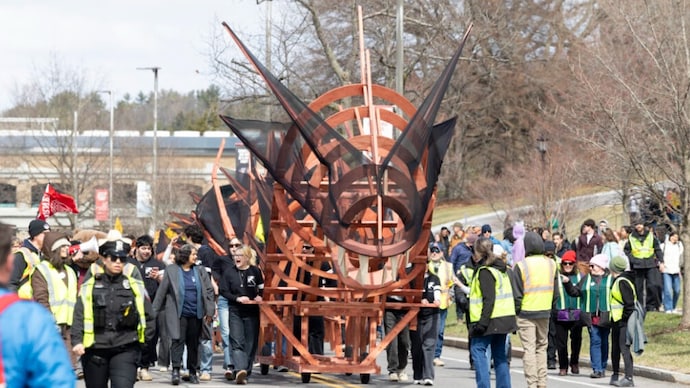
Every year, just before students scatter for spring break, an unusual creature makes its way across the campus of Cornell University in New York. Towering above the crowd, breathing life into imagination and drawing hundreds of spectators, it commands attention wherever it goes.
No, it is not a real dragon.
Yet for generations of Cornell students, it has become one of the most anticipated sights of the academic year.
Welcome to Dragon Day, a century-old tradition that transforms the Ivy League campus into a stage for creativity, rivalry, chaos, and community.
THE BIRTH OF THE DRAGON
For over 100 years, first-year architecture students at Cornell University have dedicated weeks to designing and constructing a giant dragon, which is then paraded through campus just before spring break. The tradition has become one of Cornell's most iconic annual spectacles, blending creativity, craftsmanship, and student spirit.
The tradition is more than a spectacle. It is a celebration of craftsmanship, teamwork, and artistic ambition. What begins as sketches and construction materials eventually emerges as a massive mythical creature, carried proudly by students through cheering crowds.
Today, Dragon Day is one of Cornell's most cherished traditions, but its origins were surprisingly modest.
The event traces its roots to 1901, when architecture student Willard Dickerman Straight wanted to organise a celebration that would bring architecture students together. Originally conceived as a St. Patrick's Day festival, the event gradually evolved over the decades.
Here's a look at the 1901 dragon:
Interestingly, it was not always known as Dragon Day. While architecture students were referring to their creation as a dragon by the 1920s, the term "Dragon Day" did not become widely used until the 1980s, according to reports by The Cornell Daily Sun.
In 2013, after Cornell shifted spring break later into the semester, the celebration was officially moved to the day before the holiday began, separating it from its St. Patrick's Day roots.
For Dragon Day 2025, which marked the festival's 125th anniversary, students adopted the theme "Veiled." Their dragon featured tensile fabric draped over a concealed structural framework, blending mystery with innovative design.
WHEN CELEBRATION MEETS CHAOS
Dragon Day may be beloved today, but its history is anything but orderly.
In fact, chaos has long been part of its identity.
According to historians of the tradition, some of the earliest celebrations descended into fierce snowball battles between architecture and engineering students. By the 1970s and 1980s, the event had developed a reputation for pranks, vandalism, and spontaneous campus-wide mischief.
Here's a look at the 2006 dragon:
Green paint occasionally appeared on university landmarks. Rival student groups looked for increasingly creative ways to outdo one another. Disorder became almost as much a tradition as the dragon itself.
At one point, the university decided enough was enough.
In 1990, Cornell's Department of Architecture officially cancelled Dragon Day, citing concerns about safety and costs. However, the student community's attachment to the event proved too strong. The festival eventually returned in a more organised and regulated form.
While today's celebrations are far more structured, the spirit of playful rebellion that defined earlier generations continues to linger.
THE LEGENDARY RIVAL: RISE OF PHOENIX
What is a dragon story without a worthy opponent?
Cornell students found the answer in the late 1980s.
Inspired by the attention surrounding Dragon Day, engineering students decided they wanted their own role in the festivities.
In the spring of 1987, a group of engineers created a majestic phoenix that hovered above the Engineering Quad as the architecture students' dragon marched past.
What began as a one-time response soon evolved into a lasting tradition.
The students established the Phoenix Society and pledged to challenge the dragon every year. Over time, they experimented with a variety of creations, including a knight, a cobra, and even a penguin. Eventually, however, the phoenix emerged as the enduring symbol of engineering pride.
Today, one of the highlights of Dragon Day is the dramatic encounter between the architecture students' dragon and the engineers' phoenix.
The rivalry is playful rather than hostile, but it adds an extra layer of excitement to the event, turning the parade into a campus-wide spectacle.
MORE THAN A FESTIVAL
Despite its history of chaos, competition, and occasional controversy, Dragon Day has endured because it represents something deeper than a parade.
For architecture students, it is often their first major collaborative project at Cornell. For engineers, it is an opportunity to showcase ingenuity and school spirit. For the broader campus community, it is a chance to celebrate creativity in all its forms.
In an age when university traditions often fade away, Dragon Day continues to thrive because it belongs to the students. Each generation leaves its own mark, adding new ideas while preserving the essence of a celebration that has survived for more than a century.
And so, every spring, Cornell witnesses a familiar sight: a dragon emerging from the imagination of students, marching proudly across campus, ready once again to meet its eternal rival.
Not many universities can claim that the largest creature to roam their campus is a dragon. At Cornell, that is simply part of the tradition.
Every year, just before students scatter for spring break, an unusual creature makes its way across the campus of Cornell University in New York. Towering above the crowd, breathing life into imagination and drawing hundreds of spectators, it commands attention wherever it goes.
No, it is not a real dragon.
Yet for generations of Cornell students, it has become one of the most anticipated sights of the academic year.
Welcome to Dragon Day, a century-old tradition that transforms the Ivy League campus into a stage for creativity, rivalry, chaos, and community.
THE BIRTH OF THE DRAGON
For over 100 years, first-year architecture students at Cornell University have dedicated weeks to designing and constructing a giant dragon, which is then paraded through campus just before spring break. The tradition has become one of Cornell's most iconic annual spectacles, blending creativity, craftsmanship, and student spirit.
The tradition is more than a spectacle. It is a celebration of craftsmanship, teamwork, and artistic ambition. What begins as sketches and construction materials eventually emerges as a massive mythical creature, carried proudly by students through cheering crowds.
Today, Dragon Day is one of Cornell's most cherished traditions, but its origins were surprisingly modest.
The event traces its roots to 1901, when architecture student Willard Dickerman Straight wanted to organise a celebration that would bring architecture students together. Originally conceived as a St. Patrick's Day festival, the event gradually evolved over the decades.
Here's a look at the 1901 dragon:
Interestingly, it was not always known as Dragon Day. While architecture students were referring to their creation as a dragon by the 1920s, the term "Dragon Day" did not become widely used until the 1980s, according to reports by The Cornell Daily Sun.
In 2013, after Cornell shifted spring break later into the semester, the celebration was officially moved to the day before the holiday began, separating it from its St. Patrick's Day roots.
For Dragon Day 2025, which marked the festival's 125th anniversary, students adopted the theme "Veiled." Their dragon featured tensile fabric draped over a concealed structural framework, blending mystery with innovative design.
WHEN CELEBRATION MEETS CHAOS
Dragon Day may be beloved today, but its history is anything but orderly.
In fact, chaos has long been part of its identity.
According to historians of the tradition, some of the earliest celebrations descended into fierce snowball battles between architecture and engineering students. By the 1970s and 1980s, the event had developed a reputation for pranks, vandalism, and spontaneous campus-wide mischief.
Here's a look at the 2006 dragon:
Green paint occasionally appeared on university landmarks. Rival student groups looked for increasingly creative ways to outdo one another. Disorder became almost as much a tradition as the dragon itself.
At one point, the university decided enough was enough.
In 1990, Cornell's Department of Architecture officially cancelled Dragon Day, citing concerns about safety and costs. However, the student community's attachment to the event proved too strong. The festival eventually returned in a more organised and regulated form.
While today's celebrations are far more structured, the spirit of playful rebellion that defined earlier generations continues to linger.
THE LEGENDARY RIVAL: RISE OF PHOENIX
What is a dragon story without a worthy opponent?
Cornell students found the answer in the late 1980s.
Inspired by the attention surrounding Dragon Day, engineering students decided they wanted their own role in the festivities.
In the spring of 1987, a group of engineers created a majestic phoenix that hovered above the Engineering Quad as the architecture students' dragon marched past.
What began as a one-time response soon evolved into a lasting tradition.
The students established the Phoenix Society and pledged to challenge the dragon every year. Over time, they experimented with a variety of creations, including a knight, a cobra, and even a penguin. Eventually, however, the phoenix emerged as the enduring symbol of engineering pride.
Today, one of the highlights of Dragon Day is the dramatic encounter between the architecture students' dragon and the engineers' phoenix.
The rivalry is playful rather than hostile, but it adds an extra layer of excitement to the event, turning the parade into a campus-wide spectacle.
MORE THAN A FESTIVAL
Despite its history of chaos, competition, and occasional controversy, Dragon Day has endured because it represents something deeper than a parade.
For architecture students, it is often their first major collaborative project at Cornell. For engineers, it is an opportunity to showcase ingenuity and school spirit. For the broader campus community, it is a chance to celebrate creativity in all its forms.
In an age when university traditions often fade away, Dragon Day continues to thrive because it belongs to the students. Each generation leaves its own mark, adding new ideas while preserving the essence of a celebration that has survived for more than a century.
And so, every spring, Cornell witnesses a familiar sight: a dragon emerging from the imagination of students, marching proudly across campus, ready once again to meet its eternal rival.
Not many universities can claim that the largest creature to roam their campus is a dragon. At Cornell, that is simply part of the tradition.

