Spider-Noir review: Nicolas Cage swings into chaos with deliciously strange charm
Spider-Noir sends Ben Reilly back into Depression-era New York's criminal underworld. Its noir style and emotional weariness give the superhero tale an unusual pull.
Superhero fatigue is real. At this point, even capes seem tired of themselves.
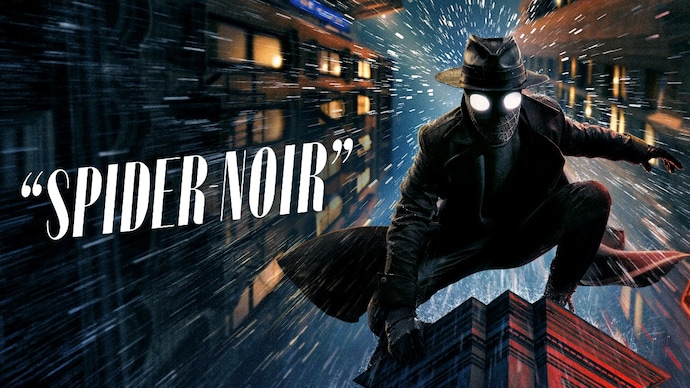
Which is perhaps why Spider-Noir feels oddly refreshing. The new Prime Video series does not try to out-Marvel Marvel with multiverse lectures or world-ending sky beams. Instead, it throws viewers into a rain-soaked 1930s New York, gives its hero a trench coat, unresolved trauma and enough existential exhaustion to rival every detective noir protagonist ever written. The result is strange, stylish and far more entertaining than it has any right to be.
Set in an alternate version of Depression-era New York, Spider-Noir follows Ben Reilly (Nicolas Cage), a washed-up private investigator who once operated as the city’s masked vigilante known simply as “The Spider.” Older, bitter, and carrying enough emotional baggage to collapse a building, Ben gets pulled back into the city’s criminal underworld after a dangerous new case lands on his desk. Mob bosses, corrupt politicians, missing girls, and shadowy conspiracies soon follow because, apparently, even superheroes are not allowed a peaceful retirement any more.
And honestly, Nicolas Cage was born for this level of theatrical nonsense.
Cage does not merely act in Spider-Noir, he attacks the role with glorious unpredictability. One moment he sounds like Humphrey Bogart delivering hard-boiled detective monologues. The next, he spirals into full Nicolas Cage absurdity, muttering dramatic one-liners while looking emotionally haunted under aggressively noir lighting. Somehow, it works. More importantly, the show understands exactly how much Cage energy is too much and cleverly never asks him to tone it down.
There is an old-Hollywood weirdness to the entire series that becomes part of its charm. The black-and-white aesthetic, the smoky jazz clubs, the morally questionable characters and the exaggerated shadows make the show feel like somebody accidentally dropped a comic-book superhero into a detective film from another era. It should feel gimmicky. Instead, it feels committed. Very committed.
Visually, Spider-Noir is arguably one of the most distinct superheroes shows in recent years. The series is available in both colour and black-and-white formats, but the monochrome version carries far more personality. Directors Harry Bradbeer, Nzingha Stewart, Alethea Jones and Greg Yaitanes [who have separately directed episodes of the eight-part series] lean heavily into noir iconography without making the show feel like parody. Every frame looks textured, moody and slightly grimy in the best possible way.
The writing also smartly avoids turning the series into a relentless nostalgia exercise. Beneath all the stylised dialogue and comic-book flourishes is a fairly straightforward story about regret, ageing and guilt. Ben Reilly is not presented as a glamorous superhero. He is exhausted, lonely and often deeply pathetic. The show repeatedly reminds viewers that saving a city does not necessarily save a person from themselves.
That emotional weariness gives the series surprising depth.
The supporting cast also helps keep the world engaging. Lamorne Morris brings warmth and humour without disrupting the tone, while Li Jun Li adds sharpness and emotional grounding to the surrounding chaos. Brendan Gleeson, meanwhile, looks like he was genetically engineered to play intimidating noir villains. As Silvermane, he carries the exact kind of threatening presence the series needs.
That said, Spider-Noir occasionally struggles under the weight of its own style. The pacing in the middle stretch is uneven with a few episodes more invested in mood than momentum. The tonal balancing act also wobbles occasionally. Some scenes play like sincere noir drama, while others embrace near-camp absurdity so aggressively that the emotional tension briefly dissolves.
But strangely, even that inconsistency becomes part of the viewing experience.
Because Spider-Noir never feels manufactured in the way many modern franchise shows do. It feels weirdly personal. It is messy, theatrical and fully aware of how ridiculous its premise sounds. Yet it commits so sincerely to its world that you eventually stop questioning it.
More importantly, the show remembers something many superhero projects forget: fun matters. Not every comic-book adaptation needs to set up twelve spin-offs or explain the future of an entire cinematic universe. Sometimes audiences simply want to watch Nicolas Cage dramatically monologue in black-and-white while fighting gangsters with spider powers.
And thankfully, Spider-Noir delivers exactly that.
It may not reinvent the superhero genre, but it certainly shakes the dust off it. All 8 episodes of the show are out on Prime Video.
Superhero fatigue is real. At this point, even capes seem tired of themselves.
Which is perhaps why Spider-Noir feels oddly refreshing. The new Prime Video series does not try to out-Marvel Marvel with multiverse lectures or world-ending sky beams. Instead, it throws viewers into a rain-soaked 1930s New York, gives its hero a trench coat, unresolved trauma and enough existential exhaustion to rival every detective noir protagonist ever written. The result is strange, stylish and far more entertaining than it has any right to be.
Set in an alternate version of Depression-era New York, Spider-Noir follows Ben Reilly (Nicolas Cage), a washed-up private investigator who once operated as the city’s masked vigilante known simply as “The Spider.” Older, bitter, and carrying enough emotional baggage to collapse a building, Ben gets pulled back into the city’s criminal underworld after a dangerous new case lands on his desk. Mob bosses, corrupt politicians, missing girls, and shadowy conspiracies soon follow because, apparently, even superheroes are not allowed a peaceful retirement any more.
And honestly, Nicolas Cage was born for this level of theatrical nonsense.
Cage does not merely act in Spider-Noir, he attacks the role with glorious unpredictability. One moment he sounds like Humphrey Bogart delivering hard-boiled detective monologues. The next, he spirals into full Nicolas Cage absurdity, muttering dramatic one-liners while looking emotionally haunted under aggressively noir lighting. Somehow, it works. More importantly, the show understands exactly how much Cage energy is too much and cleverly never asks him to tone it down.
There is an old-Hollywood weirdness to the entire series that becomes part of its charm. The black-and-white aesthetic, the smoky jazz clubs, the morally questionable characters and the exaggerated shadows make the show feel like somebody accidentally dropped a comic-book superhero into a detective film from another era. It should feel gimmicky. Instead, it feels committed. Very committed.
Visually, Spider-Noir is arguably one of the most distinct superheroes shows in recent years. The series is available in both colour and black-and-white formats, but the monochrome version carries far more personality. Directors Harry Bradbeer, Nzingha Stewart, Alethea Jones and Greg Yaitanes [who have separately directed episodes of the eight-part series] lean heavily into noir iconography without making the show feel like parody. Every frame looks textured, moody and slightly grimy in the best possible way.
The writing also smartly avoids turning the series into a relentless nostalgia exercise. Beneath all the stylised dialogue and comic-book flourishes is a fairly straightforward story about regret, ageing and guilt. Ben Reilly is not presented as a glamorous superhero. He is exhausted, lonely and often deeply pathetic. The show repeatedly reminds viewers that saving a city does not necessarily save a person from themselves.
That emotional weariness gives the series surprising depth.
The supporting cast also helps keep the world engaging. Lamorne Morris brings warmth and humour without disrupting the tone, while Li Jun Li adds sharpness and emotional grounding to the surrounding chaos. Brendan Gleeson, meanwhile, looks like he was genetically engineered to play intimidating noir villains. As Silvermane, he carries the exact kind of threatening presence the series needs.
That said, Spider-Noir occasionally struggles under the weight of its own style. The pacing in the middle stretch is uneven with a few episodes more invested in mood than momentum. The tonal balancing act also wobbles occasionally. Some scenes play like sincere noir drama, while others embrace near-camp absurdity so aggressively that the emotional tension briefly dissolves.
But strangely, even that inconsistency becomes part of the viewing experience.
Because Spider-Noir never feels manufactured in the way many modern franchise shows do. It feels weirdly personal. It is messy, theatrical and fully aware of how ridiculous its premise sounds. Yet it commits so sincerely to its world that you eventually stop questioning it.
More importantly, the show remembers something many superhero projects forget: fun matters. Not every comic-book adaptation needs to set up twelve spin-offs or explain the future of an entire cinematic universe. Sometimes audiences simply want to watch Nicolas Cage dramatically monologue in black-and-white while fighting gangsters with spider powers.
And thankfully, Spider-Noir delivers exactly that.
It may not reinvent the superhero genre, but it certainly shakes the dust off it. All 8 episodes of the show are out on Prime Video.

