Stranger Things: Tales From '85 review: The vibe is back, the magic isn't
Stranger Things - Tales From '85 series review: Eleven and the gang are back. This time, in animated avatars, to take on more monsters. The spin-off captures the energy of Stranger Things, but the aura feels missing.
The show Stranger Things being a pop culture icon is a statement that could spark debate on any day of the week for years to come. The sensation it created when it ended its run last New Year’s Eve was a phenomenon in itself; despite conversations around the quality of its later seasons, emotionally invested fans felt the sting of one of their favourite shows coming to an end.
However, Netflix is back with Stranger Things: Tales From ’85, an animated spin-off set in the same universe, placed between the second and third seasons during the winter of 1985 in Hawkins. Mike, Dustin, Lucas and Will, along with Max and Eleven, return for another adventure, joined by a few new characters. But are they truly back, or is this a reimagined version of the beloved group? Let’s find out.
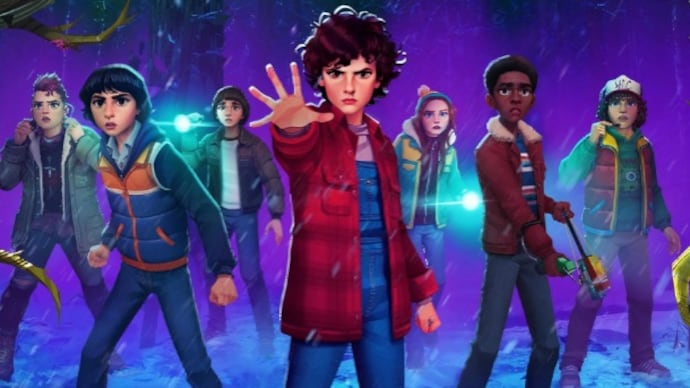
Once you set aside the deep connection built with the characters and their live-action counterparts in Stranger Things, these animated versions come across as a fun bunch you can begin to root for. The show clearly makes an effort to develop them by retaining key traits from the originals while taking the creative liberties that animation allows.
For instance, Dustin’s physical abilities are dialled up while his intellectual edge is toned down, Lucas is portrayed as more athletically gifted, yet often clumsy, and Eleven’s powers remain on par with where they stood towards the end of the original series. When approached with the mindset of watching an animated show, these changes largely work and fit within the tone of the series.
However, shedding that emotional connection is easier said than done. As the show progresses, these alterations begin to feel more distracting and may require some getting used to. Dustin, at times, comes across as irritating in this version - a trait he was not particularly known for earlier, at least until the events surrounding Eddie Munson’s death. This approach, where traits are retained, but core characteristics are altered, can create a disconnect between long-time fans and the show.
The emotional peaks in this animated version feel firmly PG-13, or even milder. The sense of thrill and eeriness that defined the original has been significantly toned down. While this approach may help attract younger audiences, it risks alienating adult viewers. There are several instances where emotions are conveyed through overt verbalisation, which dilutes what could have been more intense moments, making the overall tone feel distinctly child-friendly.
Another aspect that makes this feel like a children’s show is the minimal involvement of adults and older siblings, almost to the point of absence. Apart from Jim Hopper, parents are largely missing. Steve Harrington appears in just one episode and Nancy Wheeler in another. While the children have always carried much of the narrative in the original series, they were often supported by adults in meaningful and responsible ways.
Here, that layer is missing. Mrs Baxter, the replacement science teacher for Mr Clark and Nikki’s (a new kid who joins the group) mother, along with Dan, are among the few adult presences. From handling heavy weaponry to engaging in close combat with the creatures, the children are left to do it all.
The new voice cast takes some getting used to, but the makers have clearly put in the effort to find voices that closely resemble those of the original actors. The cast does a commendable job of bringing back the same energy, helping retain a sense of familiarity. Even the guest appearances of Steve Harrington, Nancy Wheeler and Jim Hopper are effectively voiced, adding to the overall experience.
Animation, handled by Flying Bark Productions, does an impressive job with the visual storytelling. It often recalls the quality seen in Sony’s Spider-Verse films, especially in its aesthetics, visual detailing and use of colour. The world feels consistent with the Hawkins we know—both the real world and the Upside Down, and everything in between. Other technical departments, including sound design and editing, also deliver solid work, making the show technically sound overall.
In conclusion, Stranger Things: Tales From ’85 may feel a little strange to long-time fans of the original series, but it has its merits when viewed without the baggage of expectations. There is enough here to suggest the potential for an engaging, multi-season animated run. However, its placement between two known timelines makes the character arcs feel slightly off, creating a lingering disconnect. The makers need a sweet solution for that sour feeling.
The show Stranger Things being a pop culture icon is a statement that could spark debate on any day of the week for years to come. The sensation it created when it ended its run last New Year’s Eve was a phenomenon in itself; despite conversations around the quality of its later seasons, emotionally invested fans felt the sting of one of their favourite shows coming to an end.
However, Netflix is back with Stranger Things: Tales From ’85, an animated spin-off set in the same universe, placed between the second and third seasons during the winter of 1985 in Hawkins. Mike, Dustin, Lucas and Will, along with Max and Eleven, return for another adventure, joined by a few new characters. But are they truly back, or is this a reimagined version of the beloved group? Let’s find out.
Once you set aside the deep connection built with the characters and their live-action counterparts in Stranger Things, these animated versions come across as a fun bunch you can begin to root for. The show clearly makes an effort to develop them by retaining key traits from the originals while taking the creative liberties that animation allows.
For instance, Dustin’s physical abilities are dialled up while his intellectual edge is toned down, Lucas is portrayed as more athletically gifted, yet often clumsy, and Eleven’s powers remain on par with where they stood towards the end of the original series. When approached with the mindset of watching an animated show, these changes largely work and fit within the tone of the series.
However, shedding that emotional connection is easier said than done. As the show progresses, these alterations begin to feel more distracting and may require some getting used to. Dustin, at times, comes across as irritating in this version - a trait he was not particularly known for earlier, at least until the events surrounding Eddie Munson’s death. This approach, where traits are retained, but core characteristics are altered, can create a disconnect between long-time fans and the show.
The emotional peaks in this animated version feel firmly PG-13, or even milder. The sense of thrill and eeriness that defined the original has been significantly toned down. While this approach may help attract younger audiences, it risks alienating adult viewers. There are several instances where emotions are conveyed through overt verbalisation, which dilutes what could have been more intense moments, making the overall tone feel distinctly child-friendly.
Another aspect that makes this feel like a children’s show is the minimal involvement of adults and older siblings, almost to the point of absence. Apart from Jim Hopper, parents are largely missing. Steve Harrington appears in just one episode and Nancy Wheeler in another. While the children have always carried much of the narrative in the original series, they were often supported by adults in meaningful and responsible ways.
Here, that layer is missing. Mrs Baxter, the replacement science teacher for Mr Clark and Nikki’s (a new kid who joins the group) mother, along with Dan, are among the few adult presences. From handling heavy weaponry to engaging in close combat with the creatures, the children are left to do it all.
The new voice cast takes some getting used to, but the makers have clearly put in the effort to find voices that closely resemble those of the original actors. The cast does a commendable job of bringing back the same energy, helping retain a sense of familiarity. Even the guest appearances of Steve Harrington, Nancy Wheeler and Jim Hopper are effectively voiced, adding to the overall experience.
Animation, handled by Flying Bark Productions, does an impressive job with the visual storytelling. It often recalls the quality seen in Sony’s Spider-Verse films, especially in its aesthetics, visual detailing and use of colour. The world feels consistent with the Hawkins we know—both the real world and the Upside Down, and everything in between. Other technical departments, including sound design and editing, also deliver solid work, making the show technically sound overall.
In conclusion, Stranger Things: Tales From ’85 may feel a little strange to long-time fans of the original series, but it has its merits when viewed without the baggage of expectations. There is enough here to suggest the potential for an engaging, multi-season animated run. However, its placement between two known timelines makes the character arcs feel slightly off, creating a lingering disconnect. The makers need a sweet solution for that sour feeling.

