What's the hype behind 'Gond Katira'?
Gond katira's popularity has surged across social media, with videos pitching it as a summer coolant and bone health aid. Experts say there is no strong evidence for those claims, though its fibre may support gut health.
Once used by our grandmothers or sometimes even by hakims for medicinal purposes, Gond Katira has now spiled into Instagram Reels and wellness blogs.
The Google searches for ‘gond katira’ peaked between April and May, and both YouTube and Instagram searches show multiple videos with millions of likes in recent months.
A number of recipes have been shared by food bloggers and multiple videos talk about how it improves bone density and helps body ‘cool down’ in summer.
But doctors disagree with these claims.
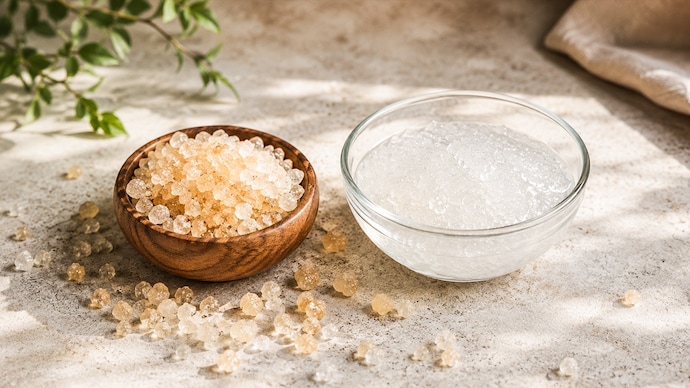
When soaked in water, gond katira swells up into a soft, jelly-like substance, making it suitable for drinks and desserts. But does it really improve bone health or act as a ‘coolant’ for the body?
Experts explained the lack of scientific evidence behind these viral claims.
WHAT IS IT?
It’s a translucent, crystalline lump and looks like a shard of glass and is popularly known as ‘gond katira’ or tragacanth gum, which is a natural gum obtained from the dried sap of certain edible plants, primarily from the genus Astragalus. And when the sap is exposed to air, it hardens.
It is usually available in local grocery shops, popularly called ‘kirana’ stores, but is also available online in its raw form now.
Multiple Instagram videos have famously called Gond katira a natural ‘summer coolant’ and videos showcase it as a key ingredient for many refreshing drinks like shikanji and milkshakes.
According to science communicator Krish Ashok, "These claims are overhyped, and there is no such thing as a cooling effect, but it’s a prebiotic. And prebiotics are better than probiotics because they feed the existing gut bacteria."
Prebiotics are plant fibres that your body can't digest, but the good bacteria in your gut can. Also, the high soluble fibre content makes gond katira a good remedy for digestive issues. It acts as a natural laxative like isabghol (Psyllium husk) but more studies are needed to understand this.
INSTAGRAM CLAIMS – IT IMPROVES BONE HEALTH
Basically, tragacanth gum is low in calories but rich in dietary fibre and has some antioxidants as well as some minerals and vitamins. The gum also has some amount of calcium and magnesium as well and therefore is going viral on Instagram as a cure for bone health issues, but doctors explain that it is not enough to make a big difference on bone health.
“Gond katira should not be thought of as a miracle cure to improve bone health. Gond katira contains small amounts of calcium and magnesium; however, these amounts are too small to help meet the body's daily requirements and therefore will not provide enough support to improve bone health," explained Dr. Akhilesh Yadav, Director, Orthopedics & Joint Replacement, Max Super Speciality Hospital Vaishali.
Well, don't rely on it for your bones. This claim, however confidently appears across the internet, is misleading, as there is no strong research to back up this claim. Although it’s a food-safe ingredient and has a history of use.
According to Krish Ashok, there is zero clinical evidence when it comes to bone health. It’s an Instagram-promoted wellness trend.
Nutritionist Amita Gadre in an Instagram post, also called out the trend and explained how there is no scientific evidence behind this claim. She explained how there is only 15 mg of calcium in 3gm gond katira whereas 1 cup of dahi provides 187 mg of calcium.
Also, relying on just one food item to provide all the nutrients for bones is not a good idea, noted Dr. Yadav. And people with concerns regarding their bone health should concentrate on proper nutrition, adequate levels of vitamin D, and exercise, and seek the advice of a qualified healthcare provider rather than relying on gond katira alone, he added.
So, if you are genuinely concerned about bone density, or dealing with osteoporosis, or joint health, know that you need to consult a doctor and may require prescription medication and other interventions.
Once used by our grandmothers or sometimes even by hakims for medicinal purposes, Gond Katira has now spiled into Instagram Reels and wellness blogs.
The Google searches for ‘gond katira’ peaked between April and May, and both YouTube and Instagram searches show multiple videos with millions of likes in recent months.
A number of recipes have been shared by food bloggers and multiple videos talk about how it improves bone density and helps body ‘cool down’ in summer.
But doctors disagree with these claims.
When soaked in water, gond katira swells up into a soft, jelly-like substance, making it suitable for drinks and desserts. But does it really improve bone health or act as a ‘coolant’ for the body?
Experts explained the lack of scientific evidence behind these viral claims.
WHAT IS IT?
It’s a translucent, crystalline lump and looks like a shard of glass and is popularly known as ‘gond katira’ or tragacanth gum, which is a natural gum obtained from the dried sap of certain edible plants, primarily from the genus Astragalus. And when the sap is exposed to air, it hardens.
It is usually available in local grocery shops, popularly called ‘kirana’ stores, but is also available online in its raw form now.
Multiple Instagram videos have famously called Gond katira a natural ‘summer coolant’ and videos showcase it as a key ingredient for many refreshing drinks like shikanji and milkshakes.
According to science communicator Krish Ashok, "These claims are overhyped, and there is no such thing as a cooling effect, but it’s a prebiotic. And prebiotics are better than probiotics because they feed the existing gut bacteria."
Prebiotics are plant fibres that your body can't digest, but the good bacteria in your gut can. Also, the high soluble fibre content makes gond katira a good remedy for digestive issues. It acts as a natural laxative like isabghol (Psyllium husk) but more studies are needed to understand this.
INSTAGRAM CLAIMS – IT IMPROVES BONE HEALTH
Basically, tragacanth gum is low in calories but rich in dietary fibre and has some antioxidants as well as some minerals and vitamins. The gum also has some amount of calcium and magnesium as well and therefore is going viral on Instagram as a cure for bone health issues, but doctors explain that it is not enough to make a big difference on bone health.
“Gond katira should not be thought of as a miracle cure to improve bone health. Gond katira contains small amounts of calcium and magnesium; however, these amounts are too small to help meet the body's daily requirements and therefore will not provide enough support to improve bone health," explained Dr. Akhilesh Yadav, Director, Orthopedics & Joint Replacement, Max Super Speciality Hospital Vaishali.
Well, don't rely on it for your bones. This claim, however confidently appears across the internet, is misleading, as there is no strong research to back up this claim. Although it’s a food-safe ingredient and has a history of use.
According to Krish Ashok, there is zero clinical evidence when it comes to bone health. It’s an Instagram-promoted wellness trend.
Nutritionist Amita Gadre in an Instagram post, also called out the trend and explained how there is no scientific evidence behind this claim. She explained how there is only 15 mg of calcium in 3gm gond katira whereas 1 cup of dahi provides 187 mg of calcium.
Also, relying on just one food item to provide all the nutrients for bones is not a good idea, noted Dr. Yadav. And people with concerns regarding their bone health should concentrate on proper nutrition, adequate levels of vitamin D, and exercise, and seek the advice of a qualified healthcare provider rather than relying on gond katira alone, he added.
So, if you are genuinely concerned about bone density, or dealing with osteoporosis, or joint health, know that you need to consult a doctor and may require prescription medication and other interventions.

