Beyond red iron tablet: Public hospitals try IV therapy for anaemic pregnant women
Public hospitals across parts of Uttar Pradesh and Bihar are increasingly turning to IV iron therapy to treat anaemia during pregnancy, a shift doctors say has become necessary as the traditional red iron tablet continues to fall short for many women.
For years, the small red iron tablet has been one of the most recognisable symbols of India's public health system.
Distributed free through government hospitals and by ASHA workers going door to door in villages, it has long been seen as the country’s frontline defence against anaemia in pregnancy, a condition so widespread that it has quietly shaped generations of maternal and child health.
Yet, despite decades of campaigns, counselling and supplements, anaemia continues to shadow millions of Indian women through pregnancy.
The problem is especially severe in states like Uttar Pradesh and Bihar, where diets are often low in iron-rich foods and women enter pregnancy already nutritionally depleted.
In crowded maternity wards, severely anaemic mothers remain a common sight -- exhausted, breathless and dangerously low on haemoglobin, the protein that carries oxygen through the blood.
“Anaemia has reduced, but still, when you look at it from the hospital perspective, we are getting a lot of anaemic women,” Dr. Anjoo Agarwal, head of obstetrics and gynaecology at King George's Medical University, told India Today Digital.
IRON TABLETS MIGHT NOT BE ENOUGH
The reasons are complex.
Many women stop taking iron tablets because of nausea, bloating and stomach discomfort. Others do not absorb enough iron because of poor overall nutrition, vitamin deficiencies or chronic blood loss caused by parasitic infections such as hookworm, which remains common in some rural areas.
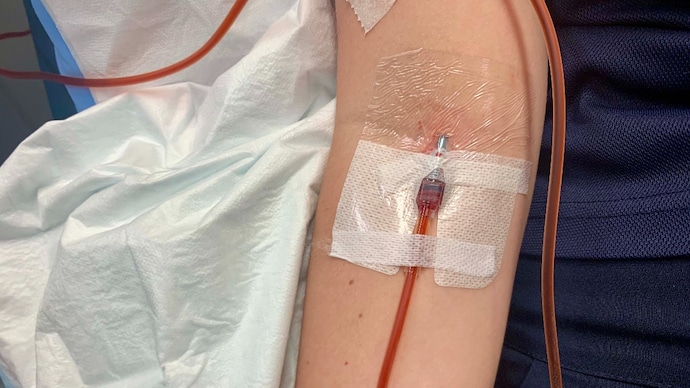
Now, public hospitals in parts of northern India are increasingly turning to a newer treatment: ferric carboxymaltose, or FCM, an intravenous iron therapy that can replenish iron stores far more quickly than conventional tablets.
Unlike older iron infusions that require repeated hospital visits, FCM can deliver up to one gram of iron in a single sitting.
“In ferric carboxymaltose, the advantage is that we can give up to one gram at one sitting. It leads to a dramatic improvement in iron deficiency anaemia," Dr. Agarwal said.
That matters in rural India, where repeated trips to hospitals can mean losing a day’s wages, paying for transport or travelling long distances while pregnant.
ACCESS TO IV IRON THERAPY
The Uttar Pradesh government has begun expanding access to the therapy through the public health system, while training healthcare workers to administer it safely.
The treatment is more expensive than traditional iron sucrose therapy, but doctors argue that the hidden costs of multiple hospital visits often make older treatments harder for families to sustain.
Dr. Agarwal and her team also studied the treatment in around 300 pregnant women and found it to be largely safe, with only mild side effects such as gastric discomfort or minor local reactions.
Still, doctors say medicine alone will not solve India’s anaemia crisis.
Fear of IV treatments, lack of awareness and poor nutrition continue to stand in the way.
For many physicians, the challenge is no longer just about making iron available, but convincing women that seeking treatment early could save both their lives and their babies’.
For years, the small red iron tablet has been one of the most recognisable symbols of India's public health system.
Distributed free through government hospitals and by ASHA workers going door to door in villages, it has long been seen as the country’s frontline defence against anaemia in pregnancy, a condition so widespread that it has quietly shaped generations of maternal and child health.
Yet, despite decades of campaigns, counselling and supplements, anaemia continues to shadow millions of Indian women through pregnancy.
The problem is especially severe in states like Uttar Pradesh and Bihar, where diets are often low in iron-rich foods and women enter pregnancy already nutritionally depleted.
In crowded maternity wards, severely anaemic mothers remain a common sight -- exhausted, breathless and dangerously low on haemoglobin, the protein that carries oxygen through the blood.
“Anaemia has reduced, but still, when you look at it from the hospital perspective, we are getting a lot of anaemic women,” Dr. Anjoo Agarwal, head of obstetrics and gynaecology at King George's Medical University, told India Today Digital.
IRON TABLETS MIGHT NOT BE ENOUGH
The reasons are complex.
Many women stop taking iron tablets because of nausea, bloating and stomach discomfort. Others do not absorb enough iron because of poor overall nutrition, vitamin deficiencies or chronic blood loss caused by parasitic infections such as hookworm, which remains common in some rural areas.
Now, public hospitals in parts of northern India are increasingly turning to a newer treatment: ferric carboxymaltose, or FCM, an intravenous iron therapy that can replenish iron stores far more quickly than conventional tablets.
Unlike older iron infusions that require repeated hospital visits, FCM can deliver up to one gram of iron in a single sitting.
“In ferric carboxymaltose, the advantage is that we can give up to one gram at one sitting. It leads to a dramatic improvement in iron deficiency anaemia," Dr. Agarwal said.
That matters in rural India, where repeated trips to hospitals can mean losing a day’s wages, paying for transport or travelling long distances while pregnant.
ACCESS TO IV IRON THERAPY
The Uttar Pradesh government has begun expanding access to the therapy through the public health system, while training healthcare workers to administer it safely.
The treatment is more expensive than traditional iron sucrose therapy, but doctors argue that the hidden costs of multiple hospital visits often make older treatments harder for families to sustain.
Dr. Agarwal and her team also studied the treatment in around 300 pregnant women and found it to be largely safe, with only mild side effects such as gastric discomfort or minor local reactions.
Still, doctors say medicine alone will not solve India’s anaemia crisis.
Fear of IV treatments, lack of awareness and poor nutrition continue to stand in the way.
For many physicians, the challenge is no longer just about making iron available, but convincing women that seeking treatment early could save both their lives and their babies’.

