When Israel, India planned to strike Pak's Islamic bomb site; Why Indira Gandhi said no
As Pakistan moved dangerously close to an "Islamic bomb" in the early 1980s, India and Israel explored a covert strike on Kahuta to prevent it from having a nuclear weapon. But why did PM Indira Gandhi call off the mission?
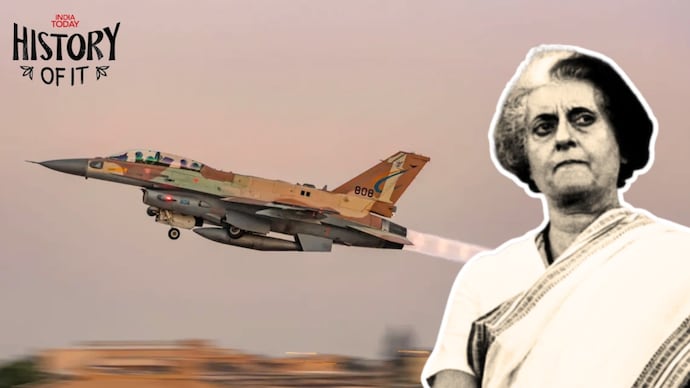
"We will eat grass or leaves, even go hungry, but we will get one of our own," Pakistan Prime Minister Zulfikar Ali Bhutto said after the Buddha Smiled in India in 1974. There, Bhutto said, "was already a Christian bomb, a Jewish bomb and now a Hindu bomb".
"Why not an Islamic bomb?" he asked.
Less than a decade later, in the early 1980s, those words and their implications resulted in Israel and India joining hands despite the two countries not having full diplomatic ties then. After all, both were, and, still are, the Pakistani establishment's two bitter strategic enemies. Formal India-Israel diplomatic relations would come only a decade later under Prime Minister PV Narasimha Rao in 1992.
India, Israel and Pakistan — all now nuclear powers — found themselves entangled in a covert operation. Israel feared Pakistan was close to getting the "Islamic bomb". Israel's fear of the bomb was so intense that it planned a joint covert strike with India.
But, then, Prime Minister Indira Gandhi called off the operation at the end stages. Some experts say that Indira "lost her nerve" under US threats. Pakistan got the nuclear bomb in 1998. And, it changed South Asia and now also casts a shadow in the Middle East. Pakistan is the only Islamic country with nuclear weapons.
Decades later, the very nuclear programme Israel and India wanted to restrict came closer to the Jewish nation's doorsteps after Pakistan and Saudi Arabia signed the Strategic Mutual Defence Agreement in 2025, which extends Islamabad's nuclear umbrella to Riyadh.
TRUMP'S ABRAHAM ACCORDS PUSH TO PAK REVIVES THE KAHUTA STORY
Now in 2026, that Kahuta story gains relevance as US President Donald Trump is pushing Pakistan to sign the Abraham Accords and formally recognise Israel.
The accords, which normalised ties between Israel and several Muslim-majority nations in the Middle East (West Asia), have long remained politically toxic in Pakistan. For Islamabad, recognition of Israel has been tied to Palestine. For Israel, Pakistan remains the Islamic state with nuclear arms that doesn't recognise it.
So, pushing the two nations to shake hands is asking the two, with decades of suspicion, ideological differences and covert hostilities, to accept a new reality. Few episodes capture the Pakistan-Israel hostility better than the Kahuta story of the early 1980s.
By then, India had successfully tested a nuclear weapon in 1974. A Delhi-obsessed, Islamabad was also seeking a nuclear bomb for itself. Israel feared Pakistan was building what many in the West and Pakistan, then called an "Islamic bomb". Pakistan's nuclear programme under the notorious AQ Khan was being projected by the Pakistani establishment as a matter of Islamic pride.
Israeli intelligence worried that once Pakistan crossed the threshold, nuclear technology could eventually spread across the hostile Sheikhdoms of the Middle East, who wanted to destroy the Jewish nation.
India also had its own reasons to be concerned. Pakistan exported terror to India, particularly to destabilise Jammu and Kashmir, and fought open wars with it.
Pakistan's uranium enrichment facility at Kahuta had become the nerve centre of its covert bomb project. The trauma of the 1971 War was still fresh in the Pakistani military establishment. And Pakistani dictator Zia-ul-Haq, who overthrew PM Bhutto, ensured that Pakistan did not have to "eat grass" for the bomb. The military regime under Zia was more than happy to swallow billions in American aid and keep Pakistan's nuclear programme alive.
FEAR OF AN 'ISLAMIC BOMB'. WHY DID PAKISTAN WANT THE N-BOMB SO BAD?
Firstly, India had it, so Pakistan had to have it. By the early 1980s, India too, believed Pakistan was getting dangerously close to a nuclear bomb.
It was the peak of the Cold War. India and Pakistan shared bitterness after wars in 1965 and 1971. Israel remained paranoid about hostile Islamic states acquiring nuclear weapons after fighting multiple Arab wars.
The "Kaoboys" of the RN Kao-led Research and Analysis Wing (R&AW) operatives had by then infiltrated and tracked nuclear physicist AQ Khan's uranium enrichment efforts at the Kahuta laboratories in the 1970s.
AQ Khan, who had learnt a great deal about nuclear technology in the Netherlands, became the public face of the programme. Former CIA officer James Lawler nicknamed Khan the "Merchant of Death".
Books and interviews referred to Pakistan's bomb as an "Islamic bomb". Its messaging was "strategic". Pakistan wanted the world to believe it had crossed the enrichment threshold, while avoiding sanctions, according to Adrian Levy and Catherine Scott-Clark's book, Deception.
Levy and Scott-Clark, in their book called it Pakistan's "nuclear ambiguity". The aim was to convince India and the world that Pakistan could build the bomb.
"The plan was to give the impression that Pakistan's nuclear mission was unstoppable in order to bring about its international acceptance and to warn India that should they choose to strike we were ready to respond," wrote Levy and Scott-Clark, in their book Deception.
Israel was already in pre-emption mode. In June 1981, Israeli jets had destroyed Iraq's Osirak reactor near Baghdad. Israel was certain that it would not allow hostile states in the region to acquire nuclear capability.
Levy and Scott-Clark wrote that "a committee of soldiers and intelligence people" in India began discussing "the Osirak contingency" in 1981 itself. Prime Minister Indira Gandhi reportedly approved the preparations. Air Marshal Dilbagh Singh was tasked with operational planning. Indian Air Force Jaguar squadrons allegedly began practising low-level bombing runs with 2,000-pound bombs.
HOW INDIA AND ISRAEL CAME TOGETHER AGAINST PAK's NUCLEAR AMBITION
At the time, India and Israel did not have full diplomatic relations. Publicly, New Delhi remained pro-Palestine. But backdoor channels existed between India and Israel.
National security expert Bharat Karnad, in a 2016 piece on his official website, recalled meeting retired Israeli Major General Aharon Yaariv near the Lebanese border in the early 1980s. Yaariv narrated how Israel and India had quietly coordinated plans for a strike on Kahuta.
The operational details now sound like something out of a Cold War thriller film.
According to Karnad's account, six Israeli F-16s and six F-15s were to fly from Haifa into Jamnagar in Gujarat. The crews would rest there and finalise plans. The jets would then move towards Udhampur in Jammu and Kashmir, where special penetration bombs would already have been flown in.
The Israeli aircraft would fly "in the lee of the mountains to avoid Pakistani radar detection" before emerging for the bombing run over Kahuta. Israeli F-15s would provide air cover while F-16s dropped the payload.
Yaariv told Karnad that Israel insisted that India's aircraft fly openly with Israeli roundels because it did not want New Delhi to portray later that the mission was solely Israeli. "We wanted India to be fully involved and implicated and to share in the responsibility for the mission," Karnad quoted retired Israeli Major General Aharon Yaariv as saying.
India also wanted Pakistan not to go the nuclear way. Indian intelligence, since the 1970s, had been tracking and trying to stop Pakistan from having the bomb. And, this was probably the last chance.
FYI, between Indira Gandhi's two chapters in office (early 1970s and early 1980s) came the Janata Party government of Morarji Desai. PM Desai allegedly told Pakistani dictator Zia-ul-Haq that India knew about the secret nuclear activity at Kahuta. The disclosure, many former RAW officials and experts say compromised Indian intelligence assets tracking Kahuta to stop Pakistan from going nuclear, according to a 2015 piece by former India Today journalist, Uday Mahurkar in DailyO. Mahurkar would later serve as India's Central Information Commissioner.
To understand why Desai might have done so, you can read Mahurkar’s detailed piece on DailyO.
So, the collaboration with the Israelis in the 1980s was another chance for Prime Minister Indira Gandhi to stop Pakistan from developing a nuclear bomb.
WHY INDIRA GANDHI STEPPED BACK FROM HITTING PAK's NUCLEAR SITE IN 1983
But, unlike hitting Iraq's Osirak reactor, which Israel had struck in 1981 without fearing retaliation, Kahuta came with the threat of an immediate counterstrike on India's nuclear facilities and the possibility of radioactive disaster.
Pakistan had prepared for retaliation. Levy and Scott-Clark wrote in their book that the chairman of the Pakistan Atomic Energy Commission (PAEC), Munir Ahmad Khan, warned Indian nuclear scientist Raja Ramanna in Vienna that if India struck Kahuta, Pakistan would retaliate against India's nuclear facilities at Trombay near Mumbai.
The threat carried implications. Trombay was close to densely populated Mumbai. A strike would have risked massive radioactive fallout. Then came another problem. Washington.
The Soviet invasion of Afghanistan had transformed Pakistan into America's frontline ally. General Zia-ul-Haq had become indispensable to the US-backed anti-Soviet jihad. US President Ronald Reagan could not afford instability in Pakistan.
Former CIA officer Richard Barlow in 2025, speaking to news agency ANI, said, "It's a shame that Indira [Gandhi] didn't approve it... It would have solved a lot of problems."
Barlow added that Reagan would have reacted furiously had Israel attempted such a strike. "I think [Ronald] Reagan would have cut [Israeli PM] Menachem Begin's ba**s off if he had done anything like that. Because it would have interfered with the Afghan problem," Barlow said.
Islamabad was effectively using its role in Afghanistan as leverage to shield its nuclear programme. That's why it also didn't have to worry as much about repercussions, like sanctions.
"...Prime minister Indira Gandhi signed off the Israeli-led operation, bringing India, Pakistan and Israel to within a hair’s breadth of a nuclear conflagration," wrote Levy and Scott-Clark, in their book Deception.
According to Levy and Scott-Clark, the CIA eventually tipped off Zia about the possibility of an attack on Kahuta, hoping the warning would defuse the crisis.
PM Indira Gandhi stepped back.
"This was the last time India had the chance credibly to stop Pakistan from crossing the N-weapons threshold. Predictably, we fluffed it — Indira losing her nerve. Or, perhaps, because Washington got wind of the mission and pressured Indira into halting it," wrote national security expert Bharat Karnad in the 2016 column.
He added that "an attempt to revive a purely Indian attack mission in 1984" was planned during Rajiv Gandhi's prime ministership, that he said "didn't even get off the ground".
Pakistan crossed the threshold anyway. AQ Khan's network expanded into one of the world's most notorious nuclear proliferation operations. Pakistan conducted nuclear tests in 1998 after India's Pokhran-II tests. And, South Asia formally became a two-nuclear-powered region. It changed South Asia and now also challenges the balance of power against Israel in the Middle East.
But the "Islamic bomb" didn't just travel to the Middle East. AQ Khan later emerged as a supplier of nuclear technology to Iran, Libya and North Korea. That's why former CIA Lawler nicknamed him the "Merchant of Death". There's a looming threat of the Pakistani establishment's nukes someday landing on terrorists' lap.
It is against this backdrop of power imbalance and mistrust in the Middle East that the US foreign policy decision makers are pushing Pakistan to join the Abraham Accords. They know their old friend, the Pakistani establishment, too well and what they're capable of. Normalisation of Israel-Pakistan ties would follow, Trump believes.
Four decades after the India-Israel covert strike plan to stop Pakistan from making the "Islamic bomb", and Washington working to prevent that strike from happening, America, now wanting the two old adversaries to shake hands, tells you that the US might be unaware of its "old friend" completely.
"We will eat grass or leaves, even go hungry, but we will get one of our own," Pakistan Prime Minister Zulfikar Ali Bhutto said after the Buddha Smiled in India in 1974. There, Bhutto said, "was already a Christian bomb, a Jewish bomb and now a Hindu bomb".
"Why not an Islamic bomb?" he asked.
Less than a decade later, in the early 1980s, those words and their implications resulted in Israel and India joining hands despite the two countries not having full diplomatic ties then. After all, both were, and, still are, the Pakistani establishment's two bitter strategic enemies. Formal India-Israel diplomatic relations would come only a decade later under Prime Minister PV Narasimha Rao in 1992.
India, Israel and Pakistan — all now nuclear powers — found themselves entangled in a covert operation. Israel feared Pakistan was close to getting the "Islamic bomb". Israel's fear of the bomb was so intense that it planned a joint covert strike with India.
But, then, Prime Minister Indira Gandhi called off the operation at the end stages. Some experts say that Indira "lost her nerve" under US threats. Pakistan got the nuclear bomb in 1998. And, it changed South Asia and now also casts a shadow in the Middle East. Pakistan is the only Islamic country with nuclear weapons.
Decades later, the very nuclear programme Israel and India wanted to restrict came closer to the Jewish nation's doorsteps after Pakistan and Saudi Arabia signed the Strategic Mutual Defence Agreement in 2025, which extends Islamabad's nuclear umbrella to Riyadh.
TRUMP'S ABRAHAM ACCORDS PUSH TO PAK REVIVES THE KAHUTA STORY
Now in 2026, that Kahuta story gains relevance as US President Donald Trump is pushing Pakistan to sign the Abraham Accords and formally recognise Israel.
The accords, which normalised ties between Israel and several Muslim-majority nations in the Middle East (West Asia), have long remained politically toxic in Pakistan. For Islamabad, recognition of Israel has been tied to Palestine. For Israel, Pakistan remains the Islamic state with nuclear arms that doesn't recognise it.
So, pushing the two nations to shake hands is asking the two, with decades of suspicion, ideological differences and covert hostilities, to accept a new reality. Few episodes capture the Pakistan-Israel hostility better than the Kahuta story of the early 1980s.
By then, India had successfully tested a nuclear weapon in 1974. A Delhi-obsessed, Islamabad was also seeking a nuclear bomb for itself. Israel feared Pakistan was building what many in the West and Pakistan, then called an "Islamic bomb". Pakistan's nuclear programme under the notorious AQ Khan was being projected by the Pakistani establishment as a matter of Islamic pride.
Israeli intelligence worried that once Pakistan crossed the threshold, nuclear technology could eventually spread across the hostile Sheikhdoms of the Middle East, who wanted to destroy the Jewish nation.
India also had its own reasons to be concerned. Pakistan exported terror to India, particularly to destabilise Jammu and Kashmir, and fought open wars with it.
Pakistan's uranium enrichment facility at Kahuta had become the nerve centre of its covert bomb project. The trauma of the 1971 War was still fresh in the Pakistani military establishment. And Pakistani dictator Zia-ul-Haq, who overthrew PM Bhutto, ensured that Pakistan did not have to "eat grass" for the bomb. The military regime under Zia was more than happy to swallow billions in American aid and keep Pakistan's nuclear programme alive.
FEAR OF AN 'ISLAMIC BOMB'. WHY DID PAKISTAN WANT THE N-BOMB SO BAD?
Firstly, India had it, so Pakistan had to have it. By the early 1980s, India too, believed Pakistan was getting dangerously close to a nuclear bomb.
It was the peak of the Cold War. India and Pakistan shared bitterness after wars in 1965 and 1971. Israel remained paranoid about hostile Islamic states acquiring nuclear weapons after fighting multiple Arab wars.
The "Kaoboys" of the RN Kao-led Research and Analysis Wing (R&AW) operatives had by then infiltrated and tracked nuclear physicist AQ Khan's uranium enrichment efforts at the Kahuta laboratories in the 1970s.
AQ Khan, who had learnt a great deal about nuclear technology in the Netherlands, became the public face of the programme. Former CIA officer James Lawler nicknamed Khan the "Merchant of Death".
Books and interviews referred to Pakistan's bomb as an "Islamic bomb". Its messaging was "strategic". Pakistan wanted the world to believe it had crossed the enrichment threshold, while avoiding sanctions, according to Adrian Levy and Catherine Scott-Clark's book, Deception.
Levy and Scott-Clark, in their book called it Pakistan's "nuclear ambiguity". The aim was to convince India and the world that Pakistan could build the bomb.
"The plan was to give the impression that Pakistan's nuclear mission was unstoppable in order to bring about its international acceptance and to warn India that should they choose to strike we were ready to respond," wrote Levy and Scott-Clark, in their book Deception.
Israel was already in pre-emption mode. In June 1981, Israeli jets had destroyed Iraq's Osirak reactor near Baghdad. Israel was certain that it would not allow hostile states in the region to acquire nuclear capability.
Levy and Scott-Clark wrote that "a committee of soldiers and intelligence people" in India began discussing "the Osirak contingency" in 1981 itself. Prime Minister Indira Gandhi reportedly approved the preparations. Air Marshal Dilbagh Singh was tasked with operational planning. Indian Air Force Jaguar squadrons allegedly began practising low-level bombing runs with 2,000-pound bombs.
HOW INDIA AND ISRAEL CAME TOGETHER AGAINST PAK's NUCLEAR AMBITION
At the time, India and Israel did not have full diplomatic relations. Publicly, New Delhi remained pro-Palestine. But backdoor channels existed between India and Israel.
National security expert Bharat Karnad, in a 2016 piece on his official website, recalled meeting retired Israeli Major General Aharon Yaariv near the Lebanese border in the early 1980s. Yaariv narrated how Israel and India had quietly coordinated plans for a strike on Kahuta.
The operational details now sound like something out of a Cold War thriller film.
According to Karnad's account, six Israeli F-16s and six F-15s were to fly from Haifa into Jamnagar in Gujarat. The crews would rest there and finalise plans. The jets would then move towards Udhampur in Jammu and Kashmir, where special penetration bombs would already have been flown in.
The Israeli aircraft would fly "in the lee of the mountains to avoid Pakistani radar detection" before emerging for the bombing run over Kahuta. Israeli F-15s would provide air cover while F-16s dropped the payload.
Yaariv told Karnad that Israel insisted that India's aircraft fly openly with Israeli roundels because it did not want New Delhi to portray later that the mission was solely Israeli. "We wanted India to be fully involved and implicated and to share in the responsibility for the mission," Karnad quoted retired Israeli Major General Aharon Yaariv as saying.
India also wanted Pakistan not to go the nuclear way. Indian intelligence, since the 1970s, had been tracking and trying to stop Pakistan from having the bomb. And, this was probably the last chance.
FYI, between Indira Gandhi's two chapters in office (early 1970s and early 1980s) came the Janata Party government of Morarji Desai. PM Desai allegedly told Pakistani dictator Zia-ul-Haq that India knew about the secret nuclear activity at Kahuta. The disclosure, many former RAW officials and experts say compromised Indian intelligence assets tracking Kahuta to stop Pakistan from going nuclear, according to a 2015 piece by former India Today journalist, Uday Mahurkar in DailyO. Mahurkar would later serve as India's Central Information Commissioner.
To understand why Desai might have done so, you can read Mahurkar’s detailed piece on DailyO.
So, the collaboration with the Israelis in the 1980s was another chance for Prime Minister Indira Gandhi to stop Pakistan from developing a nuclear bomb.
WHY INDIRA GANDHI STEPPED BACK FROM HITTING PAK's NUCLEAR SITE IN 1983
But, unlike hitting Iraq's Osirak reactor, which Israel had struck in 1981 without fearing retaliation, Kahuta came with the threat of an immediate counterstrike on India's nuclear facilities and the possibility of radioactive disaster.
Pakistan had prepared for retaliation. Levy and Scott-Clark wrote in their book that the chairman of the Pakistan Atomic Energy Commission (PAEC), Munir Ahmad Khan, warned Indian nuclear scientist Raja Ramanna in Vienna that if India struck Kahuta, Pakistan would retaliate against India's nuclear facilities at Trombay near Mumbai.
The threat carried implications. Trombay was close to densely populated Mumbai. A strike would have risked massive radioactive fallout. Then came another problem. Washington.
The Soviet invasion of Afghanistan had transformed Pakistan into America's frontline ally. General Zia-ul-Haq had become indispensable to the US-backed anti-Soviet jihad. US President Ronald Reagan could not afford instability in Pakistan.
Former CIA officer Richard Barlow in 2025, speaking to news agency ANI, said, "It's a shame that Indira [Gandhi] didn't approve it... It would have solved a lot of problems."
Barlow added that Reagan would have reacted furiously had Israel attempted such a strike. "I think [Ronald] Reagan would have cut [Israeli PM] Menachem Begin's ba**s off if he had done anything like that. Because it would have interfered with the Afghan problem," Barlow said.
Islamabad was effectively using its role in Afghanistan as leverage to shield its nuclear programme. That's why it also didn't have to worry as much about repercussions, like sanctions.
"...Prime minister Indira Gandhi signed off the Israeli-led operation, bringing India, Pakistan and Israel to within a hair’s breadth of a nuclear conflagration," wrote Levy and Scott-Clark, in their book Deception.
According to Levy and Scott-Clark, the CIA eventually tipped off Zia about the possibility of an attack on Kahuta, hoping the warning would defuse the crisis.
PM Indira Gandhi stepped back.
"This was the last time India had the chance credibly to stop Pakistan from crossing the N-weapons threshold. Predictably, we fluffed it — Indira losing her nerve. Or, perhaps, because Washington got wind of the mission and pressured Indira into halting it," wrote national security expert Bharat Karnad in the 2016 column.
He added that "an attempt to revive a purely Indian attack mission in 1984" was planned during Rajiv Gandhi's prime ministership, that he said "didn't even get off the ground".
Pakistan crossed the threshold anyway. AQ Khan's network expanded into one of the world's most notorious nuclear proliferation operations. Pakistan conducted nuclear tests in 1998 after India's Pokhran-II tests. And, South Asia formally became a two-nuclear-powered region. It changed South Asia and now also challenges the balance of power against Israel in the Middle East.
But the "Islamic bomb" didn't just travel to the Middle East. AQ Khan later emerged as a supplier of nuclear technology to Iran, Libya and North Korea. That's why former CIA Lawler nicknamed him the "Merchant of Death". There's a looming threat of the Pakistani establishment's nukes someday landing on terrorists' lap.
It is against this backdrop of power imbalance and mistrust in the Middle East that the US foreign policy decision makers are pushing Pakistan to join the Abraham Accords. They know their old friend, the Pakistani establishment, too well and what they're capable of. Normalisation of Israel-Pakistan ties would follow, Trump believes.
Four decades after the India-Israel covert strike plan to stop Pakistan from making the "Islamic bomb", and Washington working to prevent that strike from happening, America, now wanting the two old adversaries to shake hands, tells you that the US might be unaware of its "old friend" completely.

