A Himalayan dance quest
How Bharatiya Jnana Parampara celebrated the classical arts in a three-day initiative hosted by think-tank Indian Institute of Advanced Study (IIAS) in Shimla recently
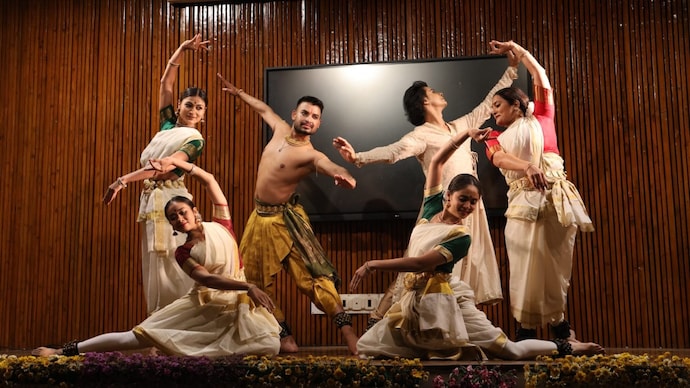
The event brought together 30 dancers and academicians in what was a first in the history of IIAS. It was ideated and curated by Uma Anantani, the do-gooder dance guru from Ahmedabad, who brought to the table the goodness of art in heart.
In his inaugural address, Sachchidanand Joshi, head of the Indira Gandhi National Centre for the Arts (IGNCA), India’s only multi-disciplinary government agency on culture, shared how our traditions have continued over millennia, and parampara in arts continues thanks largely to the guru-shishya tradition, especially in the performing arts.
Joshi gifted the IIAS director the IGNCA tome on Mohan Khokar, the father figure of Indian dance whose centenary concluded last year. IIAS head-librarian Rajeev Kumar Mishra shared this was the first dance book of 300 pages in their holdings.
So, what were they all discussing? Parampara. Where and how does it stand today in India that’s Bharat? How does a group of dancer-academicians (with one lone dance critic-historian—yours truly) sensibly platform a thousand-years-old tradition?
Ably. Each one spoke to the best of their ability—some solidly, some basic. The earnestness of being came through in most. Starting with Mahesh Champaklal Shah, formerly head of the dramatics department at the Maharaja Sayajirao University of Baroda (MSUB), whose forceful speech on theatre brought the house to life. He traced landmark productions in theatre, marking Shanta Gandhi, Vijaya Mehta and Kavalam Narayana Panicker as benchmarks.
Online presentations by most had no real connect, as there was, by definition, no synergetic exchange. Internet connectivity in the mountains is also iffy, causing blackouts and slow transmission. While Shatavadhani Ganesh was like a hurtling train on his enunciation of shastra concepts, it became a monologue in the end.
The best in this segment of online presentations were Choodamani Nandagopal from Bengaluru and Meenakshi Iyer from Mumbai. While the former had a multidisciplinary approach, taking dance, architecture, sculpture and literary aspects together, the latter was more of a university course refresher with update on the content of the New Education Policy (NEP).
So many good and qualified speakers and performers ended up as a one-sided drivel. Praveen Kumar’s focus on body and alphabet as form—while neat and clean externally—looked contrived, almost akin to having a theory first, then trying to fit a round peg in a square hole. Jay Thumar’s presentation was neither fish nor fowl. Arya Deshpande mounted a first-rate visual presentation on AI and how it can complement Indian arts.
The few who manifested real content, context and concept were Swarnamalya Ganesh on Javallis (joyful, jovial love songs in Bharatanatyam repertoire)—what an engaging, articulate, intelligent presenter! Neha Kumar on Jayadeva’s Geet Govinda and a totally structured, full-of-substance Veena Londhe-Malati Agneswaran combine on yoga and bhoga; an engaging Anupama Kylash, whose song and dance demo act was fetching. Uma Anantani encapsulated Mohan Khokar’s life and times, contribution and commitment to dance. A concise film on the history of Indian dance in the last century was also shared on the occasion.
Solos that stood out were by Ameera Patankar as Ahalya in Kathak, with guru Shama Bhate sharing the gentle changes that have come about in the form in the last century; Shivangee Vikram’s controlled and classy Alarippu and stately Washim Raja’s Gajendra Moksha in Kuchipudi. Bit jumpy but that was the theme. All three brought alive the proceedings. The cherry on the cake was Vaibhav Arekar’s Abhangallaripu, which was his take on the form of Bharatanatyam itself and how he related to it and creates within. Superb! That this senior dancer has won no national honour is saddening.
Reading written papers at such art forums doesn’t really work anymore. There’s no connect. The audience gets distracted. On such specialised fora, one should either present one’s filtered knowledge/ lived experience or at least use visual aids, since dance is primarily a visual treat.
At the end of three days of deliberations, seeing all dancers (aforementioned soloists plus Kadam and Rasadhawani of Ahmedabad) come together in the end with a group item, Tillana, showed how Indian dancers can dance on any stage, small or big, lights or no real lights.
What came through in the 36-hour-spread over three days, morning to night deliberations, was that young India—that’s Bharat—is bright but needs mentoring and direction; seniors need to be short and precise! Academicians need to have practical experience in or exposure to art forms: dancers are not often academicians and the reverse is truer.
Uma Anantani has created a benchmark with IIAS in propagating our frail classical arts well. That the sylvan setting and first-rate facilities (despite a very small stage for dance) enhanced the experience goes to show where there’s a will there’s a way.
The way forward is for IIAS to think out of box and engage more in creative arts processes, as also enunciated by Rashmita Jha in her valedictory address, which partook of the history of RPM music records and shared the process and the product. Superb too because this petite revenue officer slowly grew into a tall figure in 10 minutes.
The shortest man in the whole three-day deliberation, Bhagesh Jha, shone as he spoke on Mahatma Gandhi and the Gita. Rasadhawani showcased their seminal work on the subject. Deep and dignified. All in all, the Shimla sky was clear. The sun shone, flowers bloomed and this unique gathering made an indelible mark.
—The writer is an authority on Indian performing arts and culture and policy
Subscribe to India Today Magazine
The event brought together 30 dancers and academicians in what was a first in the history of IIAS. It was ideated and curated by Uma Anantani, the do-gooder dance guru from Ahmedabad, who brought to the table the goodness of art in heart.
In his inaugural address, Sachchidanand Joshi, head of the Indira Gandhi National Centre for the Arts (IGNCA), India’s only multi-disciplinary government agency on culture, shared how our traditions have continued over millennia, and parampara in arts continues thanks largely to the guru-shishya tradition, especially in the performing arts.
Joshi gifted the IIAS director the IGNCA tome on Mohan Khokar, the father figure of Indian dance whose centenary concluded last year. IIAS head-librarian Rajeev Kumar Mishra shared this was the first dance book of 300 pages in their holdings.
So, what were they all discussing? Parampara. Where and how does it stand today in India that’s Bharat? How does a group of dancer-academicians (with one lone dance critic-historian—yours truly) sensibly platform a thousand-years-old tradition?
Ably. Each one spoke to the best of their ability—some solidly, some basic. The earnestness of being came through in most. Starting with Mahesh Champaklal Shah, formerly head of the dramatics department at the Maharaja Sayajirao University of Baroda (MSUB), whose forceful speech on theatre brought the house to life. He traced landmark productions in theatre, marking Shanta Gandhi, Vijaya Mehta and Kavalam Narayana Panicker as benchmarks.
Online presentations by most had no real connect, as there was, by definition, no synergetic exchange. Internet connectivity in the mountains is also iffy, causing blackouts and slow transmission. While Shatavadhani Ganesh was like a hurtling train on his enunciation of shastra concepts, it became a monologue in the end.
The best in this segment of online presentations were Choodamani Nandagopal from Bengaluru and Meenakshi Iyer from Mumbai. While the former had a multidisciplinary approach, taking dance, architecture, sculpture and literary aspects together, the latter was more of a university course refresher with update on the content of the New Education Policy (NEP).
So many good and qualified speakers and performers ended up as a one-sided drivel. Praveen Kumar’s focus on body and alphabet as form—while neat and clean externally—looked contrived, almost akin to having a theory first, then trying to fit a round peg in a square hole. Jay Thumar’s presentation was neither fish nor fowl. Arya Deshpande mounted a first-rate visual presentation on AI and how it can complement Indian arts.
The few who manifested real content, context and concept were Swarnamalya Ganesh on Javallis (joyful, jovial love songs in Bharatanatyam repertoire)—what an engaging, articulate, intelligent presenter! Neha Kumar on Jayadeva’s Geet Govinda and a totally structured, full-of-substance Veena Londhe-Malati Agneswaran combine on yoga and bhoga; an engaging Anupama Kylash, whose song and dance demo act was fetching. Uma Anantani encapsulated Mohan Khokar’s life and times, contribution and commitment to dance. A concise film on the history of Indian dance in the last century was also shared on the occasion.
Solos that stood out were by Ameera Patankar as Ahalya in Kathak, with guru Shama Bhate sharing the gentle changes that have come about in the form in the last century; Shivangee Vikram’s controlled and classy Alarippu and stately Washim Raja’s Gajendra Moksha in Kuchipudi. Bit jumpy but that was the theme. All three brought alive the proceedings. The cherry on the cake was Vaibhav Arekar’s Abhangallaripu, which was his take on the form of Bharatanatyam itself and how he related to it and creates within. Superb! That this senior dancer has won no national honour is saddening.
Reading written papers at such art forums doesn’t really work anymore. There’s no connect. The audience gets distracted. On such specialised fora, one should either present one’s filtered knowledge/ lived experience or at least use visual aids, since dance is primarily a visual treat.
At the end of three days of deliberations, seeing all dancers (aforementioned soloists plus Kadam and Rasadhawani of Ahmedabad) come together in the end with a group item, Tillana, showed how Indian dancers can dance on any stage, small or big, lights or no real lights.
What came through in the 36-hour-spread over three days, morning to night deliberations, was that young India—that’s Bharat—is bright but needs mentoring and direction; seniors need to be short and precise! Academicians need to have practical experience in or exposure to art forms: dancers are not often academicians and the reverse is truer.
Uma Anantani has created a benchmark with IIAS in propagating our frail classical arts well. That the sylvan setting and first-rate facilities (despite a very small stage for dance) enhanced the experience goes to show where there’s a will there’s a way.
The way forward is for IIAS to think out of box and engage more in creative arts processes, as also enunciated by Rashmita Jha in her valedictory address, which partook of the history of RPM music records and shared the process and the product. Superb too because this petite revenue officer slowly grew into a tall figure in 10 minutes.
The shortest man in the whole three-day deliberation, Bhagesh Jha, shone as he spoke on Mahatma Gandhi and the Gita. Rasadhawani showcased their seminal work on the subject. Deep and dignified. All in all, the Shimla sky was clear. The sun shone, flowers bloomed and this unique gathering made an indelible mark.
—The writer is an authority on Indian performing arts and culture and policy
Subscribe to India Today Magazine

