At Indo-Japan Conclave, a home truth for foreign brands: 'Be Indian'
India is "many emotional economies" and only global brands that understand and adapt to ours consumers succeed, said Rediffusion chairman Sandeep Goyal
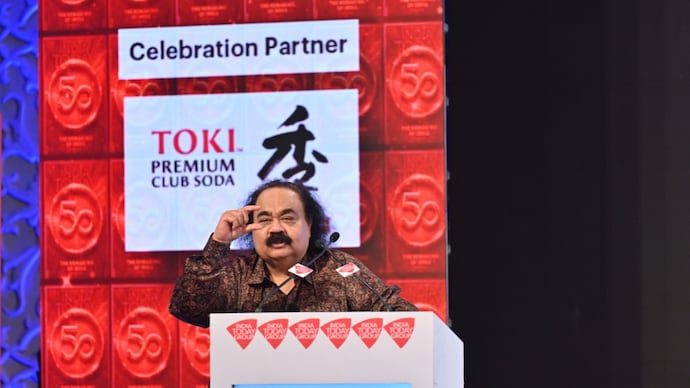
Speaking during the session ‘Lifestyle: Winning the Indian Consumer’, Goyal argued that India does not reward brands merely for entering its markets; it rewards those willing to understand its emotional grammar and assimilate themselves into everyday Indian life.
What Goyal proposed was not localisation in the conventional corporate sense but something closer to cultural assimilation—the idea that foreign brands succeed in India only when they stop treating the country as a market to be decoded and begin taking it as a society to be understood. His argument: India is not one market, but many; not one consumer, but a shifting archive of aspirations, habits, accents and expectations. Brands that come to India with a finished script, he suggested, are often undone by the country’s refusal to behave like a single, neat category.
Although Goyal spoke in an easy, conversational style, frequently engaging the audience with anecdotes and humour, what he ultimately delivered was an incisive exploration of how global brands must understand, interpret and adapt to India.
One of his sharpest lines captured that idea with brevity and force. “India changes every hundred kilometres,” he emphasised. In India, the same product can mean fashion in, say, Mumbai, status in Lucknow, practicality in Ahmedabad, aspiration in Indore, modernity in Guwahati and prestige in Delhi. Goyal’s point was that brand strategy must, therefore, be multilingual not only in language but meaning.
His second major theme was that localisation is not translation. It is interpretation. That distinction matters. A translated campaign can still feel foreign; a culturally intelligent campaign can feel inevitable. For Goyal, the successful brand does not merely speak Indian English or sprinkle in local references. It learns to think through Indian realities—family, price, trust, utility, display and emotional reassurance.
One of the session’s most memorable examples of Indianisation was Maruti Suzuki’s enduring “Kanchha” commercial—built around the simple assurance that the car would be taken care of if anything went wrong. Goyal argued that the advertisement captured a basic Indian consumer truth better than any grand global brand promise ever could. The campaign worked because it was rooted in Indian road conditions and Indian anxieties, and the idea proved so enduring that Maruti later remade the same commercial around EV charging infrastructure.
That, Goyal said, was an example of “continuous cultural listening”—a subtle reinterpretation of the Japanese philosophy of kaizen. Brands, in his telling, should not merely improve themselves internally; they should keep listening to the culture around them. That, he argued, is what distinguishes a foreign entrant from a genuine participant in the market.
The Maruti Suzuki and Toyota stories gave the talk its narrative spine. Maruti, he recalled, understood early that Indian buyers wanted reassurance, not theatricality. Toyota, meanwhile, learned the hard way that a successful global product can still fail locally if the message does not fit the market’s emotional grammar. The Innova’s eventual success, driven by a more recognisable and resonant campaign, ultimately reinforced his central argument.
At its heart, Goyal’s proposition placed brands not at the edge of Indian life but inside its rituals and self-image. The point, he suggested, is not to sell louder, but to belong better. The larger lesson from the session was that India does not reward imported confidence by itself. It rewards sensitivity, fit and cultural patience. A global brand can keep its identity, Goyal suggested, but only if it is willing to be reshaped by the country it enters. The winning formula is not domination; it is adaptation without dilution. Or, to use his own logic, the brand that lasts in India is the one that learns to become Indian without ceasing to be itself.
EXPERT-SPEAK
* “India changes every hundred kilometres India cannot be solved from a Tokyo boardroom. India is not one market; it is many emotional economies.”
* “The greatest Japanese success story in India is not merely Suzuki. It is Maruti Suzuki. Because Suzuki did not remain a Japanese company selling cars in India. It became part of Indian family life.”
* “India is not a market. India is a mood and every mood needs to be read and understood before India can be won.”
Subscribe to India Today Magazine
Speaking during the session ‘Lifestyle: Winning the Indian Consumer’, Goyal argued that India does not reward brands merely for entering its markets; it rewards those willing to understand its emotional grammar and assimilate themselves into everyday Indian life.
What Goyal proposed was not localisation in the conventional corporate sense but something closer to cultural assimilation—the idea that foreign brands succeed in India only when they stop treating the country as a market to be decoded and begin taking it as a society to be understood. His argument: India is not one market, but many; not one consumer, but a shifting archive of aspirations, habits, accents and expectations. Brands that come to India with a finished script, he suggested, are often undone by the country’s refusal to behave like a single, neat category.
Although Goyal spoke in an easy, conversational style, frequently engaging the audience with anecdotes and humour, what he ultimately delivered was an incisive exploration of how global brands must understand, interpret and adapt to India.
One of his sharpest lines captured that idea with brevity and force. “India changes every hundred kilometres,” he emphasised. In India, the same product can mean fashion in, say, Mumbai, status in Lucknow, practicality in Ahmedabad, aspiration in Indore, modernity in Guwahati and prestige in Delhi. Goyal’s point was that brand strategy must, therefore, be multilingual not only in language but meaning.
His second major theme was that localisation is not translation. It is interpretation. That distinction matters. A translated campaign can still feel foreign; a culturally intelligent campaign can feel inevitable. For Goyal, the successful brand does not merely speak Indian English or sprinkle in local references. It learns to think through Indian realities—family, price, trust, utility, display and emotional reassurance.
One of the session’s most memorable examples of Indianisation was Maruti Suzuki’s enduring “Kanchha” commercial—built around the simple assurance that the car would be taken care of if anything went wrong. Goyal argued that the advertisement captured a basic Indian consumer truth better than any grand global brand promise ever could. The campaign worked because it was rooted in Indian road conditions and Indian anxieties, and the idea proved so enduring that Maruti later remade the same commercial around EV charging infrastructure.
That, Goyal said, was an example of “continuous cultural listening”—a subtle reinterpretation of the Japanese philosophy of kaizen. Brands, in his telling, should not merely improve themselves internally; they should keep listening to the culture around them. That, he argued, is what distinguishes a foreign entrant from a genuine participant in the market.
The Maruti Suzuki and Toyota stories gave the talk its narrative spine. Maruti, he recalled, understood early that Indian buyers wanted reassurance, not theatricality. Toyota, meanwhile, learned the hard way that a successful global product can still fail locally if the message does not fit the market’s emotional grammar. The Innova’s eventual success, driven by a more recognisable and resonant campaign, ultimately reinforced his central argument.
At its heart, Goyal’s proposition placed brands not at the edge of Indian life but inside its rituals and self-image. The point, he suggested, is not to sell louder, but to belong better. The larger lesson from the session was that India does not reward imported confidence by itself. It rewards sensitivity, fit and cultural patience. A global brand can keep its identity, Goyal suggested, but only if it is willing to be reshaped by the country it enters. The winning formula is not domination; it is adaptation without dilution. Or, to use his own logic, the brand that lasts in India is the one that learns to become Indian without ceasing to be itself.
EXPERT-SPEAK
* “India changes every hundred kilometres India cannot be solved from a Tokyo boardroom. India is not one market; it is many emotional economies.”
* “The greatest Japanese success story in India is not merely Suzuki. It is Maruti Suzuki. Because Suzuki did not remain a Japanese company selling cars in India. It became part of Indian family life.”
* “India is not a market. India is a mood and every mood needs to be read and understood before India can be won.”
Subscribe to India Today Magazine

