From gambling on rains to exchange-traded rain futures, a full circle for Mumbai
The National Commodity and Derivatives Exchange Ltd will launch India's first weather derivatives on the exchange from June 1, based on rainfall deviation data from IMD
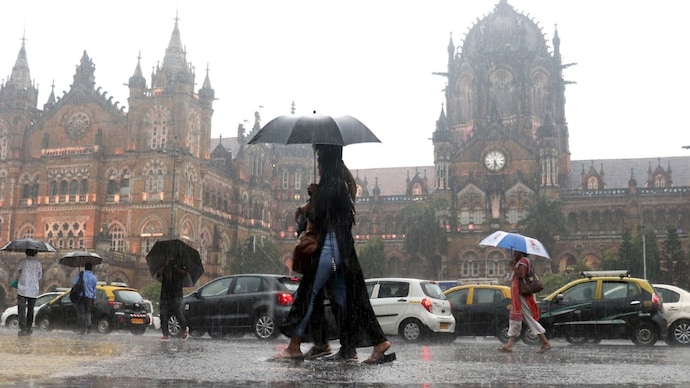
This is a case of the wheel turning full circle. For, in the late 19th century, Bombay gambled on rains, quite literally. This form of gambling began when the city was gradually expanding beyond the walls of the Bombay Fort, which were demolished on the orders of governor Sir Bartle Frere from 1864 to allow northward expansion.
This expansion and subsequent growth in migration and the population led to challenges such as traffic, beggars, European vagrants and foreign sex workers. It was in this period that, quoting former Imperial Police Service (predecessor to present-day Indian Police Service) officer V.G. Kanetkar, a former commissioner of police, Mumbai, gambling took some “queer forms” like that on the rains.
S.M. Edwardes, who was commissioner of police, Bombay City, from 1909 to 1916 and the only Indian Civil Service (ICS) officer to hold the position, writes about how rain-gambling had its epicentre at Paidhoni in south Mumbai, “where a house would be rented at a high price for the four months of the rains by a group of Indian capitalists”.
“There were two forms of Barsat ka satta or rain-gambling, known familiarly as Calcutta mori and Lakdi satta. In the former case, wagers were laid as to whether the rain would percolate in a fixed time through a specially prepared box filled with sand, the bankers settling the rates or odds by the appearance and direction of the clouds. In the latter case, winnings or losses depended on whether the rainfall during a fixed period of time was sufficient to fill the gutter of a roof and overflow. The gambling took place usually between 6 am and 12 noon, and again between 6 pm and midnight, the rates varying according to the appearance of the sky and the time left before the period open for the booking of bets expired,” Edwardes mentions in his ‘The Bombay City Police: A Historical Sketch 1672-1916’.’
During the four months of the monsoon, the city “went berserk’ as ‘servants and clerks left their employment, artisans gave up their callings, shroffs and merchants deserted their lawful trade to pursue this vice of gambling, which was the ruin of many a family”, says a contemporary writer, adding that it required “the facile pen of Dickens, the well-known novelist, to give a graphic picture of the horrors and evils wrought by rain speculation”.
Thefts and embezzlements were common during this season as “young boys stole money from their parents or ornaments which they pledged with or sold to Marwarees. Clerks robbed their employers bill collectors misappropriated their collections people in tramcars or trains discussed nothing but rain, speculators dreamt of nothing but the pouring and ceasing of rain Rain was on their brains all day and night”, says the writer.
Edwardes also mentions how corruption in the force meant that the police went soft on these gamblers, and the native (Indian) constables were themselves addicted to gambling.
Journalist-author Olga Valladeres writes about a public outcry and how the government, commissioner of police Sir Frank Souter, and philanthropists like Jagannath Shankarseth Murkute, or Nana Shankarseth as he was known, tried to crack down on gambling, leading to a cat-and-mouse game with gamblers and gambling house owners. For instance, in 1856, when the government brought in a legislation to prevent certain forms of gambling in Bombay City, the gamblers merely shifted to places like Coorla (Kurla), which was then outside the city’s limits.
Edwardes says that in 1888, two of the principal promoters of rain gambling were prosecuted, but were acquitted due to legal loopholes. Eventually, Lt Col W.H. Wilson, who was Souter’s successor, ensured that the Bombay Gambling Act was amended, and this helped, he adds.
But, as Edwardes writes, “Bombay, however, has always been addicted to gambling, whether it be in the form of the well-known teji-mundi contracts, the ank satta or opium-gambling, or the ordinary gambling with dice and cards”
Rain-gambling may have wilted away due to pressure from the authorities, but gambling continued to take new forms, be it that on prices of cotton in the Liverpool and New York cotton exchanges, and later, as matka. That, of course, is another story.
Subscribe to India Today Magazine
This is a case of the wheel turning full circle. For, in the late 19th century, Bombay gambled on rains, quite literally. This form of gambling began when the city was gradually expanding beyond the walls of the Bombay Fort, which were demolished on the orders of governor Sir Bartle Frere from 1864 to allow northward expansion.
This expansion and subsequent growth in migration and the population led to challenges such as traffic, beggars, European vagrants and foreign sex workers. It was in this period that, quoting former Imperial Police Service (predecessor to present-day Indian Police Service) officer V.G. Kanetkar, a former commissioner of police, Mumbai, gambling took some “queer forms” like that on the rains.
S.M. Edwardes, who was commissioner of police, Bombay City, from 1909 to 1916 and the only Indian Civil Service (ICS) officer to hold the position, writes about how rain-gambling had its epicentre at Paidhoni in south Mumbai, “where a house would be rented at a high price for the four months of the rains by a group of Indian capitalists”.
“There were two forms of Barsat ka satta or rain-gambling, known familiarly as Calcutta mori and Lakdi satta. In the former case, wagers were laid as to whether the rain would percolate in a fixed time through a specially prepared box filled with sand, the bankers settling the rates or odds by the appearance and direction of the clouds. In the latter case, winnings or losses depended on whether the rainfall during a fixed period of time was sufficient to fill the gutter of a roof and overflow. The gambling took place usually between 6 am and 12 noon, and again between 6 pm and midnight, the rates varying according to the appearance of the sky and the time left before the period open for the booking of bets expired,” Edwardes mentions in his ‘The Bombay City Police: A Historical Sketch 1672-1916’.’
During the four months of the monsoon, the city “went berserk’ as ‘servants and clerks left their employment, artisans gave up their callings, shroffs and merchants deserted their lawful trade to pursue this vice of gambling, which was the ruin of many a family”, says a contemporary writer, adding that it required “the facile pen of Dickens, the well-known novelist, to give a graphic picture of the horrors and evils wrought by rain speculation”.
Thefts and embezzlements were common during this season as “young boys stole money from their parents or ornaments which they pledged with or sold to Marwarees. Clerks robbed their employers bill collectors misappropriated their collections people in tramcars or trains discussed nothing but rain, speculators dreamt of nothing but the pouring and ceasing of rain Rain was on their brains all day and night”, says the writer.
Edwardes also mentions how corruption in the force meant that the police went soft on these gamblers, and the native (Indian) constables were themselves addicted to gambling.
Journalist-author Olga Valladeres writes about a public outcry and how the government, commissioner of police Sir Frank Souter, and philanthropists like Jagannath Shankarseth Murkute, or Nana Shankarseth as he was known, tried to crack down on gambling, leading to a cat-and-mouse game with gamblers and gambling house owners. For instance, in 1856, when the government brought in a legislation to prevent certain forms of gambling in Bombay City, the gamblers merely shifted to places like Coorla (Kurla), which was then outside the city’s limits.
Edwardes says that in 1888, two of the principal promoters of rain gambling were prosecuted, but were acquitted due to legal loopholes. Eventually, Lt Col W.H. Wilson, who was Souter’s successor, ensured that the Bombay Gambling Act was amended, and this helped, he adds.
But, as Edwardes writes, “Bombay, however, has always been addicted to gambling, whether it be in the form of the well-known teji-mundi contracts, the ank satta or opium-gambling, or the ordinary gambling with dice and cards”
Rain-gambling may have wilted away due to pressure from the authorities, but gambling continued to take new forms, be it that on prices of cotton in the Liverpool and New York cotton exchanges, and later, as matka. That, of course, is another story.
Subscribe to India Today Magazine

