How barrier-free highway tolls will save the fuel Modi wants Indians to
The Multi-Lane Free Flow system can potentially save 2,500 million litres of fuel every year by letting vehicles zip through toll gates non-stop
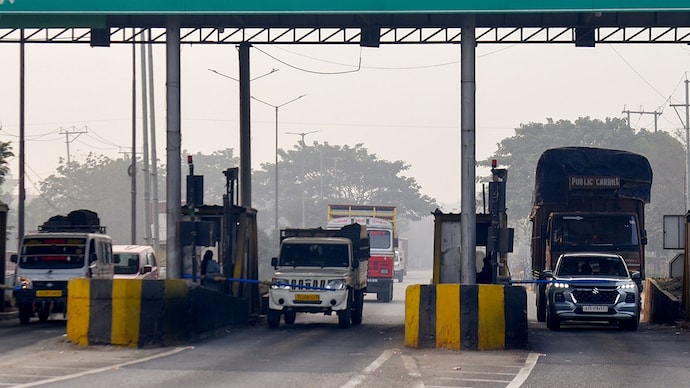
The prime minister’s appeal also finds a ring in a recent highway travel reform. The Multi-Lane Free Flow (MLFF) system abolishes toll barriers altogether, enabling vehicles to speed through without slowing down. Road transport and highways minister Nitin Gadkari says it can save India as much as 2,500 million litres of fuel every year by doing away with idling of vehicles at highway toll collection points.
That number is critical when India imports over 85 per cent of its crude oil needs. The very next day after Modi’s pitch on saving fuel, Gadkari inaugurated an MLFF toll plaza on the Urban Extension Road in Delhi's Mundka. The system has already kicked in from May 1 with India’s first ‘barrier-less’ toll plaza in Gujarat’s Choryasi.
The logic is straightforward. Toll plaza congestion—vehicles waiting in a queue, accelerating, braking and idling—burns fuel, something documented by government studies. Back in 2010, an apex committee on electronic toll collection, led by Infosys co-founder Nandan Nilekani, had recommended that cashless transactions at toll gates could cut the time taken to clear each vehicle from as high as 10 minutes to under 60 seconds.
MLFF goes a step further and removes the toll stop entirely. The system, based on FASTag data, automatic number plate recognition and AI-enabled cameras, allows vehicles to cross toll points at 80-100 kmph. No barrier-lifts to deal with, no lanes to queue up in.
Gadkari's ministry envisages that MLFF would reduce operational costs from 12-15 per cent of toll revenue to just 3-4 per cent, allowing for gains to the tune of Rs 5,000-6,000 crore annually through sheer efficiency and higher revenue. For freight, the gains compound. Toll plazas benefit from a greater share of petrol and diesel on delivery vehicles—their engines larger, cargo heavier.
Gadkari and his ministry officials have also quoted figures such as total losses of around Rs 10,000 crore per year from toll plazas (time, fuel, emissions) and savings to the tune of Rs 1,500 crore per year due to MLFF, as if to stress that there are gains to be had whichever way you slice the pie.
The fresh volatility injected into the oil markets by the West Asia crisis endangers both India’s current account deficit and inflation trajectory. Modi’s prescription for fuel conservation was essentially a demand-side response. MLFF is a structural one: it takes away the cash-burning inefficiency.
Gadkari has also attributed a financial benefit in this direction. As with many of the previous solutions deployed in the space, MLFF relieves the capital burden from government books while still delivering at scale through private technology providers funding the rollout. There is no direct public expense as the system recoups its costs through better collections and lower operating expenses.
There is a secondary function too. Cameras are built into MLFF infrastructure to automatically and immediately spot seatbelt violations and mobile phone use while driving. This allows for digital fines without manual enforcement.
The MLFF reform is in keeping with a logic evident in many of the infrastructure decisions made by the Union government: roll out digital systems, reduce friction that generates waste, make savings quantifiable rather than aspirational, and move compliance from voluntary to automatic. FASTag was version one. MLFF, if it expands as planned, is the next.
Subscribe to India Today Magazine
The prime minister’s appeal also finds a ring in a recent highway travel reform. The Multi-Lane Free Flow (MLFF) system abolishes toll barriers altogether, enabling vehicles to speed through without slowing down. Road transport and highways minister Nitin Gadkari says it can save India as much as 2,500 million litres of fuel every year by doing away with idling of vehicles at highway toll collection points.
That number is critical when India imports over 85 per cent of its crude oil needs. The very next day after Modi’s pitch on saving fuel, Gadkari inaugurated an MLFF toll plaza on the Urban Extension Road in Delhi's Mundka. The system has already kicked in from May 1 with India’s first ‘barrier-less’ toll plaza in Gujarat’s Choryasi.
The logic is straightforward. Toll plaza congestion—vehicles waiting in a queue, accelerating, braking and idling—burns fuel, something documented by government studies. Back in 2010, an apex committee on electronic toll collection, led by Infosys co-founder Nandan Nilekani, had recommended that cashless transactions at toll gates could cut the time taken to clear each vehicle from as high as 10 minutes to under 60 seconds.
MLFF goes a step further and removes the toll stop entirely. The system, based on FASTag data, automatic number plate recognition and AI-enabled cameras, allows vehicles to cross toll points at 80-100 kmph. No barrier-lifts to deal with, no lanes to queue up in.
Gadkari's ministry envisages that MLFF would reduce operational costs from 12-15 per cent of toll revenue to just 3-4 per cent, allowing for gains to the tune of Rs 5,000-6,000 crore annually through sheer efficiency and higher revenue. For freight, the gains compound. Toll plazas benefit from a greater share of petrol and diesel on delivery vehicles—their engines larger, cargo heavier.
Gadkari and his ministry officials have also quoted figures such as total losses of around Rs 10,000 crore per year from toll plazas (time, fuel, emissions) and savings to the tune of Rs 1,500 crore per year due to MLFF, as if to stress that there are gains to be had whichever way you slice the pie.
The fresh volatility injected into the oil markets by the West Asia crisis endangers both India’s current account deficit and inflation trajectory. Modi’s prescription for fuel conservation was essentially a demand-side response. MLFF is a structural one: it takes away the cash-burning inefficiency.
Gadkari has also attributed a financial benefit in this direction. As with many of the previous solutions deployed in the space, MLFF relieves the capital burden from government books while still delivering at scale through private technology providers funding the rollout. There is no direct public expense as the system recoups its costs through better collections and lower operating expenses.
There is a secondary function too. Cameras are built into MLFF infrastructure to automatically and immediately spot seatbelt violations and mobile phone use while driving. This allows for digital fines without manual enforcement.
The MLFF reform is in keeping with a logic evident in many of the infrastructure decisions made by the Union government: roll out digital systems, reduce friction that generates waste, make savings quantifiable rather than aspirational, and move compliance from voluntary to automatic. FASTag was version one. MLFF, if it expands as planned, is the next.
Subscribe to India Today Magazine

