How West Asia crisis keeps analysts, policymakers guessing on volatile rupee
The longer a peace deal eludes the US and Iran, the more the rupee would be under pressure even as the RBI intervenes to control volatility
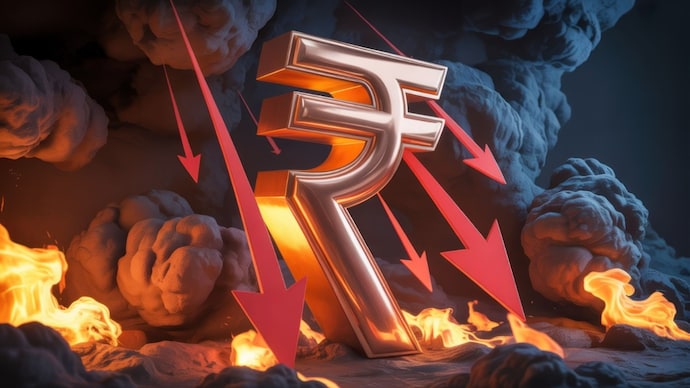
A prolonged stand-off in the Gulf region or any escalation of the conflict could mean that the rupee would fall further to the dollar, even threatening to breach the 100 mark if no peace deal is reached.
India’s balance of payments (BoP)—the inflow of funds compared to outflow—had been in top focus of late, but the rupee had been falling for several months now. The war has only worsened the fall. The tug of war between the value of our key imports, such as oil and gold, and our key exports, such as refined petroleum, pharmaceuticals and electronics, determined India’s exchange rate (i.e. the value of the rupee). However, the rise in the country’s imports and the current account deficit (CAD) widening to 1.3 per cent of the GDP (it is expected to hit 2.3 per cent by FY27) are having a disastrous impact on the rupee.
Even more worrying has been the stress on India's capital account, or that part of the BoP which records the net flow of investments, loans, and assets into and out of the economy. Foreign portfolio investors have sold Rs 2.2 lakh crore worth of equities in 2026 so far, compared to Rs 1.7 lakh crore sold in all of 2025. Meanwhile, net FDI into India was in the negative territory for six months in a row till February this year.
“There is a crisis in the BoP, wherein the rupee is under tremendous pressure,” says Madan Sabnavis, chief economist, Bank of Baroda. “The rupee is weakening more compared to other currencies because foreign portfolio investors are withdrawing on a regular basis. This is a major hit over which we have no control,” Sabnavis said.
Attempts by the Reserve Bank of India (RBI) to shore up the rupee by selling dollars have momentarily helped, but they end up depleting the country’s foreign reserves, which stood at $697 billion as of May, compared to $728 billion in February. A weaker rupee further inflates India’s import bill and stokes inflation, eating into the discretionary spend of consumers.
While, technically, a weak rupee is supposed to boost exports, that may not really happen for two reasons. The first is that India faces stiff competition in the world markets from countries like Bangladesh and is in no position to set prices. Second, a significant part of India’s exports are “re-exports” or exports based on imported goods. In such a case, a weak rupee will result in making imports more expensive and thus negate any advantage for the exporter, say some experts.
There are diverse views among economists regarding the rupee. While some believe that the rupee should be allowed to find its own level, there are others who feel that without RBI intervention, the rupee may slide further. It is true that the RBI intervention is aimed more at stabilising the rupee in times of volatility rather than target a certain level for the currency.
In any case, the rupee has strengthened from the last week on the possibility of an end to the West Asia crisis. RBI governor Sanjay Malhotra has also said the rupee is currently “undervalued” in Real Effective Exchange Rate. He signalled that the RBI would continue to intervene in the forex market to prevent volatility.
Experts feel the RBI would maintain “status quo” on interest rates in its next Monetary Policy Committee meeting scheduled for June 3-5. “In the absence of a clear risk of headline inflation spilling over into the core and signs of unanchored inflationary expectations, the central bank is likely to view the energy shock as a supply-side price catalyst and defer tightening policy at the upcoming meeting,” says Radhika Rao, senior economist and executive director at DBS Bank.
Subscribe to India Today Magazine
A prolonged stand-off in the Gulf region or any escalation of the conflict could mean that the rupee would fall further to the dollar, even threatening to breach the 100 mark if no peace deal is reached.
India’s balance of payments (BoP)—the inflow of funds compared to outflow—had been in top focus of late, but the rupee had been falling for several months now. The war has only worsened the fall. The tug of war between the value of our key imports, such as oil and gold, and our key exports, such as refined petroleum, pharmaceuticals and electronics, determined India’s exchange rate (i.e. the value of the rupee). However, the rise in the country’s imports and the current account deficit (CAD) widening to 1.3 per cent of the GDP (it is expected to hit 2.3 per cent by FY27) are having a disastrous impact on the rupee.
Even more worrying has been the stress on India's capital account, or that part of the BoP which records the net flow of investments, loans, and assets into and out of the economy. Foreign portfolio investors have sold Rs 2.2 lakh crore worth of equities in 2026 so far, compared to Rs 1.7 lakh crore sold in all of 2025. Meanwhile, net FDI into India was in the negative territory for six months in a row till February this year.
“There is a crisis in the BoP, wherein the rupee is under tremendous pressure,” says Madan Sabnavis, chief economist, Bank of Baroda. “The rupee is weakening more compared to other currencies because foreign portfolio investors are withdrawing on a regular basis. This is a major hit over which we have no control,” Sabnavis said.
Attempts by the Reserve Bank of India (RBI) to shore up the rupee by selling dollars have momentarily helped, but they end up depleting the country’s foreign reserves, which stood at $697 billion as of May, compared to $728 billion in February. A weaker rupee further inflates India’s import bill and stokes inflation, eating into the discretionary spend of consumers.
While, technically, a weak rupee is supposed to boost exports, that may not really happen for two reasons. The first is that India faces stiff competition in the world markets from countries like Bangladesh and is in no position to set prices. Second, a significant part of India’s exports are “re-exports” or exports based on imported goods. In such a case, a weak rupee will result in making imports more expensive and thus negate any advantage for the exporter, say some experts.
There are diverse views among economists regarding the rupee. While some believe that the rupee should be allowed to find its own level, there are others who feel that without RBI intervention, the rupee may slide further. It is true that the RBI intervention is aimed more at stabilising the rupee in times of volatility rather than target a certain level for the currency.
In any case, the rupee has strengthened from the last week on the possibility of an end to the West Asia crisis. RBI governor Sanjay Malhotra has also said the rupee is currently “undervalued” in Real Effective Exchange Rate. He signalled that the RBI would continue to intervene in the forex market to prevent volatility.
Experts feel the RBI would maintain “status quo” on interest rates in its next Monetary Policy Committee meeting scheduled for June 3-5. “In the absence of a clear risk of headline inflation spilling over into the core and signs of unanchored inflationary expectations, the central bank is likely to view the energy shock as a supply-side price catalyst and defer tightening policy at the upcoming meeting,” says Radhika Rao, senior economist and executive director at DBS Bank.
Subscribe to India Today Magazine

