In India's big defence reset, how reforms ride on new leadership
The government will soon appoint a new chief of defence staff, DRDO head and army and navy chiefs. Why this couldn't have come at a more strategic time
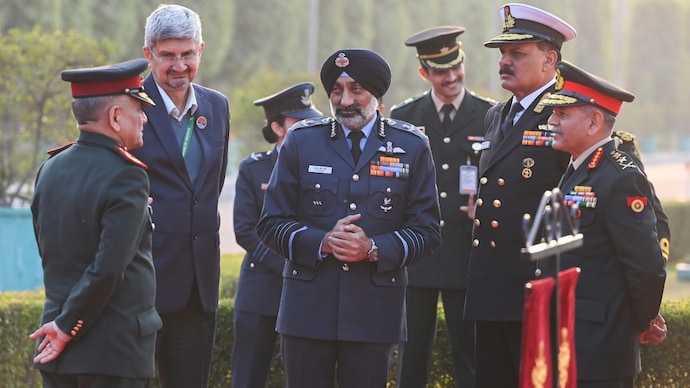
From the ongoing conflict in West Asia to emerging security concerns closer home, the significance of these appointments goes well beyond routine succession. These choices are not merely administrative; they will directly influence how India prepares for future conflicts and advances long-pending reforms in its warfighting structure.
First, chief of defence staff (CDS) General Anil Chauhan is completing his stint by the end of May, after being given eight months of extension last September by the Appointments Committee of the Cabinet (ACC). Gen. Chauhan turns 65 in May, the maximum age for this position. His original term was extended to oversee ongoing military reforms and implementation of theater commands.
Gen. Chauhan took over as India’s second CDS in September 2022 and was entrusted with the unfinished task of his predecessor, the late Gen. Bipin Rawat, towards critical tri-services integration and theatre commands. Gen. Rawat died in a helicopter crash in December 2021.
Under Gen. Chauhan as CDS, efforts have been made to iron out differences between the three armed forces and bring them on the same page to implement the theatre commands. While most issues seem to have been resolved, the theatre command proposal is still be to cleared by the government.
Next comes Dr Samir V. Kamat, chief of India’s premier defence research organisation, the Defence Research and Development Organisation (DRDO). Kamat’s tenure as DRDO chairman and secretary, Department of Defence Research and Development, was extended till May 31.
This was a second extension, as approved by the ACC. Kamat’s leadership of the DRDO came at a time when the organisation has been under pressure to reinvent itself by shifting from a slow, project-heavy ecosystem to an innovation-led entity that delivers timely indigenous defence technologies. The goal is to transition from a project-execution model to a lean R&D establishment to combat past inefficiencies, delays and cost overruns—a cause heavily driven by the Prime Minister’s Office (PMO).
These two overlapping extensions, for Gen. Chauhan and Kamat, underlined the government’s efforts to balance continuity in reform with the urgency of changes in an increasingly uncertain security landscape.
Also scheduled to retire in May is Indian Navy chief Admiral Dinesh Kumar Tripathi. Vice-Admiral Krishna Swaminathan, the flag officer commanding-in-chief of the Western Naval Command, is considered in naval circles to be the frontrunner for the post. He is the seniormost navy officer after Admiral Tripathi, which lends him a certain edge.
Under Admiral Tripathi’s leadership, the Indian Navy has significantly accelerated its fleet modernisation, with 12 new ships inducted recently and plans afoot to expand to a 200-plus ship force by 2035.
The next major transition will be in the Indian Army, with chief Gen. Upendra Dwivedi set to retire in July. Lieutenant Gen. Dheeraj Seth, an Armoured Corps officer who was appointed vice-chief of the Indian Army last month, is seen as a leading contender for the top post due to his seniority.
If selected, it would mark a rare moment of an Armoured Corps officer taking charge of the infantry-dominated, 1.3 million-strong Indian Army after a long gap. The last such instance was of Gen. Shankar Roychowdhury of the 20 Lancers, who served as army chief from November 1994 to September 1997 and later became a member of the Rajya Sabha.
A similar situation had arisen in 2016 when Lt Gen. Praveen Bakshi, then heading the Eastern Command and also from the Armoured Corps, was considered close to becoming Indian Army chief. However, his seniority was overlooked when the government appointed Lt Gen. Bipin Rawat to the post.
Taken together, these oncoming overlapping transitions are a significant moment for India’s defence establishment. The government’s choices to the various posts will determine how effectively ongoing reforms are carried forward. From pushing through long-pending theatre commands to accelerating indigenous defence innovation, continuity in vision will be key for the new leadership.
Subscribe to India Today Magazine
From the ongoing conflict in West Asia to emerging security concerns closer home, the significance of these appointments goes well beyond routine succession. These choices are not merely administrative; they will directly influence how India prepares for future conflicts and advances long-pending reforms in its warfighting structure.
First, chief of defence staff (CDS) General Anil Chauhan is completing his stint by the end of May, after being given eight months of extension last September by the Appointments Committee of the Cabinet (ACC). Gen. Chauhan turns 65 in May, the maximum age for this position. His original term was extended to oversee ongoing military reforms and implementation of theater commands.
Gen. Chauhan took over as India’s second CDS in September 2022 and was entrusted with the unfinished task of his predecessor, the late Gen. Bipin Rawat, towards critical tri-services integration and theatre commands. Gen. Rawat died in a helicopter crash in December 2021.
Under Gen. Chauhan as CDS, efforts have been made to iron out differences between the three armed forces and bring them on the same page to implement the theatre commands. While most issues seem to have been resolved, the theatre command proposal is still be to cleared by the government.
Next comes Dr Samir V. Kamat, chief of India’s premier defence research organisation, the Defence Research and Development Organisation (DRDO). Kamat’s tenure as DRDO chairman and secretary, Department of Defence Research and Development, was extended till May 31.
This was a second extension, as approved by the ACC. Kamat’s leadership of the DRDO came at a time when the organisation has been under pressure to reinvent itself by shifting from a slow, project-heavy ecosystem to an innovation-led entity that delivers timely indigenous defence technologies. The goal is to transition from a project-execution model to a lean R&D establishment to combat past inefficiencies, delays and cost overruns—a cause heavily driven by the Prime Minister’s Office (PMO).
These two overlapping extensions, for Gen. Chauhan and Kamat, underlined the government’s efforts to balance continuity in reform with the urgency of changes in an increasingly uncertain security landscape.
Also scheduled to retire in May is Indian Navy chief Admiral Dinesh Kumar Tripathi. Vice-Admiral Krishna Swaminathan, the flag officer commanding-in-chief of the Western Naval Command, is considered in naval circles to be the frontrunner for the post. He is the seniormost navy officer after Admiral Tripathi, which lends him a certain edge.
Under Admiral Tripathi’s leadership, the Indian Navy has significantly accelerated its fleet modernisation, with 12 new ships inducted recently and plans afoot to expand to a 200-plus ship force by 2035.
The next major transition will be in the Indian Army, with chief Gen. Upendra Dwivedi set to retire in July. Lieutenant Gen. Dheeraj Seth, an Armoured Corps officer who was appointed vice-chief of the Indian Army last month, is seen as a leading contender for the top post due to his seniority.
If selected, it would mark a rare moment of an Armoured Corps officer taking charge of the infantry-dominated, 1.3 million-strong Indian Army after a long gap. The last such instance was of Gen. Shankar Roychowdhury of the 20 Lancers, who served as army chief from November 1994 to September 1997 and later became a member of the Rajya Sabha.
A similar situation had arisen in 2016 when Lt Gen. Praveen Bakshi, then heading the Eastern Command and also from the Armoured Corps, was considered close to becoming Indian Army chief. However, his seniority was overlooked when the government appointed Lt Gen. Bipin Rawat to the post.
Taken together, these oncoming overlapping transitions are a significant moment for India’s defence establishment. The government’s choices to the various posts will determine how effectively ongoing reforms are carried forward. From pushing through long-pending theatre commands to accelerating indigenous defence innovation, continuity in vision will be key for the new leadership.
Subscribe to India Today Magazine

