Indo-Japan Conclave: Envoy Ono Keiichi flags ¥10 trillion private investment, says we're natural partners
L-G Taranjit Singh Sandhu's 'metropolis' vision for Delhi has Japanese firms setting up regional headquarters and tech hubs in the national capital
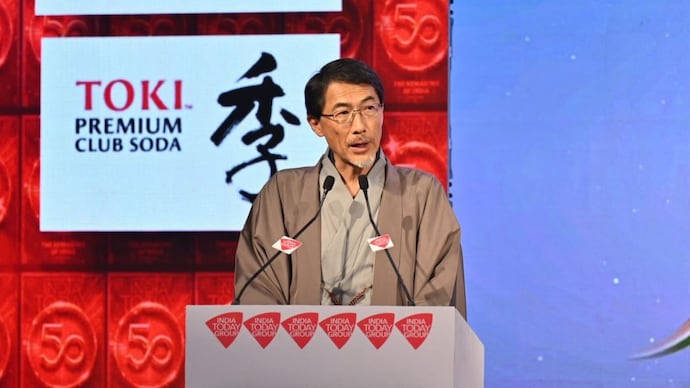
Ono was speaking during the inaugural session of the third edition of the India Today Indo-Japan Conclave, themed ‘The New Growth Corridor’, in New Delhi. The session was moderated by India Today Group Editorial Director (Publishing) Raj Chengappa. The gathering comprised diplomats, policymakers, politicians and industry leaders.
Delhi Lieutenant Governor Taranjit Singh Sandhu used the same platform to pitch an ambitious vision of transforming the national capital from a metro city to a metropolis.
Ono placed the India-Japan relationship within the sweep of Tokyo’s updated Free and Open Indo-Pacific strategy and shared some big numbers. India has been the most popular destination for Japanese companies for four consecutive years, he said, and “both sides agreed on a new target of 10 trillion in new private investment from Japan to India—approximately $68 billion—doubling the previous achieved goal”.
The envoy emphasised that the bilateral partnership was moving past rhetoric. “We have already moved from merely agreeing on beautiful words and principles to driving concrete collaboration between our private sectors,” Ono said, citing the Japan-India Economic Security Initiative and its five priority areas: “semiconductors, critical minerals, information and communications technology, clean energy and pharmaceuticals”.
Ono confirmed that Japanese firms were engaging with semiconductor parks in Gujarat’s Dholera and Jagiroad in Assam and that the Quad foreign ministers would be meeting in New Delhi on May 26.
“We are natural partners, and we are complementary partners. Japan needs India. India needs Japan,” he said, adding: “Next year marks the 75th anniversary of the establishment of diplomatic relations between Japan and India. Let us work together to organise many special events to commemorate this special year.”
Sandhu grounded his remarks in Delhi’s lived experience of Japanese partnership. “The most prominent example is the Delhi Metro. It is not just a transport system, it is a model of efficiency, punctuality, safety and sustainability,” he said, crediting Japanese support with building “one of the largest and most reliable metro networks in the world”.
Sandhu also pivoted sharply from past gains to future ambition. “How do we move up from a metro city to a metropolis? A metropolis is not defined only by infrastructure; it is defined by efficiency, sustainability, innovation and quality of life,” he said.
The lieutenant governor placed Dwarka at the centre of that vision. “Dwarka can be envisioned not just as a residential area but as a hub for knowledge-based industry, innovation centres and global partnerships. It can emerge as a destination for Japanese companies to establish regional headquarters, research centres and technology hubs,” he said.
“This is the shift we must aim for—from isolated projects to integrated development, from infrastructure creation to ecosystem building, from growth to sustainable growth,” Sandhu said.
Subscribe to India Today Magazine
Ono was speaking during the inaugural session of the third edition of the India Today Indo-Japan Conclave, themed ‘The New Growth Corridor’, in New Delhi. The session was moderated by India Today Group Editorial Director (Publishing) Raj Chengappa. The gathering comprised diplomats, policymakers, politicians and industry leaders.
Delhi Lieutenant Governor Taranjit Singh Sandhu used the same platform to pitch an ambitious vision of transforming the national capital from a metro city to a metropolis.
Ono placed the India-Japan relationship within the sweep of Tokyo’s updated Free and Open Indo-Pacific strategy and shared some big numbers. India has been the most popular destination for Japanese companies for four consecutive years, he said, and “both sides agreed on a new target of 10 trillion in new private investment from Japan to India—approximately $68 billion—doubling the previous achieved goal”.
The envoy emphasised that the bilateral partnership was moving past rhetoric. “We have already moved from merely agreeing on beautiful words and principles to driving concrete collaboration between our private sectors,” Ono said, citing the Japan-India Economic Security Initiative and its five priority areas: “semiconductors, critical minerals, information and communications technology, clean energy and pharmaceuticals”.
Ono confirmed that Japanese firms were engaging with semiconductor parks in Gujarat’s Dholera and Jagiroad in Assam and that the Quad foreign ministers would be meeting in New Delhi on May 26.
“We are natural partners, and we are complementary partners. Japan needs India. India needs Japan,” he said, adding: “Next year marks the 75th anniversary of the establishment of diplomatic relations between Japan and India. Let us work together to organise many special events to commemorate this special year.”
Sandhu grounded his remarks in Delhi’s lived experience of Japanese partnership. “The most prominent example is the Delhi Metro. It is not just a transport system, it is a model of efficiency, punctuality, safety and sustainability,” he said, crediting Japanese support with building “one of the largest and most reliable metro networks in the world”.
Sandhu also pivoted sharply from past gains to future ambition. “How do we move up from a metro city to a metropolis? A metropolis is not defined only by infrastructure; it is defined by efficiency, sustainability, innovation and quality of life,” he said.
The lieutenant governor placed Dwarka at the centre of that vision. “Dwarka can be envisioned not just as a residential area but as a hub for knowledge-based industry, innovation centres and global partnerships. It can emerge as a destination for Japanese companies to establish regional headquarters, research centres and technology hubs,” he said.
“This is the shift we must aim for—from isolated projects to integrated development, from infrastructure creation to ecosystem building, from growth to sustainable growth,” Sandhu said.
Subscribe to India Today Magazine

