Japan's precision tech, India's scale and market a win-win deal: Jitin Prasada
At the India Today Indo-Japan Conclave, Union MoS for Commerce and Industry Jitin Prasada highlighted the booster elements of the bilateral collaboration
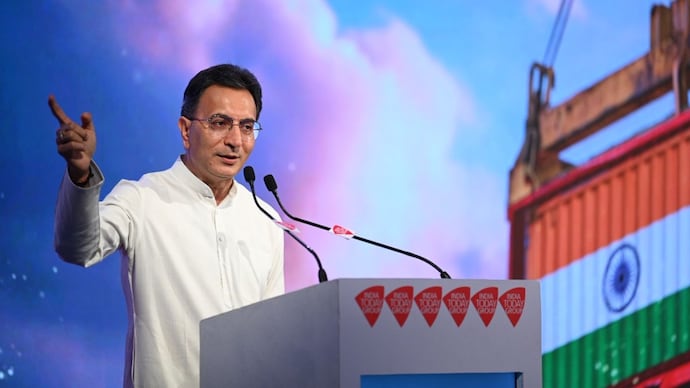
In his keynote address for the session ‘Trade & Commerce: CEPA—The New Focus Sectors of Growth’ at the India Today Indo-Japan Conclave in New Delhi, Prasada described the bilateral relationship as increasingly driven by collaboration in emerging technologies, manufacturing and investments.
The minister framed the India-Japan Comprehensive Economic Partnership Agreement (CEPA), signed in 2011, as a pact that now required recalibration in light of changing global realities. More than a decade after the agreement came into force, he said the focus should move beyond paperwork and tariff reductions towards unlocking practical business opportunities and deeper industrial collaboration.
Prasada repeatedly emphasised that India had transformed significantly over the past decade under Prime Minister Narendra Modi’s leadership. According to him, India’s global image, economic ambitions and domestic consumption patterns had undergone a major shift since 2014. He argued that India’s 1.4 billion population, once seen largely as a burden, had now become its greatest economic strength, particularly because rising aspirations had spread beyond metropolitan cities into rural India.
Prasada highlighted the expanding scale of India’s consumer market, saying households across villages and towns were now demanding quality products and modern appliances. This transformation, he argued, had made India one of the world’s most attractive markets and a preferred destination for global trade partnerships and free trade agreements.
At the same time, the minister stressed that India did not want to remain merely a consumption market for foreign companies. Instead, he called for co-production, manufacturing partnerships and long-term industrial collaboration. He said that manufacturing had become central to the Modi government’s third term because of its direct connection with job creation.
The minister also underscored the government’s push to improve ease of doing business. Referring to the passage of the Jan Vishwas (Amendment of Provisions) Bill, 2026, by Parliament, he said over 1,000 compliances and criminal provisions had been removed to reduce bureaucratic hurdles and create a more investor-friendly environment. He described the government’s approach as one focused on “red carpets, not red tape”, with streamlined approvals and single-window systems aimed at making investments easier and faster.
On India-Japan trade specifically, Prasada acknowledged that several challenges remained despite the CEPA framework. He said many businesses still lacked awareness of market opportunities and regulatory conditions in each country. Japanese businesses needed to better understand the Indian market while Indian firms also needed deeper engagement with Japanese systems and requirements.
The minister raised concerns over non-tariff barriers affecting Indian exports to Japan, particularly in sectors such as agriculture, seafood, textiles and food products. While saying India was ready to meet global standards and compliance requirements, he stressed that Indian products should not be blocked through excessive restrictions. India, he said, was building world-class testing infrastructure and laboratories capable of meeting international quality norms.
The minister highlighted MSMEs as the next major beneficiaries of India’s growing network of trade agreements. According to him, smaller Indian enterprises now had “limitless opportunities” to access global markets if they could deliver quality products at scale.
Prasada also identified future technology partnerships as a major growth area between India and Japan. He pointed to semiconductors, robotics, AI, quantum computing and advanced manufacturing as areas where Japan’s technical expertise could complement India’s scale and skilled workforce.
Referring to Japan’s ageing demographics and India’s young workforce, Prasada described the situation as a natural synergy. He said India was rapidly building expertise in future technologies, with AI, robotics and semiconductor-related education increasingly reaching even grassroots institutions and villages.
Calling India the “skill capital of the world”, he said the government was prepared to support greater movement of skilled Indian workers to Japan if mobility barriers were eased. He described this as one of the most promising areas of future India-Japan cooperation.
The speech ultimately presented India as a stable, long-term economic partner seeking deeper integration with Japan not only through trade agreements, but through shared manufacturing, technology partnerships, workforce collaboration and supply-chain resilience.
PRASADA-SPEAK
* “We do not want India to be treated merely as a market. We want to co-produce, we want to partner.”
* “We want the red carpet being rolled out, not red tape.”
* “Japan has the precision and technical expertise, and India has the scale and the market. That is a win-win partnership.”
“At one point, our population was seen as a burden. Today, it is India’s biggest strength.”
“This government is agile. It listens, consults stakeholders and changes rules accordingly. We are not making policies for the next election but for the next 20-30 years.”
Subscribe to India Today Magazine
In his keynote address for the session ‘Trade & Commerce: CEPA—The New Focus Sectors of Growth’ at the India Today Indo-Japan Conclave in New Delhi, Prasada described the bilateral relationship as increasingly driven by collaboration in emerging technologies, manufacturing and investments.
The minister framed the India-Japan Comprehensive Economic Partnership Agreement (CEPA), signed in 2011, as a pact that now required recalibration in light of changing global realities. More than a decade after the agreement came into force, he said the focus should move beyond paperwork and tariff reductions towards unlocking practical business opportunities and deeper industrial collaboration.
Prasada repeatedly emphasised that India had transformed significantly over the past decade under Prime Minister Narendra Modi’s leadership. According to him, India’s global image, economic ambitions and domestic consumption patterns had undergone a major shift since 2014. He argued that India’s 1.4 billion population, once seen largely as a burden, had now become its greatest economic strength, particularly because rising aspirations had spread beyond metropolitan cities into rural India.
Prasada highlighted the expanding scale of India’s consumer market, saying households across villages and towns were now demanding quality products and modern appliances. This transformation, he argued, had made India one of the world’s most attractive markets and a preferred destination for global trade partnerships and free trade agreements.
At the same time, the minister stressed that India did not want to remain merely a consumption market for foreign companies. Instead, he called for co-production, manufacturing partnerships and long-term industrial collaboration. He said that manufacturing had become central to the Modi government’s third term because of its direct connection with job creation.
The minister also underscored the government’s push to improve ease of doing business. Referring to the passage of the Jan Vishwas (Amendment of Provisions) Bill, 2026, by Parliament, he said over 1,000 compliances and criminal provisions had been removed to reduce bureaucratic hurdles and create a more investor-friendly environment. He described the government’s approach as one focused on “red carpets, not red tape”, with streamlined approvals and single-window systems aimed at making investments easier and faster.
On India-Japan trade specifically, Prasada acknowledged that several challenges remained despite the CEPA framework. He said many businesses still lacked awareness of market opportunities and regulatory conditions in each country. Japanese businesses needed to better understand the Indian market while Indian firms also needed deeper engagement with Japanese systems and requirements.
The minister raised concerns over non-tariff barriers affecting Indian exports to Japan, particularly in sectors such as agriculture, seafood, textiles and food products. While saying India was ready to meet global standards and compliance requirements, he stressed that Indian products should not be blocked through excessive restrictions. India, he said, was building world-class testing infrastructure and laboratories capable of meeting international quality norms.
The minister highlighted MSMEs as the next major beneficiaries of India’s growing network of trade agreements. According to him, smaller Indian enterprises now had “limitless opportunities” to access global markets if they could deliver quality products at scale.
Prasada also identified future technology partnerships as a major growth area between India and Japan. He pointed to semiconductors, robotics, AI, quantum computing and advanced manufacturing as areas where Japan’s technical expertise could complement India’s scale and skilled workforce.
Referring to Japan’s ageing demographics and India’s young workforce, Prasada described the situation as a natural synergy. He said India was rapidly building expertise in future technologies, with AI, robotics and semiconductor-related education increasingly reaching even grassroots institutions and villages.
Calling India the “skill capital of the world”, he said the government was prepared to support greater movement of skilled Indian workers to Japan if mobility barriers were eased. He described this as one of the most promising areas of future India-Japan cooperation.
The speech ultimately presented India as a stable, long-term economic partner seeking deeper integration with Japan not only through trade agreements, but through shared manufacturing, technology partnerships, workforce collaboration and supply-chain resilience.
PRASADA-SPEAK
* “We do not want India to be treated merely as a market. We want to co-produce, we want to partner.”
* “We want the red carpet being rolled out, not red tape.”
* “Japan has the precision and technical expertise, and India has the scale and the market. That is a win-win partnership.”
“At one point, our population was seen as a burden. Today, it is India’s biggest strength.”
“This government is agile. It listens, consults stakeholders and changes rules accordingly. We are not making policies for the next election but for the next 20-30 years.”
Subscribe to India Today Magazine

