Wetland greens or energy clean? Why Kutch pastoralists are in protest
Over 500 local villagers are against NTPC's solar power project at Chhari-Dhand, a protected breeding-hosting site for indigenous species and migratory birds
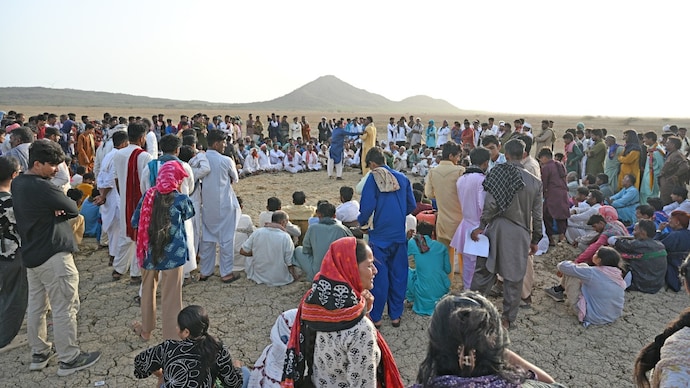
On International Day for Biological Diversity (May 22), when the sun was blazing at over 45 degrees Celsius, more than 500 Maldharis and other villagers from 16 Banni villages gathered near Fulay in Kutch to protest against a proposed solar project of the NTPC Renewable Energy Limited.
The villagers, who are joined by conservationists, are against the project because the specific land required for it is a fragile ecological site that supports several indigenous species and attracts migratory birds. It’s the Chhari-Dhand wetland conservation reserve in the Banni grasslands, declared a Ramsar-protected site in January.
Villagers allege that heavy machinery has already begun operating near the wetland, and that the land being marked out includes traditional settlements, farmlands, village commons and even burial grounds.
NTPC had, in 2023, applied for allocation of 578 hectares of government land at Survey No. 60/Part-1 in Fulay village of Nakhatrana taluka. Sources inform that local villages have not given the go-ahead—a prerequisite for the project to take shape.
Among them, Fulay, Tal, Laiyari, Motichur, Burkal, Chhachala, Bhagadiya, Jatavira and Sherva have filed ‘community forest resource’ claims over the same grasslands under the Forest Rights Act, 2006. Records from the sub-divisional magistrate dating back to 2019 had already cautioned that industrial projects in and around the reserve should not be approved without scientific ecological assessment.
Banni’s is a pastoral economy. Residents say the contested land supports nearly 3,000 cattle and sustains 60 per cent of the local milk economy. “The site of the project is about 700 metres from the Ramsar-protected wetland. This grazing land is not used by just one village. Herders from outside villages also depend on it,” said Ashok Chaudhary, a Kutch-based wildlife photographer and conservator who has been associated with the movement for several years.
“The exact site of the power plant is a shallow plate where water gathers during monsoon. As water recedes, a rich, unique grass grows, which local camels thrive on. Around 2,500 camels come here to breed and give birth,” he added.
Chhari-Dhand, an 80 sq km seasonal wetland-grassland mosaic, hosts 275 of the nearly 300 bird species recorded in Kutch, including cranes, flamingos, pelicans, painted storks, spoonbills, harriers and imperial eagles. Each winter, nearly 40,000 common cranes—almost 40 per cent of India's wintering population—arrive after a 15-20 day flight from Russia and Central Asia.
Ornithologist Dr Asad Rahmani, who has studied Chhari-Dhand since 1981, warned that solar panels can create a ‘lake effect’ at night, misleading birds in flight and causing fatal crashes, and that high-tension transmission lines are themselves established killers of birds.
Residents also flag that the project footprint threatens Kiro Hill, a geological site with fossils.
Experts say wetlands cover under 6 per cent of the earth's land but recharge groundwater, filter pollutants, buffer floods, sequester carbon at rates higher than most forests, and anchor migratory flyways. Seasonal desert wetlands such as Chhari-Dhand are particularly fragile: a single fence or transmission corridor can sever hydrological and behavioural rhythms settled over millennia.
Backed by local MLA Pradhyumansinh Jadeja, the villages say they are prepared for a sustained satyagraha and a legal challenge in the Gujarat High Court. With the 30 GW Khavda Renewable Energy Park barely 100 km away, the question at Fulay is not whether India needs more solar power. It is whether the cheapest hectare on a revenue map is the same as the cheapest hectare on an ecological one.
Subscribe to India Today Magazine
On International Day for Biological Diversity (May 22), when the sun was blazing at over 45 degrees Celsius, more than 500 Maldharis and other villagers from 16 Banni villages gathered near Fulay in Kutch to protest against a proposed solar project of the NTPC Renewable Energy Limited.
The villagers, who are joined by conservationists, are against the project because the specific land required for it is a fragile ecological site that supports several indigenous species and attracts migratory birds. It’s the Chhari-Dhand wetland conservation reserve in the Banni grasslands, declared a Ramsar-protected site in January.
Villagers allege that heavy machinery has already begun operating near the wetland, and that the land being marked out includes traditional settlements, farmlands, village commons and even burial grounds.
NTPC had, in 2023, applied for allocation of 578 hectares of government land at Survey No. 60/Part-1 in Fulay village of Nakhatrana taluka. Sources inform that local villages have not given the go-ahead—a prerequisite for the project to take shape.
Among them, Fulay, Tal, Laiyari, Motichur, Burkal, Chhachala, Bhagadiya, Jatavira and Sherva have filed ‘community forest resource’ claims over the same grasslands under the Forest Rights Act, 2006. Records from the sub-divisional magistrate dating back to 2019 had already cautioned that industrial projects in and around the reserve should not be approved without scientific ecological assessment.
Banni’s is a pastoral economy. Residents say the contested land supports nearly 3,000 cattle and sustains 60 per cent of the local milk economy. “The site of the project is about 700 metres from the Ramsar-protected wetland. This grazing land is not used by just one village. Herders from outside villages also depend on it,” said Ashok Chaudhary, a Kutch-based wildlife photographer and conservator who has been associated with the movement for several years.
“The exact site of the power plant is a shallow plate where water gathers during monsoon. As water recedes, a rich, unique grass grows, which local camels thrive on. Around 2,500 camels come here to breed and give birth,” he added.
Chhari-Dhand, an 80 sq km seasonal wetland-grassland mosaic, hosts 275 of the nearly 300 bird species recorded in Kutch, including cranes, flamingos, pelicans, painted storks, spoonbills, harriers and imperial eagles. Each winter, nearly 40,000 common cranes—almost 40 per cent of India's wintering population—arrive after a 15-20 day flight from Russia and Central Asia.
Ornithologist Dr Asad Rahmani, who has studied Chhari-Dhand since 1981, warned that solar panels can create a ‘lake effect’ at night, misleading birds in flight and causing fatal crashes, and that high-tension transmission lines are themselves established killers of birds.
Residents also flag that the project footprint threatens Kiro Hill, a geological site with fossils.
Experts say wetlands cover under 6 per cent of the earth's land but recharge groundwater, filter pollutants, buffer floods, sequester carbon at rates higher than most forests, and anchor migratory flyways. Seasonal desert wetlands such as Chhari-Dhand are particularly fragile: a single fence or transmission corridor can sever hydrological and behavioural rhythms settled over millennia.
Backed by local MLA Pradhyumansinh Jadeja, the villages say they are prepared for a sustained satyagraha and a legal challenge in the Gujarat High Court. With the 30 GW Khavda Renewable Energy Park barely 100 km away, the question at Fulay is not whether India needs more solar power. It is whether the cheapest hectare on a revenue map is the same as the cheapest hectare on an ecological one.
Subscribe to India Today Magazine

