What Bengal business body calling out Mamata govt on industrial paralysis means
At the Bharat Chamber of Commerce event in Kolkata, BJP state chief Samik Bhattacharya assured of a policy overhaul to ease business and attract investment
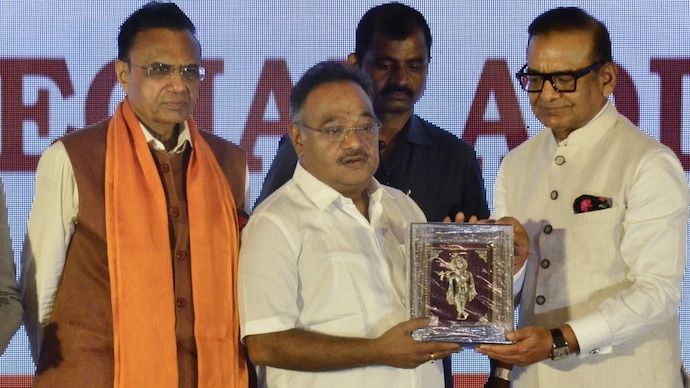
Pachisia recalled that former chief ministers, including Dr Bidhan Chandra Roy, P.C. Sen, Ajoy Mukherjee, Siddhartha Shankar Ray, Jyoti Basu and Buddhadeb Bhattacharya, had all “personally blessed various memorable proceedings” of the organisation over the years.
He then said that “the only exception” was the “immediate past chief minister of our state despite we having approached her many times”. Although not named in the speech, the remarks were directed at former chief minister Mamata Banerjee.
Pachisia said the chamber had extended “whole-hearted support” to the state government during the Covid pandemic and cyclone-related disasters but had remained “helpless with regard to policy support for industrial development and growth”.
The speech added that the chamber had increasingly worked with Union ministries on industrial and defence-related initiatives, including collaborations with the ministries of defence and food processing industries.
Pachisia also suggested that these engagements may have affected the chamber’s relationship with the previous political leadership in the state. “Perhaps, our success in such efforts could be the reason for earning the dislike of the previous political leadership in our state,” he said.
The remarks are likely to resonate with a large section of Bengal’s business and industrial circles, where concerns over policy uncertainty, delays in land acquisition, allegations of syndicate interference and the perceived lack of large-scale industrial growth under the Mamata government have often been privately expressed even though industry bodies have generally avoided direct public confrontation with the state administration.
Alongside these observations, the chamber president praised Bhattacharya’s political style and public image. He described the BJP leader as a “Bhadralok politician” known for “moderation and articulation”.
On industry and investment, Pachisia said the chamber appreciated Bhattacharya’s emphasis on “rule of law” for attracting investors to Bengal. “Businesses first look for stability, administrative fairness, safety, predictable policy and freedom from coercive practices,” he stated.
During his interaction with industrialists and members of the chamber, Bhattacharya said the BJP government in Bengal would consider restoring fiscal incentives for industry to attract investment. “Incentives will be given; there will also be tax holidays [for industry],” Bhattacharya said.
He said the implementation of such measures would be worked out by the BJP government in consultation with the Union government. Acknowledging the financial stress facing the state, Bhattacharya said: “[Union] finance minister [Nirmala] Sitharaman knows about the state of Bengal’s exchequer; that it has no resources is known to all.” He reiterated that the BJP had promised to continue welfare schemes introduced by the Trinamool government while increasing allocations in some sectors.
Bhattacharya said a comprehensive land policy would be prepared within 100 days. “Investors are waiting for a land policy, a data centre policy. Several players from the semiconductor industry have reached out to us and are ready to come [to Bengal],” he said.
The BJP leader also said legislation would be introduced to protect industries from alleged harassment by syndicates and extortion networks, an issue frequently raised by sections of the business community in Bengal.
Bhattacharya also spoke about increasing state revenues through monetisation of natural resources. Referring to rare earth mineral reserves in Purulia, he said they could be auctioned to benefit the state economy. He also claimed that commercial hydrocarbon production at Ashoknagar could increase state revenues by around Rs 8,000 crore annually.
The chamber also expressed hope that Bhattacharya would help secure “stronger national attention” and support from the Union government on issues concerning Bengal’s economic growth.
Subscribe to India Today Magazine
Pachisia recalled that former chief ministers, including Dr Bidhan Chandra Roy, P.C. Sen, Ajoy Mukherjee, Siddhartha Shankar Ray, Jyoti Basu and Buddhadeb Bhattacharya, had all “personally blessed various memorable proceedings” of the organisation over the years.
He then said that “the only exception” was the “immediate past chief minister of our state despite we having approached her many times”. Although not named in the speech, the remarks were directed at former chief minister Mamata Banerjee.
Pachisia said the chamber had extended “whole-hearted support” to the state government during the Covid pandemic and cyclone-related disasters but had remained “helpless with regard to policy support for industrial development and growth”.
The speech added that the chamber had increasingly worked with Union ministries on industrial and defence-related initiatives, including collaborations with the ministries of defence and food processing industries.
Pachisia also suggested that these engagements may have affected the chamber’s relationship with the previous political leadership in the state. “Perhaps, our success in such efforts could be the reason for earning the dislike of the previous political leadership in our state,” he said.
The remarks are likely to resonate with a large section of Bengal’s business and industrial circles, where concerns over policy uncertainty, delays in land acquisition, allegations of syndicate interference and the perceived lack of large-scale industrial growth under the Mamata government have often been privately expressed even though industry bodies have generally avoided direct public confrontation with the state administration.
Alongside these observations, the chamber president praised Bhattacharya’s political style and public image. He described the BJP leader as a “Bhadralok politician” known for “moderation and articulation”.
On industry and investment, Pachisia said the chamber appreciated Bhattacharya’s emphasis on “rule of law” for attracting investors to Bengal. “Businesses first look for stability, administrative fairness, safety, predictable policy and freedom from coercive practices,” he stated.
During his interaction with industrialists and members of the chamber, Bhattacharya said the BJP government in Bengal would consider restoring fiscal incentives for industry to attract investment. “Incentives will be given; there will also be tax holidays [for industry],” Bhattacharya said.
He said the implementation of such measures would be worked out by the BJP government in consultation with the Union government. Acknowledging the financial stress facing the state, Bhattacharya said: “[Union] finance minister [Nirmala] Sitharaman knows about the state of Bengal’s exchequer; that it has no resources is known to all.” He reiterated that the BJP had promised to continue welfare schemes introduced by the Trinamool government while increasing allocations in some sectors.
Bhattacharya said a comprehensive land policy would be prepared within 100 days. “Investors are waiting for a land policy, a data centre policy. Several players from the semiconductor industry have reached out to us and are ready to come [to Bengal],” he said.
The BJP leader also said legislation would be introduced to protect industries from alleged harassment by syndicates and extortion networks, an issue frequently raised by sections of the business community in Bengal.
Bhattacharya also spoke about increasing state revenues through monetisation of natural resources. Referring to rare earth mineral reserves in Purulia, he said they could be auctioned to benefit the state economy. He also claimed that commercial hydrocarbon production at Ashoknagar could increase state revenues by around Rs 8,000 crore annually.
The chamber also expressed hope that Bhattacharya would help secure “stronger national attention” and support from the Union government on issues concerning Bengal’s economic growth.
Subscribe to India Today Magazine

